
Now Reading: Rising Costs Push Some Nigerian Women to Use Baby Diapers During Menstruation
-
01
Rising Costs Push Some Nigerian Women to Use Baby Diapers During Menstruation
Rising Costs Push Some Nigerian Women to Use Baby Diapers During Menstruation

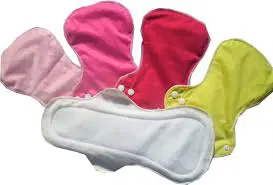
Rising living costs are pushing some women in Nigeria to replace conventional sanitary pads with disposable baby diapers and other improvised menstrual products, raising concerns among health professionals about the potential risks.
The practice, which has also gained attention on social media, is reportedly being driven largely by the rising cost of menstrual hygiene products and concerns over some commercial sanitary pads.
For some women, however, the decision is primarily financial. Increasing prices of locally produced and imported sanitary pads have made menstrual care more difficult for households already struggling with higher food and other living expenses.
Mrs Nefisat Amadu, a healthcare worker, said she has resorted to using baby diapers because of her heavy menstrual flow.
“I used to spend a significant chunk of my salary just managing my heavy flow every month,” she said.
“A single pad barely lasts three hours for me. But with a single size-2 baby diaper cut down the middle, I can get through an entire workday without a single stain or leak.”
Amadu acknowledged that the practice was uncomfortable but said the financial considerations had influenced her decision.
For other women, concerns about skin reactions and reports circulating online about the contents of sanitary products have contributed to a loss of confidence in some brands.
Mrs Jadesola Akinmorin, a lecturer, said she developed a skin infection after using a particular sanitary pad brand.
“I just tore one of my Ankara wrappers in pieces. That is what I am currently using during my menstrual cycle, because the pad I was using almost made me run mad,” she said.
However, a gynaecologist, Dr Marvel Abubakar, warned against relying on baby diapers as a substitute for products specifically designed for menstrual hygiene.
He explained that baby diapers are primarily designed to absorb urine, while menstrual discharge contains blood clots and cellular tissue.
“Menstrual discharge is entirely different; it is thicker, containing clotted blood and cellular tissue,” Abubakar said.
He also warned that the design and prolonged use of diapers could increase exposure to heat and moisture around sensitive skin, potentially contributing to infections and irritation.
According to him, women should not be forced to choose between unaffordable menstrual products and alternatives that could pose health concerns.
Abubakar called for regulatory authorities to investigate concerns surrounding chemical exposure in menstrual hygiene products and urged the government to consider measures that could make essential menstrual products more affordable.
The growing use of improvised menstrual products highlights the continuing challenge of period poverty, particularly for women and girls struggling to meet basic household needs amid rising living costs.