Now Reading: Nigeria’s Inflation Rate Drops to 14.06% in October 2026 as Food Inflation Eases
-
01
Nigeria’s Inflation Rate Drops to 14.06% in October 2026 as Food Inflation Eases
Nigeria’s Inflation Rate Drops to 14.06% in October 2026 as Food Inflation Eases

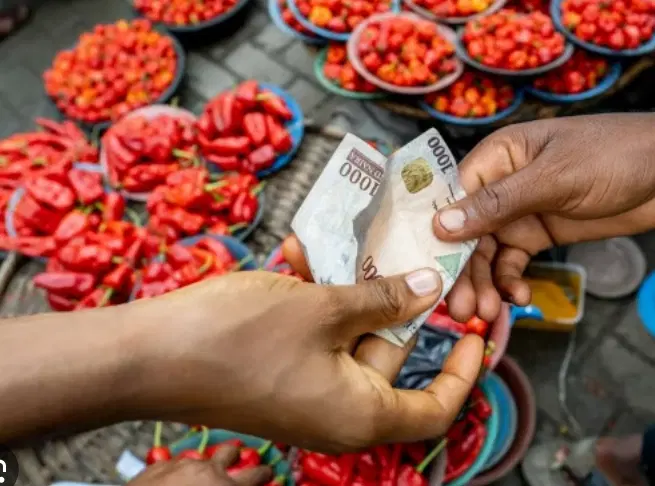
Nigeria’s headline inflation rate declined to 14.06 per cent in October 2026 from 14.63 per cent recorded in September, offering fresh signs of easing price pressures across the country.
The National Bureau of Statistics (NBS) disclosed this in its latest Consumer Price Index (CPI) report, which also showed that food inflation fell to 19.13 per cent in October from 19.59 per cent in the previous month.
Despite the year-on-year decline, the report revealed that inflation increased on a month-on-month basis. Headline inflation rose to 0.43 per cent in October, compared with 0.06 per cent in September, representing an increase of 0.38 percentage points.
The NBS explained that the figures indicated that average prices increased at a faster rate in October than they did in September. However, the annual headline inflation rate remained below the 18.97 per cent recorded in October 2025.
Food inflation also recorded a negative month-on-month rate of -0.75 per cent in October, compared with -1.55 per cent in September. The bureau attributed the movement to changes in the average prices of several food items, including vegetable oil, sardines, green peas, frozen mackerel, croaker fish, locally produced rice, fresh catfish, beef tripe, palm oil and millet flour.
A breakdown of food inflation across states showed that Ondo recorded the highest year-on-year rate at 31.74 per cent, followed by Lagos at 31.43 per cent and Imo at 29.75 per cent. Nasarawa recorded the lowest rate at 3.70 per cent, while Bayelsa and Kano followed with 7.11 per cent and 7.13 per cent respectively.
On a month-on-month basis, Yobe recorded the highest food inflation rate at 18.41 per cent, followed by Kebbi at 16.45 per cent and Borno at 13.96 per cent. Lagos recorded the lowest rate at -5.93 per cent, followed by Plateau at -5.83 per cent and Benue at -5.49 per cent.
The latest figures show that although Nigeria’s annual headline and food inflation rates declined in October, the pace of monthly price increases accelerated. The figures highlight the continuing pressure on household spending despite the improvement in the annual inflation readings.