Now Reading: IMF Forecasts 3.3% Economic Contraction for Saudi Arabia as Houthi Attacks Escalate
-
01
IMF Forecasts 3.3% Economic Contraction for Saudi Arabia as Houthi Attacks Escalate
IMF Forecasts 3.3% Economic Contraction for Saudi Arabia as Houthi Attacks Escalate

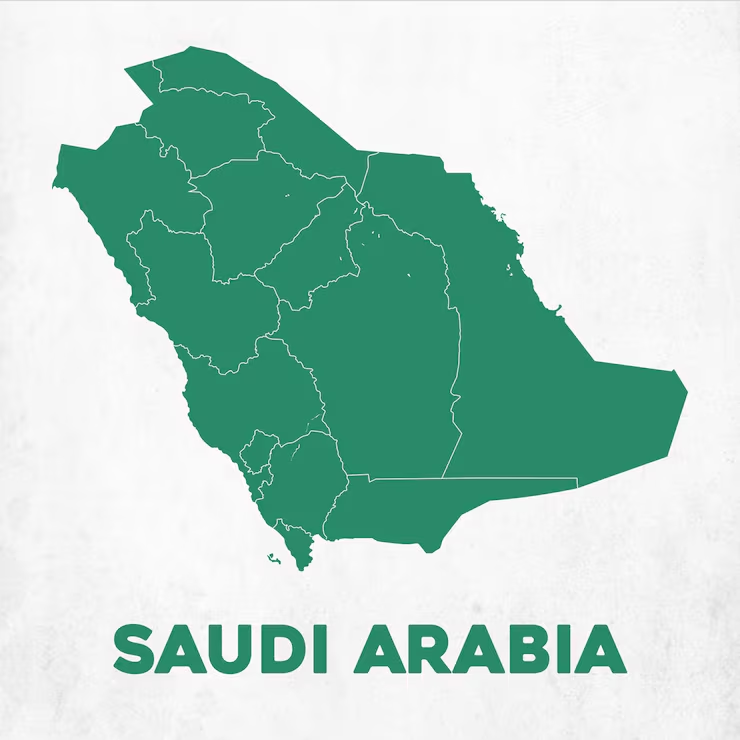
Saudi Arabia’s economy is projected to shrink by 3.3 per cent this year as the Middle East conflict, disruptions to oil shipments and escalating Houthi attacks put pressure on the world’s largest oil exporter, the International Monetary Fund (IMF) has warned.
The forecast, published in the IMF’s latest World Economic Outlook report on Tuesday, reflects the growing economic impact of restrictions on shipping through the Strait of Hormuz and the wider regional conflict. The fund also projected that the Middle East economy would contract by 0.3 per cent this year, a sharp reversal from its earlier forecast of 1.9 per cent growth.
The report was prepared before a series of deadly Houthi attacks on Saudi Arabia on Saturday, which reportedly killed 13 people in the deadliest assault on the kingdom in more than a decade. The strikes added to concerns over the security of Saudi infrastructure, including its international airport in Riyadh.
Saudi Arabia had already been facing economic pressure since the conflict involving Iran, the United States and Israel began in late February. Tehran has sought to restrict movement through the Strait of Hormuz, a critical global route for oil and gas shipments, while the United States has imposed a counter-blockade on Iranian ports and increased escorts for vessels considered friendly.
The resumption of Yemen’s long-running civil war in July has added another threat to the kingdom. The Saudi-led coalition has backed Yemen’s internationally recognised government against the Houthis, who have targeted Saudi oil facilities, tankers in the Red Sea and transport infrastructure. The renewed fighting has also brought the conflict closer to Saudi territory.
Tensions intensified again late on Monday after explosions were reported over Riyadh. The Saudi-led coalition said it had intercepted a Houthi missile, while the group claimed it had targeted the international airport, where operations remained suspended. Residents also received a government alert warning of a “hostile aerial threat”.
The latest attacks have raised the risk of deeper foreign involvement. US President Donald Trump said he was considering joining Saudi strikes against the Houthis following Saturday’s assault. Houthi political bureau member Mohammed Al Bukhaiti warned that the group would target American interests in the region if Washington intervened.
Despite the mounting pressure, the IMF said Saudi Arabia was among the regional oil exporters less exposed to the disruption because it has alternative routes for shipping crude. The kingdom uses its East-West pipeline to transport oil to the Red Sea coast, bypassing the Strait of Hormuz. However, the pipeline was temporarily shut in September after strikes blamed on Iran-backed groups in Iraq, highlighting the vulnerability of even these alternative routes.
The IMF expects a significant regional recovery in 2027, based on the assumption that the Strait of Hormuz will reopen. That outlook remains uncertain, however, as continued attacks and shipping restrictions threaten energy exports, trade and economic stability across the Middle East.