Now Reading: Abia Unveils Climate Change Strategy, Sets Up New Department to Drive Green Development
-
01
Abia Unveils Climate Change Strategy, Sets Up New Department to Drive Green Development
Abia Unveils Climate Change Strategy, Sets Up New Department to Drive Green Development

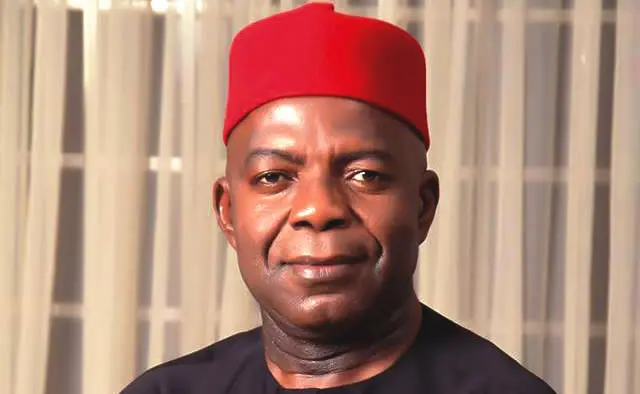
The Abia State Government has intensified efforts to tackle climate change and environmental degradation by establishing a dedicated Climate Change Department within the state Ministry of Environment.
The move forms part of a broader strategy aimed at building climate-resilient communities, attracting green investments and strengthening sustainable urban development across the state.
The disclosure was made by the Senior Special Assistant on Public Affairs to Governor Alex Otti, Dr. Ebere Uzoukwa, during a lecture delivered at the 2026 World Environment Day celebration held at Imo State University, Owerri.
Speaking on the theme, “Climate-Smart Urbanization and Environmental Governance: The Abia Development Model for Building Resilient and Sustainable Cities in Africa,” Uzoukwa said the state had already conducted climate vulnerability assessments across all 17 local government areas to establish scientific baseline data for climate planning.
He added that Climate Community Assets Assessments had also been completed across the councils, while the government developed a 107-page Climate Change Investors Readiness Document designed to position Abia competitively for climate financing and green investment opportunities.
According to him, the state has strengthened institutional climate governance by appointing climate desk officers across ministries, departments, agencies and local government councils.
“Abia also contributed greenhouse gas data to Nigeria’s Biennial Transparency Reporting framework while participating actively in national climate planning mechanisms,” he said.
Uzoukwa further disclosed that the government has expanded its global climate engagement through participation in international climate conferences and implementation meetings under the United Nations climate governance framework.
On flood control and erosion management, he noted that the Ministry of Environment established drainage and climate resilience systems in 2023, while several adaptation projects have been executed across communities through direct labour intervention programmes.
He said the state government has continued to tackle flooding, stormwater accumulation and erosion through strategic drainage engineering, flood channel infrastructure and improved environmental governance systems.
The governor’s aide stressed that climate resilience can only succeed when governments deliberately integrate science, policy, institutions and long-term planning into development strategies.
“Climate-smart urbanization requires governments to think beyond immediate political cycles because future generations will inherit the consequences of today’s development decisions,” he stated.
Uzoukwa also urged African governments to adopt comprehensive urban master plans covering transportation, housing, environmental protection, drainage systems and economic development.
He advocated stronger investment in renewable energy, electric transportation systems, rail infrastructure and climate-friendly transit networks while calling for stricter environmental laws, increased funding and improved enforcement capacity.
The Vice Chancellor of Imo State University, Professor Uchefula Chukwumaeze, represented by Deputy Vice Chancellor Professor Onuh Martin Onuh, warned against indiscriminate waste disposal and uncontrolled tree felling, saying such practices continue to worsen environmental pollution and public health challenges.
Dean of the Faculty of Environmental Sciences, Professor Patricia Duru, also emphasized the need for stronger collaboration between researchers, policymakers and communities to promote greener, safer and more sustainable cities.