Now Reading: Atiku Challenges Tinubu’s ‘Age of Prosperity’ Claim, Says Nigerians Still Face Hardship
-
01
Atiku Challenges Tinubu’s ‘Age of Prosperity’ Claim, Says Nigerians Still Face Hardship
Atiku Challenges Tinubu’s ‘Age of Prosperity’ Claim, Says Nigerians Still Face Hardship

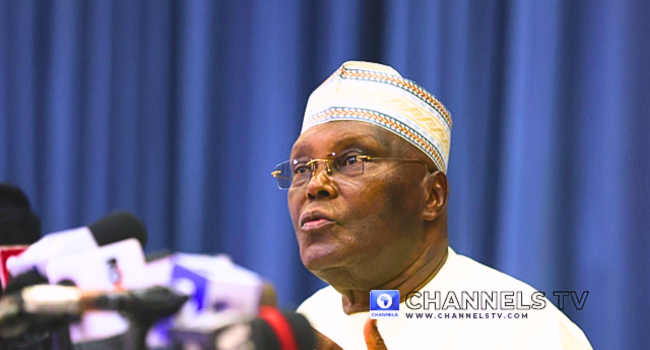
Former Vice-President and African Democratic Congress presidential candidate, Atiku Abubakar, has challenged President Bola Tinubu’s declaration that Nigeria has entered an “age of prosperity,” arguing that economic growth has yet to translate into sufficient relief for many Nigerians.
Tinubu, in his Independence Day address on October 1, said Nigeria had moved beyond the most difficult phase of his administration’s economic reforms.
The President said the economy had grown by more than four per cent in 2026 and that the government’s focus had shifted from correcting the country’s economic direction to delivering shared and widespread prosperity.
Atiku, however, questioned whether the reported economic gains were being reflected in the daily lives of Nigerians.
In his own Independence Day address, the former Vice-President pointed to the cost of food, healthcare, transportation and other basic necessities, arguing that many households continue to struggle despite the government’s reported economic progress.
He also criticised the removal of the petrol subsidy, linking the policy to increased transportation and food costs, and questioned when Nigerians would begin to experience tangible benefits from the reforms.
On inflation, Atiku argued that a decline in the rate at which prices increase does not necessarily mean that the prices of goods and services have returned to affordable levels.
The ADC presidential candidate also raised concerns about the government’s handling of insecurity, borrowing and social welfare programmes, calling for greater accountability over public spending and the outcomes of government policies.
The exchange highlights a growing political debate over the impact of Tinubu’s economic reforms ahead of the 2027 general elections.
While Tinubu maintains that the reforms have laid the foundation for sustained economic growth and prosperity, Atiku argues that the benefits of those reforms have not yet translated into adequate improvements in the living conditions of ordinary Nigerians.
The central disagreement is therefore not simply over whether Nigeria’s economy is growing, but whether that growth is sufficiently improving household welfare and living standards.