
Now Reading: CBN Cuts Interest Rate to 23% as Experts Split Over Impact on Nigerian Businesses
-
01
CBN Cuts Interest Rate to 23% as Experts Split Over Impact on Nigerian Businesses
CBN Cuts Interest Rate to 23% as Experts Split Over Impact on Nigerian Businesses

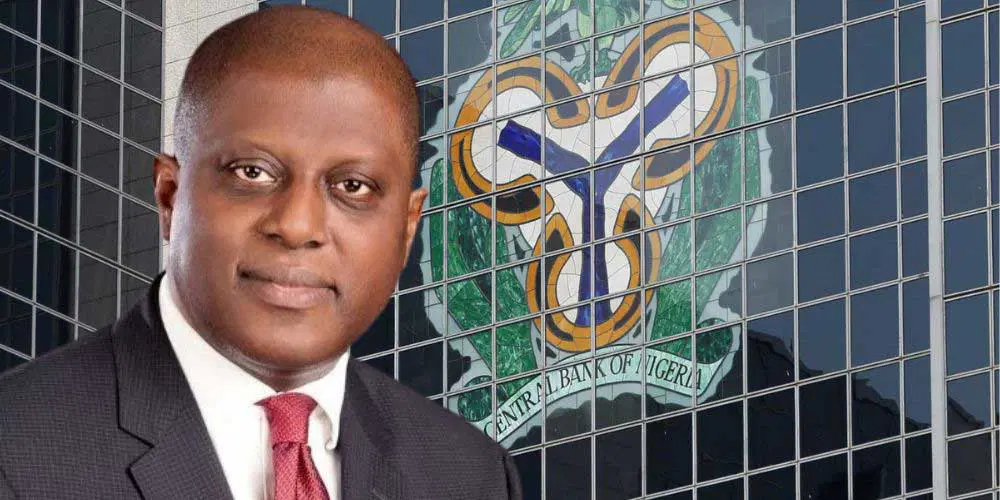
The Central Bank of Nigeria (CBN) has cut its Monetary Policy Rate (MPR) from 26.5 per cent to 23 per cent, a 350-basis-point reduction that has drawn mixed reactions from business and financial market stakeholders.
CBN Governor Olayemi Cardoso announced the decision after the 307th meeting of the Monetary Policy Committee (MPC) in Abuja, describing it as an operational reset aimed at aligning monetary policy with prevailing financial market conditions. The bank also adjusted the standing facilities corridor to +50/-300 basis points around the MPR.
Cardoso said the move should not be interpreted as a shift in the underlying monetary policy stance. He said previous tightening measures had helped moderate inflation, stabilise the foreign exchange market, strengthen external reserves and improve investor confidence, creating room for the latest recalibration.
The CBN retained the Cash Reserve Requirement at 45 per cent for Deposit Money Banks, 16 per cent for Merchant Banks and 75 per cent for non-TSA public sector deposits. Cardoso said the adjustment was intended to improve monetary policy transmission and restore the MPR as the main signal of the bank’s policy direction.
The decision has received support from some economic and capital market experts. Muda Yusuf, Chief Executive Officer of the Centre for the Promotion of Private Enterprise (CPPE), described the cut as timely, saying it could ease financing pressures on the real sector. He noted that high borrowing costs had constrained investment, production and working capital across sectors such as manufacturing, agriculture and construction.
President of the Chartered Institute of Stockbrokers, Fiona Ahimie, said the lower MPR could influence pricing across fixed-income and equity markets. She said lower yields on short-term instruments could encourage investors to consider longer-term bonds and equities, while cheaper financing could support some companies. However, she noted that the effect on banks and foreign portfolio investment would depend on how quickly lending and deposit rates adjust, as well as exchange-rate stability and inflation.
Not all stakeholders consider the reduction sufficient. National President of the National Council of Managing Directors of Licensed Customs Agents, Lucky Amiwero, said a 23 per cent policy rate remained too high for businesses that rely heavily on bank credit. He also pointed to infrastructure costs, electricity challenges and roads as additional pressures affecting the cost of doing business.
Capital Market Academics of Nigeria President, Professor Uche Uwaleke, backed the decision, citing moderating inflation, exchange-rate stability, improved foreign-exchange liquidity and stronger external reserves. Cardoso said Nigeria’s gross external reserves stood at $55.25 billion as of September 18, 2026, enough to cover about 11.3 months of imports of goods and services. The divergent reactions underline the key issue ahead: whether the lower policy rate will translate into cheaper credit and stronger economic activity for businesses and households.