
Now Reading: CBN Governor Assures Nigeria Can Weather US-Iran Conflict Amid Rising Global Energy Prices
-
01
CBN Governor Assures Nigeria Can Weather US-Iran Conflict Amid Rising Global Energy Prices
CBN Governor Assures Nigeria Can Weather US-Iran Conflict Amid Rising Global Energy Prices

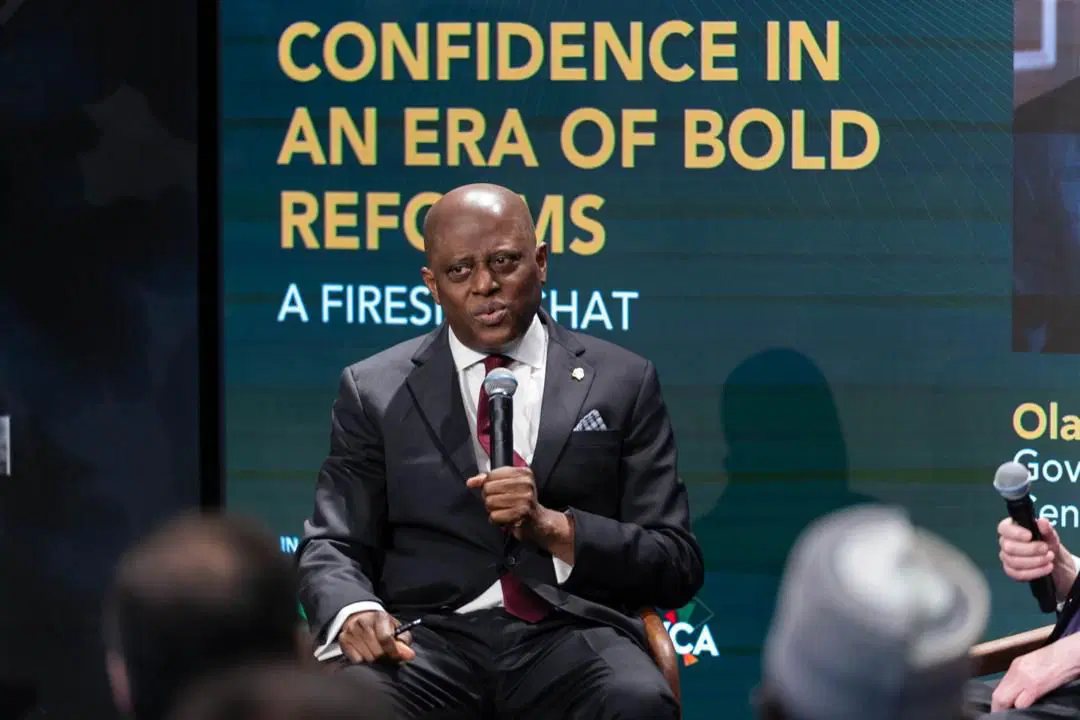
Olayemi Cardoso, Governor of the Central Bank of Nigeria (CBN), has reassured that Nigeria’s economy is well-positioned to withstand potential shocks from the ongoing US-Iran-Israel conflict and its ripple effects on global markets.
Cardoso delivered the remarks during a Distinguished Alumni Lecture at St Gregory’s College, Lagos, noting that geopolitical tensions could trigger higher energy prices, supply chain disruptions, and heightened global investor risk aversion.
Macroeconomic Reforms Bolster Resilience
According to the CBN Governor, reforms implemented over the past two years have strengthened Nigeria’s macroeconomic buffers, allowing the country to navigate external shocks more effectively.
“Today, the global economy faces renewed shocks, including the US–Israel–Iran conflict. These events may push energy prices higher, disrupt supply chains and increase risk aversion among investors. But the macroeconomic reforms and policy buffers we have built over the past two years have placed Nigeria in a far stronger position to navigate these challenges. The storms may come, but our house will stand firm,” he said.
Stronger Forex Market and Investor Confidence
Cardoso highlighted improvements in Nigeria’s foreign exchange market, which now operates with greater liquidity and efficiency, eliminating prior market distortions. He also cited a significant uptick in capital inflows, with Nigeria’s external reserves surpassing $50 billion, the highest in over a decade.
“Market participants can now transact without relying on extraordinary Central Bank interventions,” Cardoso said, adding that the strengthened balance of payments and increased foreign investment have supported economic stability.
Preparing Students for a Digital Economy
Addressing students, the CBN Governor encouraged young Nigerians to develop digital and multidisciplinary skills to thrive in an evolving, technology-driven global economy. He emphasised curiosity, discipline, integrity, and adaptability as key qualities for leadership and success in a complex world.
“Careers of the future will increasingly favour individuals who can adapt to rapidly changing technological environments,” he said.