
Now Reading: Cloud Seeding: Rainmaker Claims It Produced 19 Million Gallons of Water Over Alaska
-
01
Cloud Seeding: Rainmaker Claims It Produced 19 Million Gallons of Water Over Alaska
Cloud Seeding: Rainmaker Claims It Produced 19 Million Gallons of Water Over Alaska

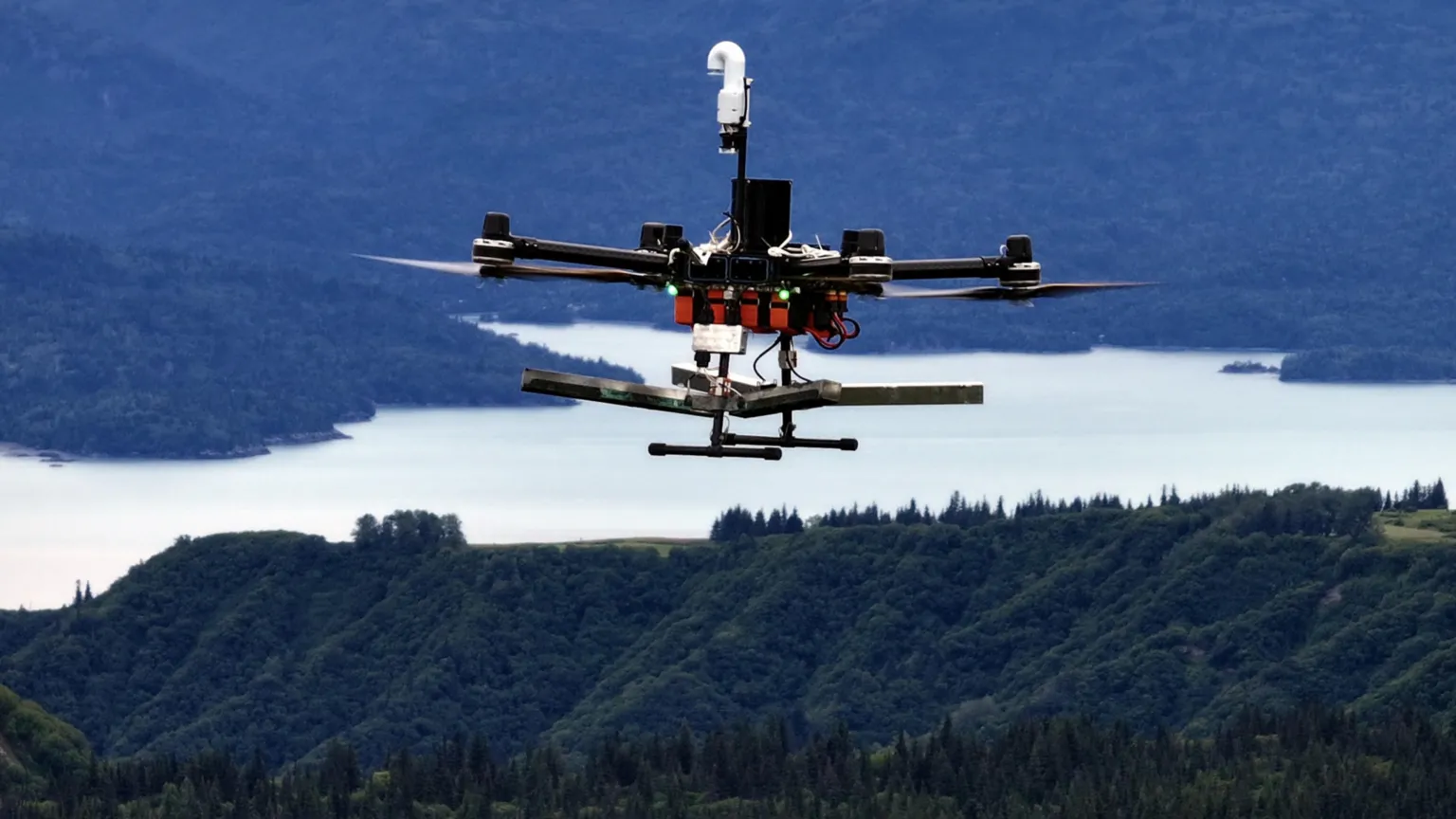
A weather-modification experiment in Homer, Alaska, has renewed debate over the safety, effectiveness and transparency of cloud seeding after residents discovered that a private company had been testing the technology in the area.
Rainmaker, a San Francisco-based start-up, carried out the experiment on August 23 using drones to release silver iodide into clouds. The company says the operation produced an estimated 19 million US gallons of water within three hours.
The experiment came as a surprise to some residents, including Cooper Freeman, Alaska director of the Center for Biological Diversity. Freeman said residents were not adequately informed and questioned whether the silver iodide released into the clouds was monitored after it fell to the ground.
“It doesn’t appear that there was any downstream monitoring to verify that this silver iodide didn’t impact the environment,” Freeman said. He also argued that cloud seeding should not distract from longer-term measures to conserve and manage water supplies.
Cloud seeding has been used for more than 80 years and works by accelerating a natural process inside suitable clouds. Aircraft or drones release substances such as silver iodide, which can help water droplets form ice crystals. As the crystals grow, they may eventually fall as rain or snow, depending on conditions below the cloud.
However, the technology does not create rain from clear skies and depends heavily on the right atmospheric conditions. Rainmaker’s claimed 19 million gallons, for example, would amount to only about 0.01 inches of rainfall across 100 square miles, highlighting the limited scale of individual operations.
The technology is attracting renewed interest as water shortages become a growing concern around the world. The World Meteorological Organization says more than 50 countries are developing weather-modification programmes, while researchers and companies are exploring ways to make cloud seeding more targeted and effective.
Rainmaker founder and CEO Augustus Doricko defended his company’s use of silver iodide, saying each flight releases about 20 grams of the compound across thousands of square kilometres. He said the resulting concentration on the ground would be extremely small and below US regulatory thresholds. The company currently operates in places including Idaho, Utah, Colorado and Jordan.
Cloud seeding dates back to 1946, when researchers at General Electric used dry ice as a seeding agent. Silver iodide later emerged as a more effective material. Researchers estimate that under suitable conditions, cloud seeding can increase precipitation by about 5% to 10%, although results can vary considerably.
Scientists are also exploring alternatives to silver iodide. San Francisco-based Recast Systems is testing a biodegradable protein made from amino acids found in soil. Chief executive Olivia Li says the material could nucleate ice more efficiently than silver iodide, although it remains under testing at Texas A&M University.
With water demand increasing in many regions, researchers expect interest in cloud seeding to grow. But the technology’s future will depend not only on whether it can produce measurable increases in rainfall, but also on stronger evidence about its environmental effects, effectiveness and how communities are informed about experiments conducted above them.