
Now Reading: Dangote Begins Work on $17bn Kenya Refinery, Set to Build East Africa’s Largest Oil Processing PlantARTICLE
-
01
Dangote Begins Work on $17bn Kenya Refinery, Set to Build East Africa’s Largest Oil Processing PlantARTICLE
Dangote Begins Work on $17bn Kenya Refinery, Set to Build East Africa’s Largest Oil Processing PlantARTICLE

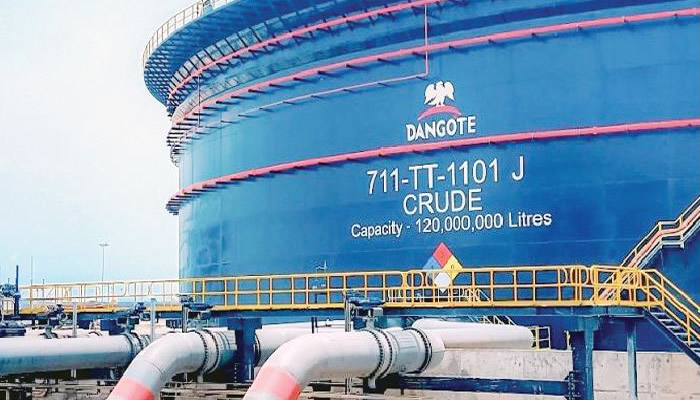
Aliko Dangote has taken a major step in expanding his industrial footprint across Africa, with preliminary work now underway on a proposed $17 billion oil refinery in Kenya that is expected to become the largest refining facility in East Africa.
Dangote Industries Limited confirmed that the project has moved beyond the planning phase, with the refinery site already selected on Lamu Island along Kenya’s coast. Soil testing, engineering studies and design work are currently in progress ahead of full-scale construction of the 700,000-barrels-per-day refinery.
The project, first reported by Reuters and Bloomberg, is expected to be completed within the next three to five years. Once operational, the refinery will supply refined petroleum products to Kenya and neighbouring East African countries, reducing the region’s dependence on imported fuel.
According to Dangote Industries’ Vice President for Oil and Gas, Devakumar Edwin, Kenya was always the preferred location for the investment. He said the choice of Lamu was based on commercial and technical considerations, although specific details were not disclosed.
Bloomberg reported that Dangote personally assured the presidents of Kenya and Uganda that he would establish a refinery in East Africa, replicating the success of the company’s flagship refinery in Lagos. Kenyan President William Ruto had earlier announced that construction would begin this year.
The Kenyan refinery represents Dangote Group’s biggest refining investment outside Nigeria and forms part of a broader strategy to strengthen Africa’s energy security. The company plans to finance the project through internally generated funds, bond issuances and proceeds from its planned initial public offering (IPO). While officials declined to confirm the exact cost, they said it would be comparable to the Lagos refinery, which ultimately exceeded $20 billion before commencing operations in 2024.
At the same time, Dangote Industries is expanding its Nigerian operations by increasing the capacity of the Lagos refinery from 700,000 barrels per day to 1.4 million barrels per day by 2028. Combined with the planned Kenyan facility, the group aims to achieve a total refining capacity of 2.1 million barrels per day, making it one of Africa’s largest refining networks.
The expansion comes as African countries seek to reduce their heavy reliance on imported petroleum products despite being major crude oil producers. According to the African Petroleum Producers’ Organisation (APPO), the continent exports roughly three-quarters of its crude oil while importing about 70 per cent of the refined fuel it consumes. The Kenyan refinery is expected to strengthen regional energy security, reduce foreign exchange pressures, boost intra-African trade and support industrial development across East Africa.