Now Reading: Dangote Explains Why Petrol Remains Expensive Despite Local Refining
-
01
Dangote Explains Why Petrol Remains Expensive Despite Local Refining

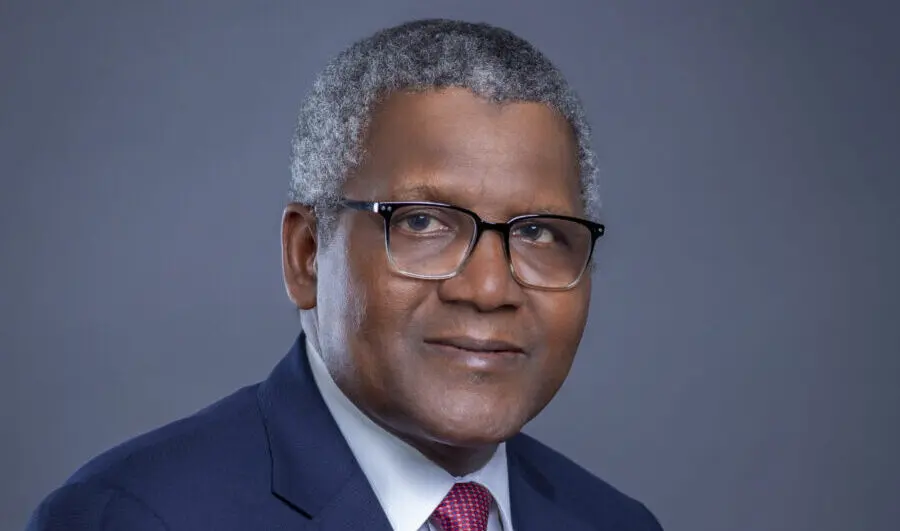
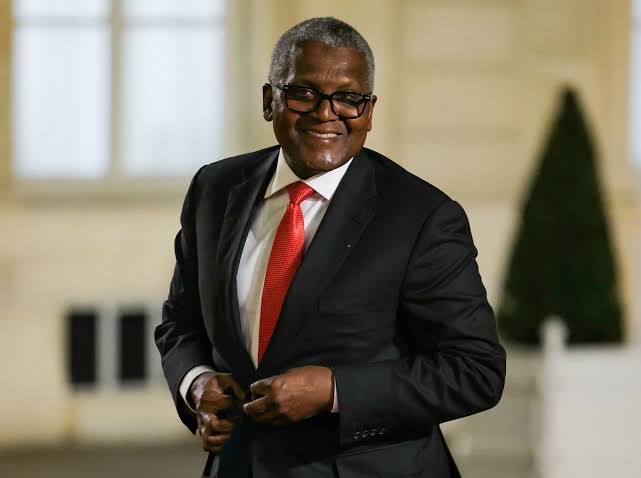
Aliko Dangote, President of Dangote Group, has explained why Nigerians are still paying relatively high prices for petrol despite the commencement of large-scale domestic refining, saying local production does not shield the country completely from global crude oil prices.
Dangote, who spoke in an interview with Arise TV, said the Dangote refinery purchases crude at prevailing international market prices and sometimes pays significant premiums, making it difficult to sell petrol below sustainable market levels.
He said the price of petrol in Nigeria should also be viewed in the context of prices in neighbouring countries, where the product is significantly more expensive.
“There is still a lot of smuggling of the same petrol we are producing to our neighbouring countries because those neighbouring countries are about 30 per cent to 50 per cent more expensive than Nigeria,” Dangote said.
The billionaire disclosed that the refinery bought crude oil for as much as $124 per barrel in May, stressing that the company could not absorb all market-related costs through subsidies.
“We can’t go now and subsidise everything,” he said.
Dangote, however, assured Nigerians that the refinery would continue supplying the domestic market despite market challenges.
“Nigerians don’t need to worry. There will not be any shortage from our own part. There will be no queues, and we’ll make sure we keep satisfying the market despite all odds,” he said.
Dangote criticises 30% interest rates
On Nigeria’s industrialisation prospects, Dangote identified high borrowing costs as one of the major obstacles confronting businesses and new investments.
“It is very difficult to industrialise with interest rates at 30 percent. I can’t see the magician who can actually industrialise a country with 30 per cent interest cost,” he said.
He also called for policies that would protect productive domestic investments, warning that the current business environment could discourage the development of another major refinery in Nigeria.
“Under the current things that are going on, especially downstream, I cannot see any new refinery in our lifetime,” Dangote said.
He argued that government policies should support local industries because businesses create jobs, generate tax revenue and stimulate economic activity.
“If you import, what you are doing is you are importing poverty and exporting jobs that you are supposed to create out of the country,” he said.
Dangote also cited inconsistent government policies and inadequate electricity as challenges facing manufacturers, saying businesses cannot depend on diesel to sustain industrial production.
Dangote speaks on succession
The businessman also addressed questions about succession, saying having a male heir to inherit his business empire was not a priority.
Dangote said his three daughters — Halima, Fatima and Mariya — were capable of leading the Dangote Group, adding that he could see one of them eventually taking charge of the conglomerate.
“I think, yes, I can see one of them. I’ve been watching all of them, so I can definitely see one of the three that can actually lead,” he said.
He said his daughters were involved in the family business because of their interest rather than pressure from him.
“They are very, very interested in the business. I’m not forcing them to come and be part of this business, no. They are very interested, and they enjoy it,” Dangote said.
He added that he believed the three women could potentially take the company to a higher level because of their education and creativity.
“Most likely, they might be even taking the company to the next level,” he said, adding that he considered all three capable.
Dangote also said his succession plans would prioritise professional management and strong corporate governance rather than simply handing the company to a family member.
“I want this company to be run professionally. I want to have the highest level of governance,” he said.
He cited companies such as Microsoft and Apple as examples of businesses that continued to develop beyond their founders, saying he wanted safeguards that would prevent any family member from undermining the group.
For Dangote, the broader objective remains contributing to Africa’s industrial development. He said attracting large-scale foreign investment would be important to expanding productive capacity across the continent.
“What I want to leave as a legacy is to industrialise Africa,” he said.