Now Reading: Ethiopia Election 2026: Abiy Ahmed Faces Criticism as Ethnic Conflict, Crackdowns Shadow Vote
-
01
Ethiopia Election 2026: Abiy Ahmed Faces Criticism as Ethnic Conflict, Crackdowns Shadow Vote
Ethiopia Election 2026: Abiy Ahmed Faces Criticism as Ethnic Conflict, Crackdowns Shadow Vote

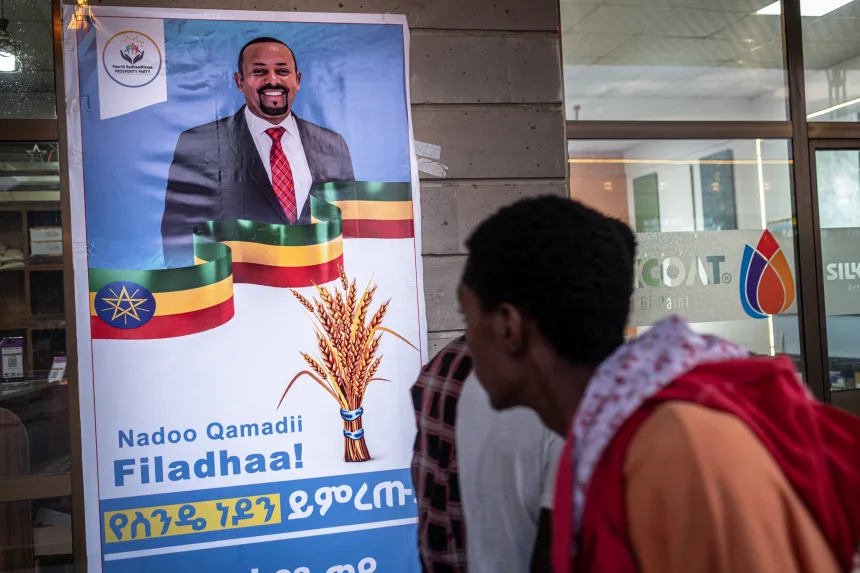
Ethiopia heads into a crucial national election under a cloud of political tension, ethnic violence, and growing questions over democratic credibility, as Prime Minister Abiy Ahmed confronts the legacy of reforms that once earned him global praise.
Abiy’s rise to power was initially marked by sweeping political changes, including the release of political prisoners and easing restrictions on the press. Those early steps helped earn him the Nobel Peace Prize and positioned him as a reformer capable of steering Ethiopia toward democratic renewal.
That optimism has largely faded. Ethiopia, a nation of more than 135 million people, is now deeply fractured, with reports of ethnic violence, restrictions on dissent, and widespread displacement shaping daily life in several regions.
The capital, Addis Ababa, presents a contrasting image. New infrastructure projects, expanding roads, and a growing tech-driven economy project a sense of progress. But beyond the capital, regions such as Tigray, Amhara, and Oromia continue to experience insecurity and armed conflict.
Analysts link the current instability to Abiy’s restructuring of Ethiopia’s political system, particularly the dissolution of the Ethiopian People’s Revolutionary Democratic Front (EPRDF) in 2019 and the creation of the Prosperity Party, a centralized national political structure. Critics argue that the move weakened regional autonomy and intensified tensions in ethnically diverse regions.
The conflict escalated further when Tigray’s leadership broke away from federal decisions, triggering a devastating civil war in 2020. The war is estimated to have killed hundreds of thousands of people and displaced millions, leaving long-lasting scars across the country.
Although a peace agreement brokered by the African Union in 2022 formally ended the fighting, instability has persisted. Armed groups remain active in parts of northern and western Ethiopia, while accusations of arbitrary arrests and media restrictions continue to surface.
As the election approaches, opposition groups say they face intimidation, administrative hurdles, and limited political space. Some candidates have already reported arrests of supporters and restrictions on campaigning in certain regions.
The National Electoral Board has also excluded conflict-affected areas from participating fully in the vote, raising concerns over fairness and representation. Critics argue this weakens the legitimacy of the process before voting even begins.
Despite these challenges, the ruling Prosperity Party is widely expected to dominate the parliamentary race, benefiting from a fragmented opposition and limited competition in many constituencies. However, some analysts note that the party’s decision not to contest several seats may be aimed at improving perceptions of openness.
For many observers, the election reflects a divided nation—one where rapid modernization in urban centres contrasts sharply with ongoing insecurity in rural regions.
As Ethiopians head to the polls, the central question remains whether the country is moving toward political stability or deeper fragmentation under a leader once hailed as a symbol of hope.