Now Reading: FG Disappointed as COP31 Climate Talks Collapse Without Global Agreement
-
01
FG Disappointed as COP31 Climate Talks Collapse Without Global Agreement
FG Disappointed as COP31 Climate Talks Collapse Without Global Agreement

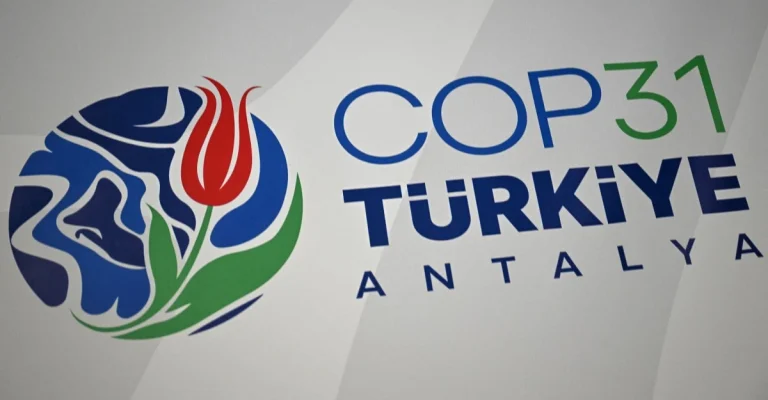
The Federal Government has expressed disappointment following the collapse of climate negotiations at the 31st United Nations Climate Change Conference (COP31) in Antalya, Türkiye, where nearly 200 countries failed to reach an overarching political agreement after almost 50 hours of overtime discussions.
Despite the breakdown, the government has assured Nigerians that the failure to secure a global deal would not stop the country from implementing its domestic climate programmes.
The Director-General of the National Council on Climate Change, Omotenioye Majekodunmi, gave the assurance in a statement released on Sunday, saying Nigeria would continue pursuing its climate commitments under the Nationally Determined Contribution 3.0 (NDC 3.0).
She said the country would also strengthen climate governance, attract investment into the energy transition and maintain efforts towards meeting its obligations under the Paris Agreement.
“COP31’s inability to reach consensus on an overarching political outcome is disappointing and underscores the continuing challenges facing international climate cooperation. However, the absence of a new political agreement does not diminish the urgency of climate action, nor does it invalidate the commitments already undertaken under the Paris Agreement,” Majekodunmi said.
She added that Nigeria remained focused on translating its climate commitments into practical results.
“For Nigeria, our focus remains firmly on implementation. We will continue advancing our NDC 3.0, strengthening climate governance, mobilising investment and pursuing an orderly, just and nationally determined energy transition,” she stated.
Majekodunmi said the negotiations had highlighted the need to align climate targets with adequate financing and realistic implementation plans, particularly for developing countries facing different economic challenges.
She stressed that Nigeria’s climate progress should be assessed by its impact on jobs, businesses, access to energy and the livelihoods of citizens.
The COP31 summit, which opened on November 9, 2026, was scheduled to end on November 20 but concluded on Sunday without adopting a final agreement.
The collapse followed nearly two weeks of negotiations and exposed deep divisions among participating countries over fossil fuel phase-out, climate finance, adaptation funding and the transition to cleaner energy.
The conference also became the longest United Nations climate summit on record, surpassing COP25 in Madrid, Spain, in 2019, which continued for about 44 hours beyond its scheduled closing time.
COP31 President Murat Kurum confirmed during Sunday’s closing plenary that countries had failed to reach an agreement on the final draft.
He said disagreements over specific wording had stalled progress and urged governments to work together towards shared climate goals.
“As the Presidency, we have worked with a focus on results from day one. Getting hung up on a single word and stalling the process means dashing the hopes of people expecting good news from us. A system that cannot make decisions benefits no one,” Kurum said.
The negotiations chair, Chris Bowen, who is also Australia’s climate minister, acknowledged that efforts to secure consensus among nearly 200 countries had failed because of what he described as “unbridgeable red lines.”
“Unfortunately, we were unable to reach agreement on a cover decision… And that’s disappointing, very disappointing,” Bowen said.
A major point of disagreement was whether the final agreement should contain a clear commitment to transitioning away from fossil fuels. Countries also disagreed over adaptation finance and the proposed role of carbon capture technologies in addressing climate change.
The proposed adaptation finance target of $120bn was also removed from the final draft, while delegates failed to agree on a concrete plan to raise the resources needed by countries vulnerable to climate impacts.
The failure drew criticism from United Nations Secretary-General António Guterres, who said he was deeply disappointed that governments could not agree on a common political position.
“I am deeply disappointed that COP31 has ended without consensus on an overarching outcome. I share the very profound frustration of all those who expected governments to rise to the moment the climate crisis demands,” Guterres said.
He warned that the absence of an agreement would not reduce the urgency of the climate crisis, pointing to rising global temperatures, intensifying extreme weather events and dangerously high emissions.
“There may be no consensus in the negotiating room. There is no ambiguity in the science. Temperatures keep shattering records. Climate extremes keep intensifying. Emissions remain far too high. And every delay makes our task harder and more costly,” he added.
Guterres also criticised continued dependence on coal, oil and gas, describing fossil fuels as major drivers of climate change and warning that reliance on them could expose economies to price shocks and weaken energy security.
“It certainly fell short today,” United Nations climate chief Simon Stiell said, describing the progress made during the negotiations as limited and warning that the world could not afford another failed summit.
The breakdown has revived concerns about the effectiveness of international climate diplomacy, particularly as governments continue to disagree over how to balance emissions reductions with economic development and the financial needs of poorer nations.
Attention has now shifted to COP32, scheduled to hold in Addis Ababa, Ethiopia, next year, where countries are expected to revisit unresolved climate commitments.
The setback comes after COP28 in Dubai in 2023, when countries agreed to transition away from fossil fuels in a just, orderly and equitable manner. COP30 in Belém, Brazil, also provided a mandate for developing a just transition mechanism, which campaigners had hoped would receive stronger institutional backing at COP31.
However, the Climate Action Network maintained that the push for climate justice would continue, urging governments to ensure that the next summit delivers concrete financing, adaptation support and a fair energy transition for developing countries.