Now Reading: FG Proposes ₦84.48bn to End Child Marriage in Nigeria by 2030
-
01
FG Proposes ₦84.48bn to End Child Marriage in Nigeria by 2030

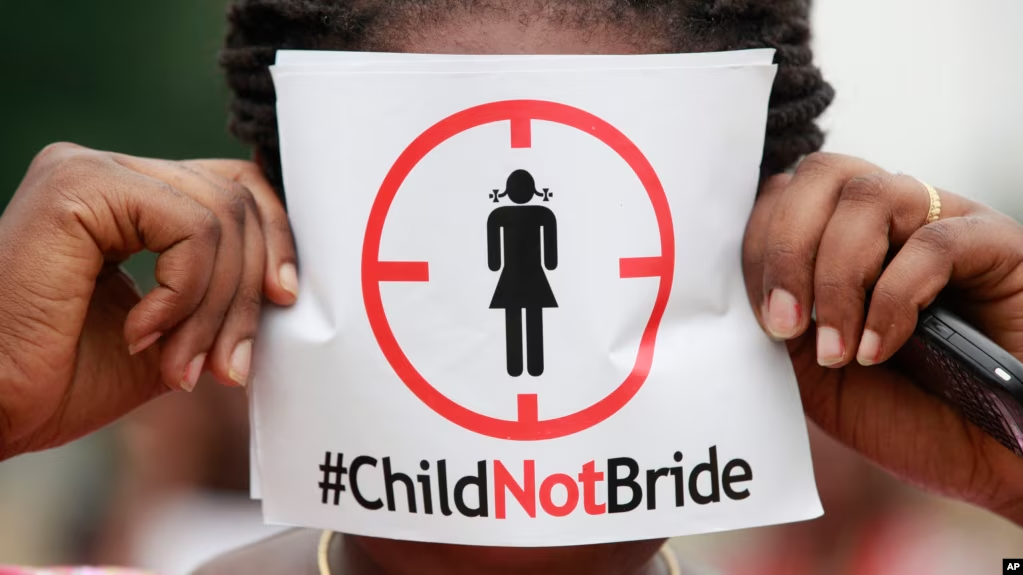
The Federal Government has proposed ₦84.48 billion to implement a five-year national strategy aimed at ending child marriage in Nigeria by 2030, with interventions targeting poverty, insecurity, school exclusion and harmful cultural practices.
The Minister of Women Affairs and Social Development, Imaan Sulaiman-Ibrahim, announced the proposed federal contribution on Tuesday night during the 2026 International Day of the Girl Child commemoration in Kano. The event also featured the launch of the North-West strategy to end child marriage.
The proposed funding forms part of the National Strategy and Costed Action Plan on Ending Child Marriage in Nigeria, 2025–2030. The plan is intended to provide a framework for financing, implementation, monitoring and accountability across the country.
Figures presented at the event indicated that 17.5 million Nigerian girls and women had been married before the age of 18, while 6.5 million were married before turning 15. The figures highlight the scale of the challenge facing policymakers as Nigeria seeks to protect girls, improve access to education and prevent early marriage.
According to a presentation by Musa Aliyu-Musa, Director of Economic Services at the ministry, implementing the strategy over five years is estimated to cost ₦140.802 billion.
The Federal Government is expected to provide 60 per cent of the total, amounting to ₦84.481 billion, while development partners are expected to contribute the remaining 40 per cent, estimated at ₦56.320 billion.
The proposed financing arrangement places a substantial responsibility on the government to sustain funding for interventions across the country. It also highlights the need to secure the expected contributions from development partners to complement domestic resources.
However, the strategy’s impact will depend not only on the proposed budget but also on the timely release of funds, clearly assigned responsibilities and transparent monitoring of spending and outcomes.
The plan identifies six areas of intervention, including enforcement of legal protections, changing harmful social and cultural norms, empowering adolescents and communities, strengthening child protection services, and improving monitoring and data collection. It also seeks to improve coordination among government agencies, traditional and religious leaders, civil society organisations and development partners.
Sulaiman-Ibrahim said Kano was strategically positioned to serve as a model for nationwide implementation because of its influence across Northern Nigeria. She highlighted initiatives supporting girls’ education in the state, including scholarships, free bus transportation for female students and the adoption of school re-entry guidelines for married adolescents.
The minister also said the Federal Government was strengthening the implementation of the Child Rights Act while working with state governments to coordinate efforts against child marriage.
Earlier, the Permanent Secretary of the Kano State Ministry of Women Affairs, Children and Persons with Special Needs, Aishatu Abdulkadir, said the state was implementing programmes to support children’s development and expand girls’ access to education.
She identified the Adolescent Girls Initiative for Learning and Empowerment (AGILE) Project, the Girl Child Initiative and free and compulsory education policies as measures intended to improve educational opportunities.
Abdulkadir urged parents, community leaders, religious institutions and other stakeholders to work together to keep girls in school and protect them from exploitation. She also said preventing early marriage was consistent with the Islamic principle of Maslaha, which emphasises public interest and the prevention of harm.
The event featured presentations on ending child marriage and implementing the national strategy, alongside goodwill messages from Girls Not Brides, Plan International, ActionAid and Girl Effect. The organisations called for sustained domestic financing, stronger coordination among government agencies and wider access to safe and inclusive education.
As Nigeria works towards the 2030 target, the proposed ₦84.48 billion federal contribution represents a significant planned investment in addressing child marriage. Whether the strategy achieves its objectives will depend on securing the funds, enforcing legal protections, improving educational access and involving communities in tackling the factors that sustain the practice.