
Now Reading: Fibroid Treatment: How Sound Waves Are Giving Nigerian Women an Alternative to Surgery
-
01
Fibroid Treatment: How Sound Waves Are Giving Nigerian Women an Alternative to Surgery
Fibroid Treatment: How Sound Waves Are Giving Nigerian Women an Alternative to Surgery

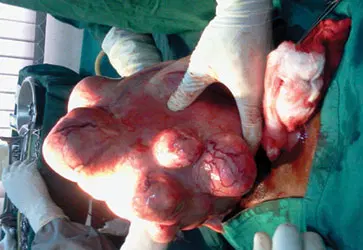
For generations, the word fibroid has been associated with heavy menstrual bleeding, severe pain, abdominal swelling, fertility concerns and, for many Nigerian women, the prospect of surgery.
But advances in medical technology are providing some women with an alternative. Instead of conventional surgery to remove fibroids, doctors can use concentrated sound waves to target and destroy fibroid tissue without making a surgical incision.
The technology, known as High-Intensity Focused Ultrasound (HIFU), is gaining attention in Nigeria as another treatment option for selected women living with symptomatic uterine fibroids.
Traditionally, treatment for troublesome fibroids has included procedures such as myomectomy, which removes the fibroids, or hysterectomy, which removes the uterus. Depending on the procedure, women may face hospital admission, anaesthesia, recovery time and other considerations, including the impact treatment could have on future fertility.
One Nigerian woman, Patricia Omoke, said her experience with fibroids began with increasingly painful periods, heavy bleeding and persistent back pain. A scan in 2018 confirmed that she had uterine fibroids.
Omoke said several doctors recommended surgery, but fear of undergoing an operation made her continue searching for alternatives. She eventually discovered HIFU through a social media campaign by the Fibroid Care Centre at Nordica in Lagos offering free treatment.
After being shortlisted, she underwent the procedure on June 25, 2021, becoming the first beneficiary of HIFU treatment at the centre.
“I was anxious and scared, being the first person, but once I signed the consent form, I just put my trust in God and went through the usual process of getting prepared,” she recalled.
According to Omoke, the procedure lasted about one hour and five minutes and did not involve conventional cutting or scraping. She said she noticed an improvement in her persistent back pain immediately after the treatment and has not experienced complications.
However, medical experts stress that HIFU is not suitable for every woman with fibroids. Treatment decisions depend on factors such as the location, size and number of fibroids, symptoms and a woman’s individual medical circumstances.
Dr Abayomi Ajayi, Medical Director of Nordica Fertility Centre and the Fibroid Care Centre at Nordica, said his interest in non-surgical fibroid treatment developed years before HIFU became available to him.
Ajayi recalled the death of a journalist following fibroid surgery as one of the experiences that motivated his interest in finding alternatives to conventional surgery.
“When finally, we saw HIFU, we took it to heart, and we have not had reason to regret because a lot of women have embraced it and we have many testimonials,” he said.
Figures provided by HIFU Medical and Nordica indicate that 965 women have undergone fibroid treatment using HIFU at their centres in Lagos and Abuja, while 30 pregnancies have reportedly been recorded following treatment.
Fibroids are non-cancerous growths that develop in or around the uterus and are common among women of reproductive age. They can cause heavy or prolonged menstrual bleeding, pelvic pressure, pain and, in some cases, fertility difficulties.
Beyond the physical symptoms, fibroids can affect women’s work, finances, relationships and plans for motherhood. For many patients, the challenge is finding an effective treatment while considering recovery time and, where relevant, preserving the uterus and future fertility.
HIFU therefore represents an additional option for appropriately selected patients, but women experiencing persistent heavy bleeding, pelvic pain, abdominal swelling or fertility concerns should seek assessment from a qualified healthcare professional before deciding on any treatment.