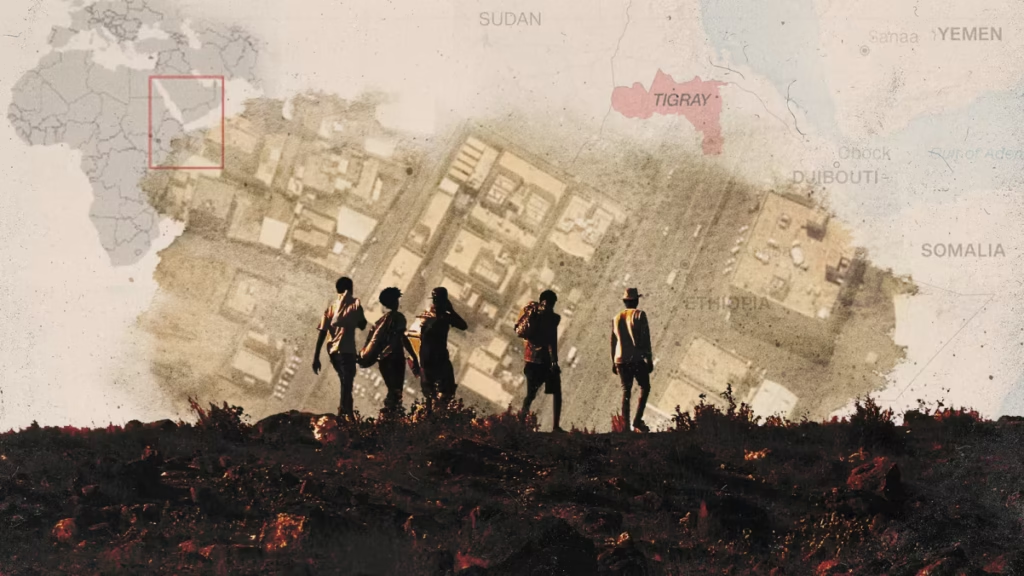
Now Reading: Inside Ethiopia’s Ancient Bond With Hyenas Amid New Scientific Discovery
-
01
Inside Ethiopia’s Ancient Bond With Hyenas Amid New Scientific Discovery
Inside Ethiopia’s Ancient Bond With Hyenas Amid New Scientific Discovery

Every night in the ancient walled city of Harar in eastern Ethiopia, Abbas Yusuf crosses the city gates carrying strips of meat for some unusual nighttime visitors — wild spotted hyenas.
Calling them by names like Kamariya, Chaltu and Jarjaraa, Abbas continues a centuries-old tradition that has made Harar famous as the home of Ethiopia’s “hyena men.”
One by one, the animals emerge from the darkness to feed calmly from sticks held by Abbas, sometimes even taking meat directly from his mouth in a carefully practiced ritual passed down through generations.
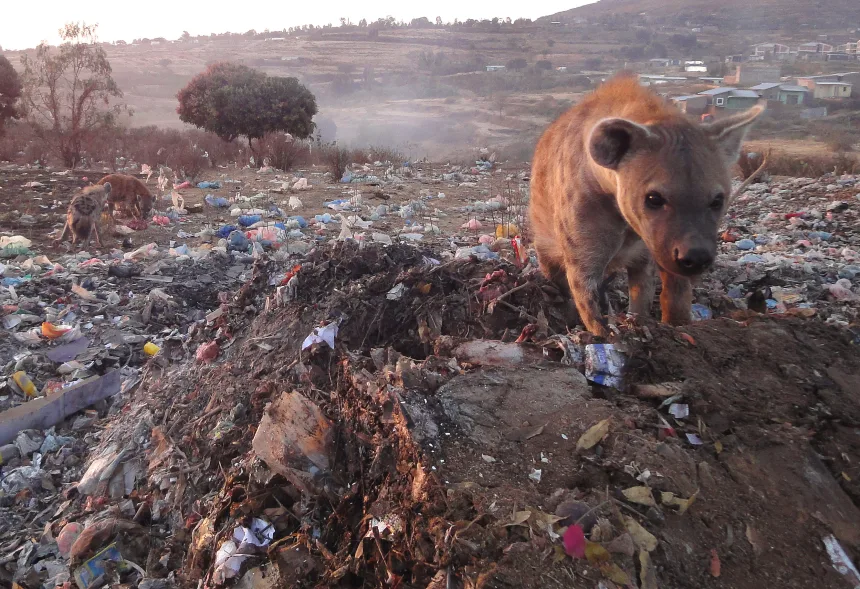
While hyenas are widely feared across much of the world for their haunting laughter and scavenging habits, researchers now believe the animals may play a crucial role in improving sanitation, public health and environmental protection in Ethiopian cities.
Wildlife ecology expert Gidey Yirga, who has spent over 15 years studying urban hyenas in Ethiopia, said the animals consume thousands of tons of organic waste annually.
Research conducted by Mekelle University and the University of Sheffield found that urban scavengers, especially spotted hyenas, process nearly 5,000 metric tons of waste yearly in the city of Mekelle.
According to researchers, the scavenging activities help reduce waste disposal costs, cut carbon emissions from decomposing organic matter and limit the spread of diseases such as anthrax and bovine tuberculosis.
Scientists noted that spotted hyenas perform nearly 90 percent of the waste-clearing work in some urban areas.
Residents in several Ethiopian cities reportedly see the animals as beneficial because they help clean streets and landfills by consuming discarded meat and waste materials.
However, perceptions differ across regions.
In Harar, hyenas are viewed not only as ecological cleaners but also as spiritual protectors believed to chase away evil spirits known as jinn in Islamic tradition.
The ancient city, recognised as a UNESCO World Heritage Site, has reportedly coexisted with hyenas for more than 500 years.
Openings built into Harar’s centuries-old walls, locally called “waraba nudul” or hyena holes, allow the animals to move freely into the city at night in search of food.
Anthropologist Marcus Baynes-Rock, who studied the relationship between humans and hyenas in Harar, said the animals gradually became accustomed to the local feeders over decades of interaction.
He explained that the hyenas recognise individual humans and even respond to the names given to them by feeders.
Despite their ecological value, conservationists warned that hyena populations across Africa are declining due to habitat destruction, retaliation killings and expanding human settlements.
The International Union for Conservation of Nature has identified negative public perception as one of the biggest threats to hyena survival.
Researchers believe changing the global image of hyenas from dangerous scavengers to valuable ecological partners could help protect the species while improving waste management in rapidly growing African cities.