Now Reading: Iran Defies US Naval Blockade, Insists Food Supply Remains Stable Amid Rising Tensions
-
01
Iran Defies US Naval Blockade, Insists Food Supply Remains Stable Amid Rising Tensions
Iran Defies US Naval Blockade, Insists Food Supply Remains Stable Amid Rising Tensions

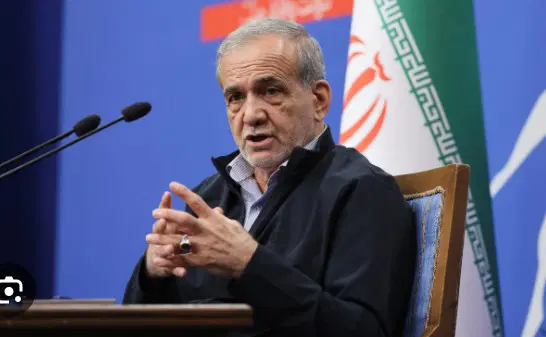
A new flashpoint is emerging in the standoff between United States and Iran, as Tehran pushes back against mounting pressure from a US-imposed naval blockade.
Iranian authorities say the strategy is failing to achieve its core objective—disrupting the country’s supply chain—particularly when it comes to food security.
Speaking publicly, Agriculture Minister Gholamreza Nouri insisted that Iran is not facing shortages of essential goods, despite restrictions targeting its maritime access.
He stated that roughly 85 percent of the country’s food and agricultural needs are met through domestic production, limiting the immediate impact of external economic pressure.
For the remaining imports, officials say alternative routes remain open. Iran continues to rely on land borders to secure supplies, effectively bypassing restrictions imposed at sea.
The blockade, introduced by Washington on April 13, came shortly after a fragile ceasefire paused escalating hostilities between both countries. Tehran has since condemned the move, describing it as a breach of that agreement.
Traditionally, naval blockades are designed to squeeze economies by cutting off critical imports and weakening internal stability. But Iran’s response suggests that the intended pressure may not be taking hold—at least for now.
Still, analysts warn that early resilience does not always translate into long-term stability. Supply chains can absorb shocks temporarily, but sustained restrictions often produce delayed economic strain.
The unfolding situation raises a critical question for both sides: whether Iran’s current position reflects genuine durability—or simply a short window before deeper economic consequences begin to surface.