
Now Reading: Kaduna Strengthens Medical Supplies Distribution Through Data-Driven Reviews
-
01
Kaduna Strengthens Medical Supplies Distribution Through Data-Driven Reviews
Kaduna Strengthens Medical Supplies Distribution Through Data-Driven Reviews

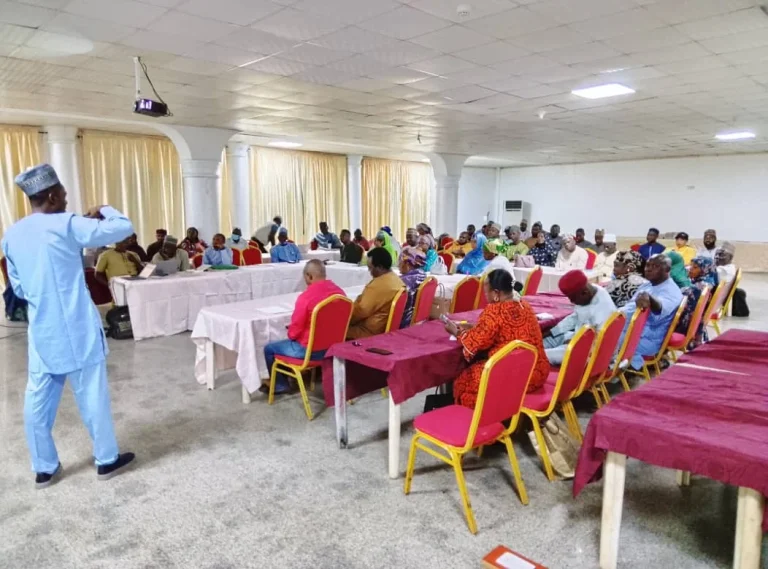
The Kaduna State Health Supplies Management Agency (KADHSMA), in collaboration with Capacity for Sustainable Development (C4SD), has intensified efforts to improve the distribution of medical commodities through quarterly reviews of supply chain performance and data.
The initiative, tagged ‘Data to Action’, is designed to strengthen the use of reliable supply chain information in decision-making, improve the timely delivery of essential medicines and expand access to quality healthcare across the state.
Speaking at a joint review meeting organised by C4SD in Kaduna on Wednesday, the Executive Secretary of KADHSMA, Aisha Tukur, said the exercise provided an opportunity to assess the agency’s performance, identify operational challenges and develop strategies to improve medical supplies distribution.
Tukur explained that the agency was responsible for procuring, warehousing and distributing medical products, including commodities donated by development partners, to healthcare facilities through its integrated Last-Mile Distribution system.
She said the agency regularly reviewed its operations to ensure that medical commodities were stored and delivered to health facilities at the lowest possible cost.
According to her, the assessment also examined how efficiently healthcare facilities used supplied commodities, whether cost-recovery targets were being achieved and how effectively the facilities were performing.
Tukur listed essential medicines, family planning supplies, maternal, newborn and child health products, nutrition commodities and vaccines among the items handled by the agency.
She also disclosed that drones were being used to transport some medical commodities, particularly vaccines and essential medicines, to healthcare facilities, including locations around Pambegua in Kaduna State.
The C4SD Team Lead, Edmond Dambu, said the meeting reviewed supply chain performance data covering the preceding three months to identify areas requiring urgent attention.
He explained that the November review focused on records from July to September 2026, while the next assessment was scheduled for January 2027, following the collection and analysis of fourth-quarter data covering October to December.
Dambu said the exercise was intended to establish a regular performance monitoring system that would enable stakeholders to track progress, identify weaknesses and implement corrective measures.
He noted that the assessment particularly focused on the integrated Last-Mile Distribution system, which monitors the movement of medical commodities from the central warehouse to healthcare facilities and uses feedback from the facilities to guide subsequent deliveries.
According to him, Kaduna’s supported public healthcare network comprises more than 1,000 facilities, including about 33 secondary general hospitals and over 1,036 primary healthcare centres.
Also speaking, the Director of Health Supplies, Nafisatu Abubakar, said the review was important for ensuring that programme data informed decisions and improved healthcare delivery across the state.
She identified poor network connectivity, insecurity and difficulties accessing remote health facilities as some of the challenges affecting the timely transmission of data.
Despite these difficulties, Abubakar commended health workers for generating information through their routine activities and urged them to remain committed to their responsibilities.
A consultant with the Kaizen Institute, Taiwo Peter, called on stakeholders to move beyond collecting and analysing logistics data to implementing practical measures that would improve the availability and distribution of medical commodities.
Issues raised during the meeting included irregular supplies of medical commodities, banking challenges, low patronage and concerns about the reliability of data submitted by healthcare facilities.
Meanwhile, the Director of Pharmaceutical Services at the Kaduna State Ministry of Health, Peter Dawa, explained that the Drug Revolving Fund (DRF) scheme was established to sustain medicine supplies and ensure access to quality drugs at affordable prices.
Speaking in an interview with the News Agency of Nigeria, Dawa said the scheme allows healthcare facilities to purchase medical commodities from KADHSMA, sell them to patients and return the capital to the system for the continuous replenishment of supplies.
He maintained that medicines distributed through the agency were of high quality because they were sourced directly from manufacturers, a process he said strengthened quality assurance.
Dawa added that the Drug Revolving Fund Steering Committee was the highest supervisory body overseeing the scheme. The committee is chaired by the Commissioner for Health, Hajiya Umma Ahmad, and includes other commissioners whose involvement, he said, helps ensure compliance with its decisions.