Now Reading: Lagos Life Creator Vatar Raises $500,000 at $10m Valuation as Game Hits 4.3 Million Users
-
01
Lagos Life Creator Vatar Raises $500,000 at $10m Valuation as Game Hits 4.3 Million Users
Lagos Life Creator Vatar Raises $500,000 at $10m Valuation as Game Hits 4.3 Million Users

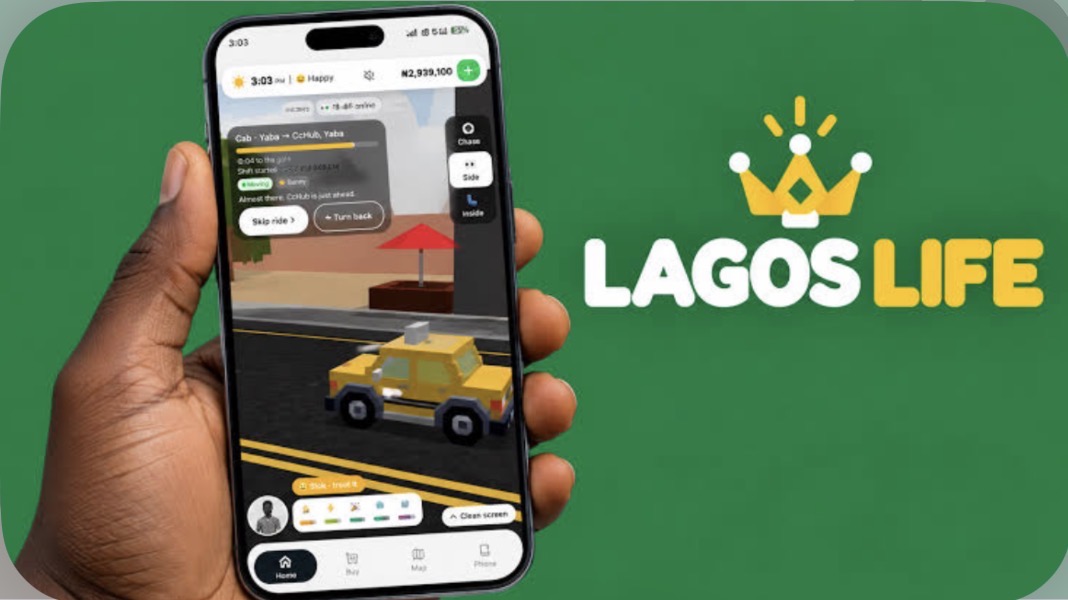
Vatar Inc., the Nigerian startup behind the viral browser game Lagos Life, has raised $500,000 in an angel funding round at a reported valuation of $10 million, following a surge in users since the game launched on October 1, 2026.
The funding attracted prominent Nigerian technology entrepreneurs, including Flutterwave Chief Executive Officer Olugbenga “GB” Agboola, who invested through his fund, Resilience17. Other investors included Oo Nwoye, Terra Industries CEO Nathan Nwachuku and Mono CEO Abdulhamid Hassan.
Vatar co-founder and Chief Executive Officer Shalom Rayhamen said the funding round was completed in a single day as the company sought to secure investment and concentrate on improving the product during a period of rapid growth.
“We built something people love that is growing very fast, so a lot of investors wanted to be involved,” she said.
Lagos Life has attracted millions of users since its launch, building on the popularity of Lagos Run, a Nigerian browser game in which players drive a danfo bus through the busy streets of Lagos.
Rayhamen said she discovered Lagos Run on X before developing Lagos Life, which allows users to create virtual characters and navigate a digital version of Nigerian urban life. Lagos Run, created by Opeyemi Adeniran, reportedly attracted more than 140,000 players in its first week, helping inspire a wave of Nigerian-themed browser games.
By Thursday evening, Lagos Life had reached 4.3 million users across 15 countries, according to Rayhamen. More than 100,000 people were playing at the time, while peak concurrent users had exceeded 200,000.
Although Nigeria accounts for a significant share of its audience, the game has also attracted players from the United States, the United Kingdom, Ghana, Canada and the Netherlands.
Vatar was co-founded on October 6 by Rayhamen, Chief Product Officer Owen Rayhamen and Chief Business Development Officer Anderson Oriahi. The company plans to use the new funding for product development, marketing and recruitment as it seeks to expand its audience.
“We can still reach more people,” Shalom Rayhamen said, noting that the current user base represents only a fraction of Nigeria’s population.
How Lagos Life Works
Lagos Life is a free browser-based simulation game that lets players create characters, find jobs, earn virtual naira, pay rent and interact with other users in a shared digital city.
Players can purchase generators to cope with simulated power outages, ride danfo buses and participate in a virtual political system where they vote for a governor and commissioners. The game also features recognisable Nigerian locations and businesses, including Quilox nightclub and Amala Shitta, while its in-game clock follows real time in Lagos.
At the start, players choose between two profiles: “Nepo”, representing wealth and connections, or “Lapo”, referring to microfinance loans and a more financially challenging starting point.
Rayhamen said the feature was introduced in response to player requests. However, some users have criticised it over concerns that it could reinforce class divisions. She said the intention was not to promote classism and acknowledged that players could interpret new features differently.
Users have also requested additional activities, including cooking, starting families and sending children to school. Rayhamen said the level of social interaction among players had exceeded her initial expectations.
The growing user base has also raised questions about moderation and online safety. Vatar says it has introduced age-verification measures, reporting and blocking tools, as well as systems for screening messages.
“We screen and censor messages,” Rayhamen said, adding that safeguards had been introduced to protect users.
Business Model and Revenue
Despite the challenges of monetising digital games in Nigeria, Vatar has developed several potential revenue streams while keeping Lagos Life free to access.
Businesses can rent billboards and other advertising spaces in the virtual city, while musicians pay to have their songs featured in the game’s clubs. Food delivery company Chowdeck has also partnered with Vatar, allowing players to access its service through virtual phones within the game.
Other revenue sources include advertising, corporate partnerships, music promotion, streaming football matches and selling virtual currency to players seeking additional funds for in-game activities.
Rayhamen said players were often willing to pay for advantages within the game.
Vatar has reported earning more than $170,000 since launch, up from approximately $46,900 generated during its first four days, based on earlier figures shared by Rayhamen on X. Payments are processed through Flutterwave.
However, Rayhamen did not disclose the company’s operating costs or confirm whether the business was profitable, noting that maintaining the platform required substantial investment in infrastructure.
Developed Overnight With AI Assistance
Rayhamen said she began developing Lagos Life at about 9 p.m. on September 30 and worked until 5 a.m. the following morning before taking a short nap. She released the game at approximately 7 a.m. on October 1, Nigeria’s Independence Day.
Her initial work focused on building the virtual city, designing avatars and defining the activities available to players. She also used artificial intelligence tools through Anthropic’s application programming interface to support research and coding.
A software developer with nearly a decade of experience in JavaScript for web and mobile applications, Rayhamen described herself as an advocate for using AI to improve productivity.
“I’m pro AI, I know how to use AI to my advantage,” she said.
She also developed the game while caring for her four-month-old baby, describing the achievement as a personal source of pride and expressing hope that her experience would encourage other nursing mothers to pursue their professional ambitions.
Rayhamen cited The Sims 3, which she enjoyed as a child, and Lagos Run as major inspirations for Lagos Life. Since launch, she has continued updating the game to cope with rising traffic.
The company also uses AI agents to gather feedback from social media and organise player requests into categories such as bug reports, urgent fixes and feature suggestions. Although running these systems can be expensive, Rayhamen said they help the team prioritise improvements.
Expansion Beyond Lagos
Vatar expanded Lagos Life beyond its original setting by adding Port Harcourt, the Niger Delta’s major oil-producing hub, around October 6.
Rayhamen declined to reveal the next cities or countries planned for the game, saying she wanted to maintain excitement around future updates.
The success of Lagos Life has also inspired other projects, including PH Lifestyle, based on Port Harcourt, and London Red Bus, which draws inspiration from Lagos Run.
While welcoming the growing interest in game development, Rayhamen criticised developers who rely on AI primarily to copy existing ideas, urging them to focus on originality and creativity.
She said Vatar intended to introduce features beyond those already requested by players as the initial excitement surrounding the game begins to settle.
“When they get used to it, then we blow their minds,” she said.