Now Reading: Nigeria Must Invest More in Peacebuilding to Prevent Costly Conflicts — IPCR DG
-
01
Nigeria Must Invest More in Peacebuilding to Prevent Costly Conflicts — IPCR DG
Nigeria Must Invest More in Peacebuilding to Prevent Costly Conflicts — IPCR DG


Nigeria must increase its investment in peacebuilding and conflict prevention because the cost of allowing violence to escalate is far greater than the resources needed to sustain peace, the Director-General of the Institute for Peace and Conflict Resolution (IPCR), Dr Joseph Ochogwu, has warned.
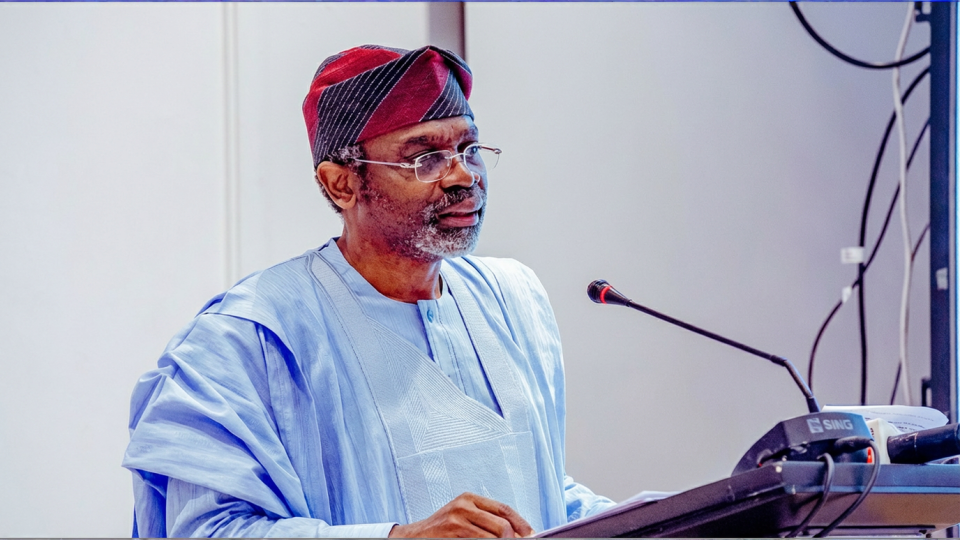
Ochogwu made the call on Thursday in Abuja while delivering a keynote lecture titled “Investing in Peace: A Collective Responsibility for Everyone” at the 2026 Peace and Dialogue Awards organised by the Ufuk Dialogue Foundation in partnership with the IPCR.
He urged Nigeria and other countries to shift from responding to conflicts after they erupt to investing more in prevention, early warning systems, peace education, youth employment, interfaith literacy, justice reform and community mediation.
“To invest in peace is to move from rhetoric to resources, from reaction to prevention,” Ochogwu said.
He noted that global military spending exceeded $2.4 trillion in 2024, while peacebuilding expenditure remained below $60 billion. He said the disparity showed how much more attention governments give to security hardware than measures designed to prevent conflict.
“We fund the bullet, not the classroom that could have prevented the trigger,” he said.
Ochogwu said West Africa and the Sahel were facing overlapping challenges, including extremism, unconstitutional changes of government, farmer-herder tensions and climate-related displacement. He called for stronger cross-border early warning systems and joint security-community mechanisms.
On Nigeria’s security challenges, the IPCR chief identified different forms of conflict across the country, including extremism in the North-East, banditry in the North-West and North-Central, resource-related conflicts in the Middle Belt, separatist agitation in the South-East and growing urban vulnerabilities.
“A blanket approach will fail,” he warned, stressing the need for responses tailored to the specific causes of conflict in different parts of the country.
Ochogwu also linked economic development to peacebuilding, describing job creation and poverty reduction under the Federal Government’s Renewed Hope Agenda as important tools for reducing vulnerability to conflict. “Economic renewal is not a separate track; it is the bedrock on which peace is sustained,” he said.
He identified four factors behind Nigeria’s low investment in peacebuilding: a perception gap, fragmented interventions, poor alignment of funding with national priorities and weak monitoring mechanisms. He said less than 0.5 per cent of budgets of ministries, departments and agencies was coded for peacebuilding.
The IPCR director-general proposed a five-point compact involving government, the private sector, faith and traditional leaders, civil society and citizens. He called for the National Peace Policy to be fast-tracked, a National Peace Investment Fund to be established, and a minimum three per cent peacebuilding allocation across relevant MDAs to be legislated. He also urged the private sector to commit one per cent of its corporate social responsibility funds to peacebuilding.
The President of the Ufuk Dialogue Foundation, Emrah Ilgen, said Nigeria’s diversity should be treated as an asset rather than a source of division. Representing the Inspector-General of Police, Olatunji Disu, AIG Victor Olaiya said peace and democracy were mutually dependent and urged award recipients to see their recognition as a fresh responsibility to continue their work.