Now Reading: Over 90 Nigerian Rice Mills Shut Down as Paddy Shortage, High Costs Hit Industry
-
01
Over 90 Nigerian Rice Mills Shut Down as Paddy Shortage, High Costs Hit Industry
Over 90 Nigerian Rice Mills Shut Down as Paddy Shortage, High Costs Hit Industry

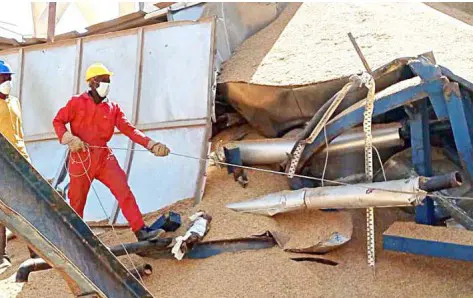
Nigeria’s rice industry is facing a major crisis, with more than 90 of the country’s 260 integrated rice mills reportedly shutting down completely due to shortages of locally produced paddy, rising production costs and the influx of cheaper imported rice.
The development marks a sharp reversal for an industry that recorded significant growth in the years leading up to 2023. It also comes as the National Rice Development Strategy II, launched in 2021 to boost investment and achieve self-sufficiency in rice production, is due to expire next month.
The strategy was part of the agricultural transformation agenda of the former President Muhammadu Buhari administration, which aimed to reduce food imports and conserve foreign exchange. In February 2023, Nigeria announced that it had achieved 75 per cent self-sufficiency in rice production and projected that the country would become a net exporter by 2026.
That progress was showcased in January 2023 when the Federal Government, the Central Bank of Nigeria and the Rice Farmers Association of Nigeria unveiled what they described as the world’s largest rice pyramids in Abuja. The display contained one million bags of paddy and was presented as evidence of the country’s growing production capacity. Nigeria’s annual rice import bill, estimated at about $1bn in 2015, was also reported to have fallen to approximately $18.5m by 2021.
However, the gains have come under pressure since 2025. Paddy production, which reportedly reached 8.5 million tonnes in 2021, fell to about 4.8 million tonnes, while mill capacity utilisation dropped below 30 per cent. Industry operators told Financial Vanguard that major integrated mills, including Umza in Kano and Stallion in Lagos, were operating below half of their installed capacity.
The National Chairman of the Rice Millers Association of Nigeria, Peter Dama, blamed policy inconsistency, particularly the suspension of the Central Bank’s Anchor Borrowers’ Programme, which he said supported the growth in rice production between 2015 and 2023. Industry operators also identified inadequate agricultural financing, insecurity, rising input costs and weak supply chains as major reasons for the decline.
They further alleged that cheaper foreign rice had entered the Nigerian market in large quantities in 2026, particularly through the Seme border with the Benin Republic. They argued that investors had spent heavily on rice mills but that government policies had failed to sustain the local production needed to keep the facilities running.
The problem of idle mills and rising production costs
Dama said Nigeria had installed rice milling capacity of about 7.5 million tonnes annually but was currently producing only 4.1 million tonnes of paddy, leaving a significant gap between the industry’s processing capacity and the supply of raw materials.
The cost of producing rice has also increased sharply. According to industry operators, a tonne of paddy that sold for about N180,000 in 2021 now costs between N600,000 and N650,000. Fertiliser prices have reportedly risen from about N8,000 to N45,000, while petrol has increased from N250 to N1,400 per litre.
Dama said the high cost of paddy had made locally milled rice more expensive than imported finished rice.
“Locally milled rice at current paddy prices costs higher than imported finished rice through Lagos ports.
“This is a fundamental competitiveness problem that cannot be resolved merely by announcing restrictions on rice imports,” he said.
Some farmers are reportedly abandoning rice production for alternative crops such as sesame and sorghum, further reducing the supply of paddy available to millers.
The operators warned that the crisis extends beyond mill owners, affecting farmers, transporters, distributors, factory workers and millions of households that depend on rice as a staple food.
Why the rice value chain is struggling — FG
A senior official of the Federal Ministry of Agriculture, who spoke on condition of anonymity, identified policy inconsistency as a major challenge facing the rice value chain.
The official said population growth, rural-to-urban migration and changing eating habits had increased pressure on rice supplies. He noted that Nigeria remained Africa’s largest rice producer but also one of its largest importers because local production could not meet domestic demand.
He put Nigeria’s current rice self-sufficiency level at 69 per cent, down from the 75 per cent announced in 2023.
The official also blamed rising prices of fertilisers, seeds and agrochemicals on the difficulties facing farmers. He said the end of the Presidential Fertiliser Initiative, under which urea was imported from Morocco and sold to fertiliser blenders at subsidised rates, had contributed to higher costs.
He added that fertiliser blenders now bought urea at market prices, making the product more expensive for farmers. He also linked the pressure on the fertiliser market to geopolitical tensions in the Middle East and the reported blockade of the Strait of Hormuz, through which he said 30 per cent of fertiliser raw materials passed.
According to the official, higher input costs had pushed up the price of paddy sold to millers. The millers, in turn, faced high operating expenses, partly because of their dependence on diesel rather than electricity.
He said imported rice benefited from production subsidies in its countries of origin, making it difficult for Nigerian millers to compete. He called for government support to reduce the cost of agricultural inputs.
Collapse of the Anchor Borrowers’ Programme
Industry operators identified the discontinuation of the Anchor Borrowers’ Programme, introduced by the Central Bank under former Governor Godwin Emefiele, as a major turning point.
The programme sought to reduce food import dependence by connecting smallholder farmers with processors and providing access to affordable agricultural inputs and financing.
Between 2015 and 2021, it reportedly helped raise paddy production from 2.5 million tonnes to 8.5 million tonnes. Industry figures also indicated that official rice imports fell from 2.4 million tonnes to fewer than 400,000 tonnes during the period.
Under the arrangement, farmers received seeds, fertiliser and herbicides on credit and repaid with paddy after harvest. They were also connected to rice millers who provided a guaranteed market for their produce.
Interest rates were fixed at nine per cent, compared with commercial lending rates of about 28 per cent cited by industry stakeholders. The arrangement helped farmers access inputs and markets while giving millers a more predictable supply of paddy.
However, the programme faced allegations of political interference, poor loan recovery and the inclusion of people who were not genuine farmers. Although more than N1.1tn was reportedly disbursed, loan recovery was said to have fallen below 30 per cent.
The CBN discontinued the programme in 2023 under a new leadership, leaving what industry operators described as a financing gap in the rice value chain.
Dama estimated that more than 40 per cent of smallholder farmers who participated in the scheme had since moved to other crops. He said government dry-season wheat and rice initiatives had not reached enough genuine farmers, while the Bank of Agriculture lacked the resources to provide financing on the scale required.
He argued that the programme did not necessarily need to return in its original form, but its weaknesses should be addressed.
“Dismantling a programme without putting a functional alternative in place has exposed the industry to precisely the production challenges it was designed to overcome,” Dama said.
Cheaper imports and alleged smuggling through Benin
The influx of cheaper foreign rice has added to the pressure on local millers.
Dama alleged that more than 2.5 million tonnes of foreign rice had entered Nigeria through the Benin Republic’s Cotonou port and porous land borders in 2026.
He said imported rice sold for between N52,000 and N60,000 per 50kg bag, compared with N75,000 to N80,000 for locally produced rice. The price difference has made foreign rice more attractive to consumers facing rising living costs.
Dama also alleged that some lower-quality imported rice was being repackaged and sold as Nigerian rice in major markets in Lagos, Abuja, Kano and Ibadan.
He attributed part of the problem to differences in import duties between Nigeria and Benin, claiming that Nigeria imposed a 70 per cent duty while Benin charged 35 per cent. He said the difference encouraged traders to route rice imports through the neighbouring country.
Dama called for the implementation of the ECOWAS Rice Roadmap 2025–2035, which provides for a common external tariff of 35 per cent on paddy and 50 per cent on milled rice across the bloc’s 15 member states.
He said a harmonised regional tariff and technology-driven border surveillance could reduce incentives for smuggling.
How Lake Rice disappeared from Lagos markets
The decline of Lake Rice, a joint agricultural initiative between Lagos and Kebbi states, was cited as another example of the difficulties facing public agricultural partnerships.
The two states signed a Memorandum of Understanding in 2016 to promote rice production in Kebbi, with processing and distribution handled in Lagos. The arrangement was designed to connect northern farmers with a major consumer market in the South.
However, the initiative eventually collapsed.
Lagos State Governor Babajide Sanwo-Olu’s Special Adviser on Agriculture and Food Systems, Dr Oluwarotimi Fashola, said the project was discontinued because the original agreement between the states was not followed.
He explained that the understanding was for Kebbi to supply paddy to Lagos for milling and packaging. However, he said the arrangement changed, with finished rice supplied by a private consulting firm being repackaged and distributed as Lake Rice.
Industry stakeholders said the project’s collapse highlighted the need for transparency, accountability and adherence to agreed terms in public-private agricultural partnerships.
Women farmers face financing challenges
The decline in agricultural financing has also affected women farmers, particularly in Kebbi State.
The Chairperson of the Kebbi State Female Farmers Associations, Hajia Hadiza Kola, said inadequate funding had become a major obstacle to expanding production since the end of the Anchor Borrowers’ Programme.
She also identified social barriers, noting that farming was traditionally regarded in parts of the state as an occupation largely reserved for men. Some women, she said, struggled to obtain their husbands’ support to participate in commercial farming.
Despite these challenges, advocacy activities across towns and villages have encouraged hundreds of women to register with female farmers’ associations and take up farming, including home gardening.
Their experience, she said, underlined the importance of making agricultural financing more accessible to women and other groups often excluded from conventional farming arrangements.
Ebonyi rice mills also shut down
The challenges facing Nigeria’s rice industry are not limited to the North. Several rice projects in Ebonyi State have also struggled to remain operational.
Around 2013, the administration of former Governor Martin Elechi established modern rice cluster mills in the state’s three senatorial districts: Izzi, Ikwo and Oso Edda.
The mills were expected to complement the existing Abakaliki rice mill with modern equipment. They initially produced polished rice under the EbonyRice brand, with packaging designed to compete with imported products.
However, by 2025, the facilities had largely become inactive.
A former worker, Onyeka Ndukwe Nkama, told Financial Vanguard that the mills were handed over by Elechi’s administration to the government of David Umahi, which he said inherited an already struggling project.
He said the mills began shutting down one after another, starting with Oso Edda, followed by Ikwo and eventually Izzi.
Nkama said managers had complained about insufficient paddy to keep the facilities running. At some point, he said, the mills sourced paddy from northern Nigeria but still struggled to maintain production.
He added that some machines gradually deteriorated and workers eventually left to seek other jobs.
A private rice mill established by Chief Charles Ugwu in Ikwo, which produced rice under the Ebony Gold and Ebony Silver brands, also reportedly shut down due to similar paddy shortages.