Now Reading: Peter Obi’s Bayelsa Visit Sparks Fresh Political Realignments Ahead of 2027 Elections
-
01
Peter Obi’s Bayelsa Visit Sparks Fresh Political Realignments Ahead of 2027 Elections
Peter Obi’s Bayelsa Visit Sparks Fresh Political Realignments Ahead of 2027 Elections

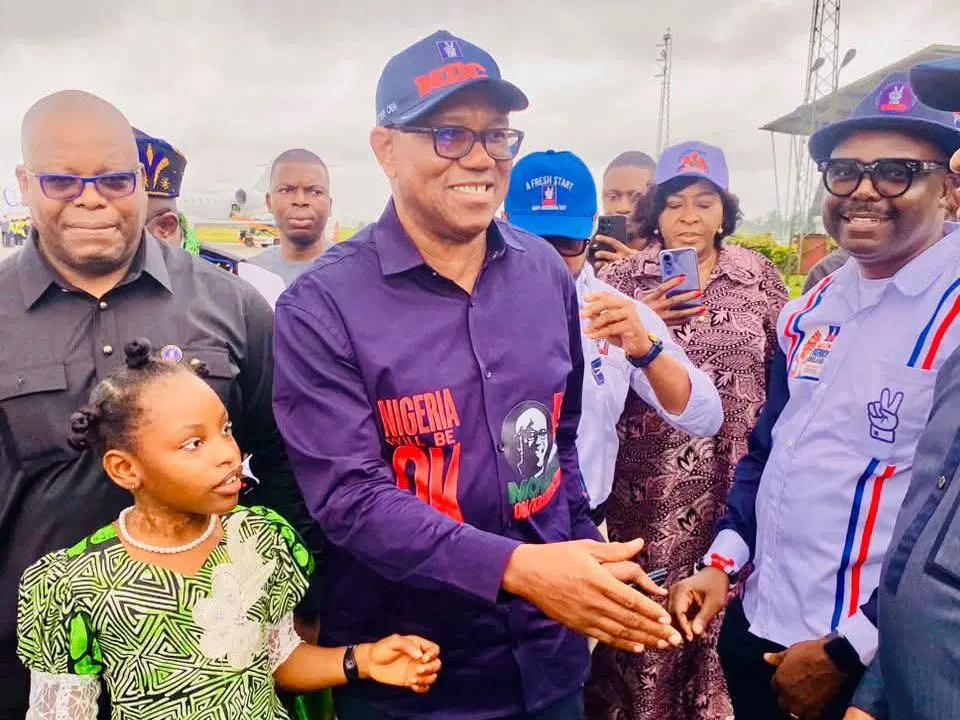
The visit of Peter Obi, presidential candidate of the Nigeria Democratic Congress (NDC), to Bayelsa State has sparked fresh political discussions about possible alliances and realignments ahead of the 2027 general elections.
Obi’s visit to the Ijaw heartland coincided with the homecoming of Senator Henry Seriake Dickson, the NDC National Leader. Activities during the visit included the commissioning of the party’s state secretariat in Yenagoa, meetings with political stakeholders and a traditional Ijaw war canoe and boat regatta at Toru-Orua in Sagbama Local Government Area.
Political analysts and Ijaw leaders who spoke about the development described it as more than a ceremonial gathering, arguing that it could influence the political configuration of Bayelsa and the wider Niger Delta.
Professor Benjamin Okaba, a university lecturer and immediate past president of the Ijaw National Congress (INC), said Obi’s visit had introduced another dimension into the evolving political landscape of Bayelsa State and the Ijaw Nation.
Reflecting on his remarks at the 2024 Bayelsa State Annual Thanksgiving, Okaba stressed that political affiliations could change, but the identity, history and collective aspirations of the Ijaw people should remain constant.
He said Dickson’s emergence as NDC National Leader had introduced a new political factor in the state, noting that his experience as a former governor and serving senator gave the party an established political presence.
However, Okaba cautioned that the credibility of any political platform should be judged by its policies and commitment to public welfare rather than its structures or prominent members.
Cultural Identity and Development Concerns
Okaba also highlighted the significance of the traditional boat regatta at Toru-Orua, particularly its display of Ijaw cultural heritage.
He maintained that cultural celebrations should be accompanied by sustained efforts to improve the welfare, security and development of riverine communities.
Commenting on Obi’s remarks about federal attention to Bayelsa, the former INC president said oil-producing communities deserved environmental restoration, better infrastructure, quality education, improved healthcare and fair benefits from the resources extracted from their ancestral lands.
He further called for serious consideration of the proposed Bayelsa seaport, particularly the long-standing Agge project.
According to him, the Ijaw Nation should look beyond crude oil by developing its maritime, agricultural, fisheries and tourism sectors to generate employment and support sustainable economic growth.
On security, Okaba called for a coordinated approach to tackling kidnapping, piracy and other criminal activities. He argued that effective policing should be supported by infrastructure development, education, youth empowerment and employment opportunities.
Okaba Proposes Ijaw Development Compact
In what he described as a framework for long-term development, Okaba proposed an Ijaw Development Compact involving political parties, elected representatives, traditional institutions, the INC, civil society organisations, professional groups and youth organisations.
He said the proposed agreement should identify common development priorities and establish measurable commitments against which political parties and elected officials could be assessed.
The areas he identified included environmental restoration, infrastructure, education, healthcare, economic diversification, youth development, resource control, security and political representation.
Okaba insisted that the compact should go beyond a ceremonial document and provide a practical framework for engagement, advocacy, monitoring and accountability.
He also urged the NDC and the ruling All Progressives Congress (APC) to move beyond partisan disagreements and make the development of Bayelsa and the wider Ijaw territory central to their political engagements.
He said the parties should address environmental justice, infrastructure and connectivity, education, healthcare, youth employment, economic diversification, resource control, fiscal federalism, security and political inclusion.
According to Okaba, political competition should focus on the quality of development proposals rather than the size of rallies, political followings, campaign billboards or cultural displays.
Looking towards 2027, he said the NDC had an opportunity to present an alternative political platform, while the APC had a responsibility to demonstrate how its access to federal power could translate into tangible development for Bayelsa and the Niger Delta.
He also urged other political parties to present credible alternatives, warning that the election should not deepen existing divisions or weaken the collective bargaining position of the Ijaw people.
“The Ijaw Nation needs political leaders who understand that their political fortunes are temporary, but the future of our people is enduring,” he said.
Obi’s Visit Described as Strategic
Also commenting on the visit, Amaebi Clarkson, a lawyer and former national spokesman of the Movement for the Survival of the Ijaw Ethnic Nationality in the Niger Delta (MOSIEND), described Obi’s engagement with the Ijaw community as significant.
Clarkson particularly highlighted the display of omu aru, the traditional Ijaw war canoe mounted by Ijaw warriors, describing it as an uncommon gesture for someone who is not from the ethnic group.
He said Bayelsa’s position as a major centre of Ijaw identity gave the state considerable influence within the Niger Delta, adding that the reception accorded to Obi could have political implications across the South-South region.
Clarkson also pointed to Dickson’s leadership of the NDC, describing the former Bayelsa governor as an experienced political figure who could play a major role in the party’s campaign activities.
He further claimed that Obi’s visit had mobilised members of the Igbo community in Yenagoa and could attract substantial support from them.
As political activities gradually intensify ahead of the 2027 elections, the discussions surrounding Obi’s visit have brought attention to demands for development, environmental justice, security and political representation in the Ijaw Nation.
Whether the NDC, APC and other political parties will translate these demands into measurable commitments remains to be seen. The central question raised by stakeholders is how political parties intend to address the long-standing development concerns of Bayelsa and the wider Niger Delta.