Now Reading: Senate Orders Probe Into Telecom Operators Over Airtime Deductions for Failed Calls
-
01
Senate Orders Probe Into Telecom Operators Over Airtime Deductions for Failed Calls
Senate Orders Probe Into Telecom Operators Over Airtime Deductions for Failed Calls

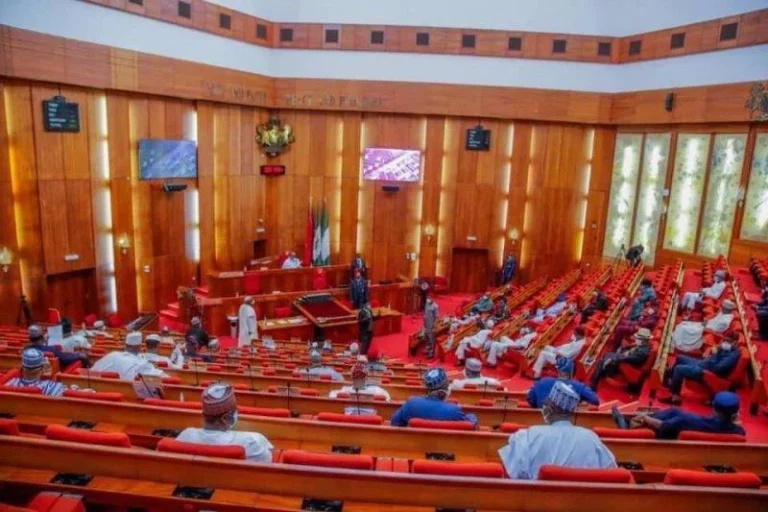
The Nigerian Senate has ordered an investigation into alleged arbitrary airtime deductions by telecommunications operators for failed, dropped and prematurely terminated calls, giving its Committee on Communications four weeks to determine the financial losses suffered by subscribers.
The resolution followed a motion on consumer protection in the telecommunications sector, which drew attention to persistent complaints from Nigerians who lose airtime when calls fail to connect, disconnect unexpectedly or are disrupted by poor network services.
The motion was sponsored by the Senate Chief Whip, Senator Tahir Monguno, and presented by the Deputy Senate Leader. Senator Ned Nwoko, representing Delta North, seconded the motion, describing the problem as one experienced by virtually every telecommunications subscriber in the country.
Supporting the proposal, Nwoko said the investigation was necessary to protect consumers from financial losses caused by poor service delivery.
He noted that Nigerians regularly encounter technical problems when making calls, making the Senate’s intervention timely and important.
During consideration of the motion, the Deputy Minority Leader proposed that the Senate adopt only Prayer Six, arguing that it sufficiently covered the issues raised in the preceding five prayers. The amendment was seconded by Senator Benios Yaro, representing Adamawa South, and adopted through a voice vote presided over by Senate President Godswill Akpabio.
Reading the resolution, Akpabio said the Committee on Communications had been directed to invite the Nigerian Communications Commission (NCC) and relevant telecommunications operators to investigate complaints involving failed calls, dropped calls, prematurely terminated calls and inflated charges.
The committee is expected to establish the financial losses incurred by subscribers and submit its findings, alongside recommendations for further legislative and regulatory action, within four weeks.
The consolidated resolution covers proposals for an investigation into the billing practices of MTN Nigeria, Globacom, Airtel and T2 Mobile. It also includes calls for an accessible complaints and redress system, automatic refunds for verifiably failed calls, independent technical audits of billing systems and stricter enforcement of quality-of-service standards.
Akpabio urged the committee, chaired by Senator Bill Bills, to begin work immediately. He described the four-week deadline as lengthy but said the Senate was prepared to allow the committee the time needed to complete its assignment.
He warned that the Senate could take over the investigation as a Committee of the Whole if the committee failed to submit a satisfactory report within the stipulated period. Such an inquiry would involve the telecommunications operators, the minister overseeing the NCC and the commission’s Executive Vice Chairman.
The Senate President said complaints from subscribers could no longer be ignored, particularly as Nigerians continued to lose money over services that were poorly delivered or not provided.
He also raised concerns about possible gaps in the supervision of the telecommunications sector, stressing the need to engage regulators and operators to ensure accountability and lasting improvements.
The investigation is expected to determine the extent of subscribers’ financial losses, examine whether operators comply with existing requirements on billing transparency and service quality, and identify possible weaknesses in the enforcement of consumer protection rules.
Telecommunications subscribers have repeatedly complained about airtime deductions when calls fail to connect, disconnect shortly after connection or are interrupted by network problems. The complaints have raised questions about the fairness and transparency of operators’ billing systems, especially when customers are charged despite receiving little or no service.
The committee’s findings are expected to guide possible legislative and regulatory measures, including stronger monitoring of operators, improved complaint-resolution channels and refunds where wrongful deductions are established.