
Now Reading: South Africa Faces Surge in Mass Shootings as Gun Violence Escalates
-
01
South Africa Faces Surge in Mass Shootings as Gun Violence Escalates
South Africa Faces Surge in Mass Shootings as Gun Violence Escalates

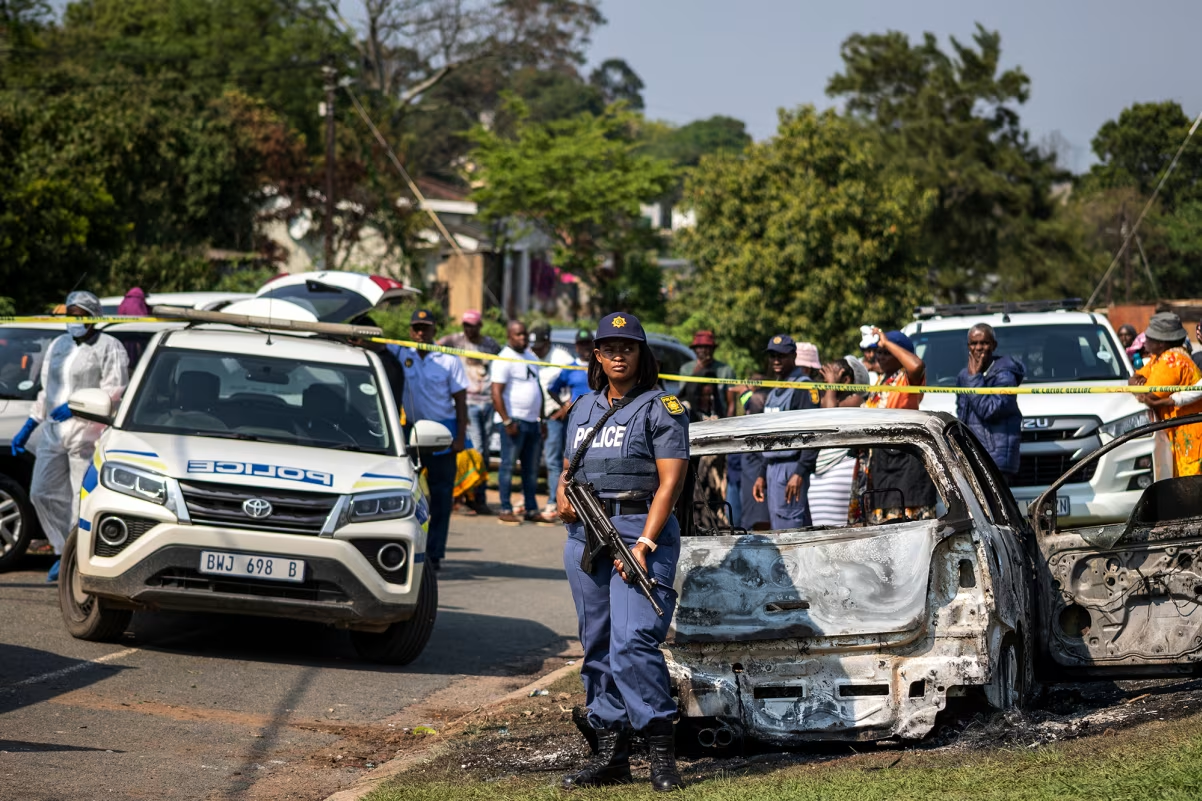
South Africa is facing renewed concern over gun violence after five separate shootings in less than a week left at least 46 people dead, raising fears that a rise in mass killings could undermine recent progress in reducing the country’s murder rate.
The attacks have highlighted the continued availability of illegal firearms and the role of organised crime in some of South Africa’s deadliest shootings.
Eight gunmen armed with AK-47 rifles and pistols reportedly stormed a tavern in Wedela, west of Johannesburg, last Saturday and killed 18 people. Hours later, another 10 people were killed in Lwandle near Cape Town.
Julian Rademeyer, an adviser to the Global Initiative Against Transnational Organized Crime, said South Africa has a serious problem with illegal firearms. Stanley Maphosa of Gun Free South Africa similarly warned that the availability of guns can turn criminal disputes, gang conflicts, extortion and other confrontations into deadly mass attacks.
Despite the recent shootings, official figures show that South Africa’s overall murder rate has been declining. Police recorded 41 murders per 100,000 people in the 12 months to March 2025, down from 44.7 per 100,000 the previous year. Murder numbers also continued to fall in the first half of the following year.
However, experts say the frequency of mass killings remains a major concern. The Global Initiative Against Transnational Organized Crime recorded 45 mass killings between January 1 and September 28, resulting in at least 210 deaths and 79 injuries. The organisation defines a mass killing as an incident in which at least three people are intentionally killed in a single attack.
The number of recorded incidents rose during the year, from one each in January and February to eight in June and eight each in August and September. September alone accounted for 57 deaths in mass killings, according to the organisation.
There is no evidence that the five most recent shootings were part of a single coordinated campaign. Investigators are examining different possible motives, including criminal rivalries, retaliation, gang disputes and a business conflict.
The Johannesburg tavern shooting is being investigated for possible links to violence surrounding illegal mining. The area is known for so-called zama zamas, informal miners who operate in abandoned gold mines, where rival groups have fought over control of lucrative mining operations.
Experts say illegal firearms reach criminal groups through several channels, including cross-border trafficking, weapons stolen from civilians and the state, corruption and theft from police facilities. More than 63,500 licensed civilian firearms were reportedly lost or stolen between 2013 and 2023.
Police have also recorded thousands of firearms and large quantities of ammunition stolen or lost from their own stocks since 2022, adding to concerns about the diversion of weapons into criminal networks.
The government has deployed Operation Vala Umgodi to tackle illegal mining, resulting in arrests and the seizure of firearms. However, security experts argue that targeting low-level participants alone may have limited impact unless authorities also pursue the financiers, weapons suppliers, gold buyers and other people who sustain criminal networks.
Another challenge is the backlog in forensic investigations. South African police forensic authorities have previously reported tens of thousands of outstanding ballistics cases, making it more difficult to determine whether recovered weapons have been used in other crimes.
Experts say reducing gun violence will require authorities to not only recover illegal firearms but also trace their sources and disrupt the networks supplying them. The broader goal, they argue, should be preventing firearms from reaching criminal groups in the first place.