Now Reading: Tinubu Admits Hardship, Security Challenges Persist as He Accepts APC 2027 Presidential Ticket
-
01
Tinubu Admits Hardship, Security Challenges Persist as He Accepts APC 2027 Presidential Ticket
Tinubu Admits Hardship, Security Challenges Persist as He Accepts APC 2027 Presidential Ticket

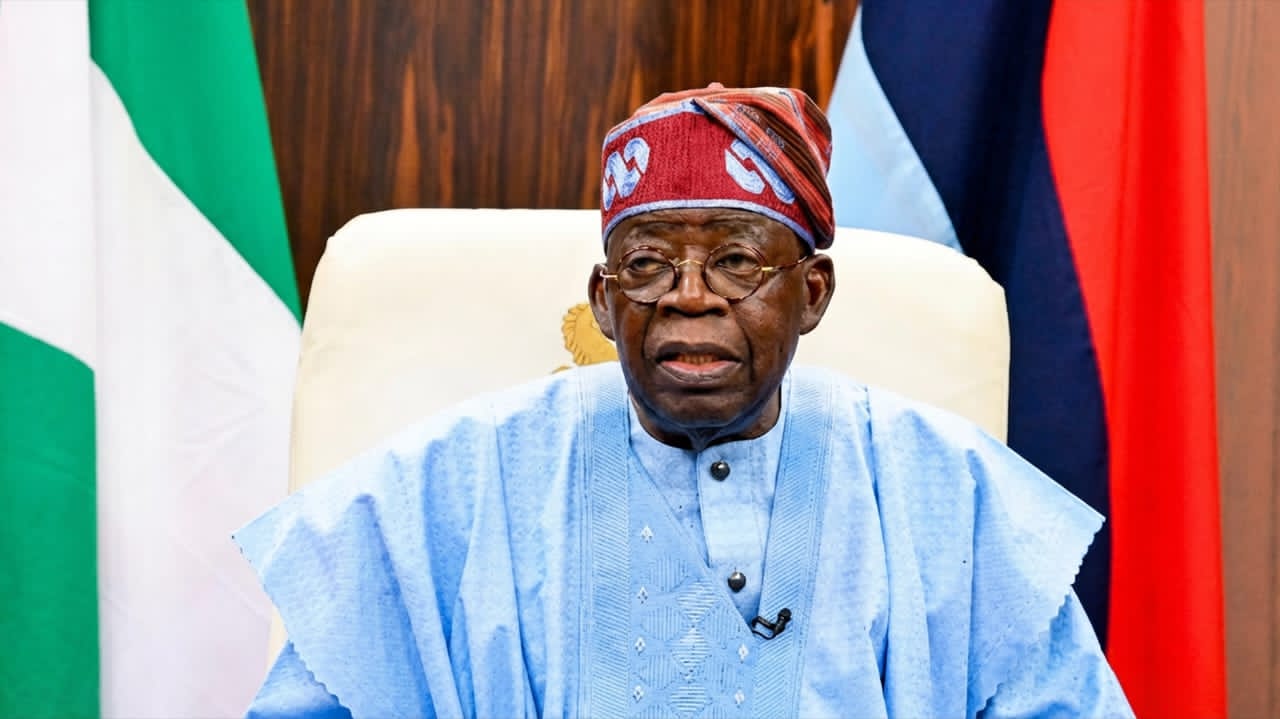
President Bola Tinubu has openly acknowledged that many Nigerians are still struggling with rising living costs and ongoing security concerns across parts of the country.
The President made the remarks on Sunday after formally accepting the presidential ticket of the All Progressives Congress ahead of the 2027 general elections.
Tinubu admitted that the economic reforms introduced by his administration have not fully eased the pressure on citizens, noting that inflation and cost-of-living challenges remain a daily reality for many households.
“However, there are still challenges ahead. Many Nigerians continue to face challenges with increasing prices and changes in the economy,” he said.
He stressed that his government is fully aware of public concerns and insists that leadership must remain grounded in the realities facing ordinary citizens.
“We take these concerns seriously; we see them and lead not from a place of ease, but from a true understanding of the situation, with honesty and decisive action,” Tinubu added.
On security, the President admitted that violence and insecurity remain active threats in some parts of the country despite ongoing military and intelligence operations.
“I recognize that there are still security challenges facing some areas of our great country,” he stated.
Tinubu explained that his administration has increased investment in intelligence gathering, surveillance systems, and modern security technology aimed at improving national response capacity.
“We have put money into intelligence, watching over things, and new tools, and we are working on the main reasons behind insecurity,” he said.
In a significant policy remark, the President also urged the National Assembly to consider the creation of state police, describing it as a matter of urgent national importance.
The call adds to ongoing national debates over decentralizing policing as Nigeria continues to battle banditry, kidnappings, and other violent crimes in several regions.
His comments come at a politically sensitive moment as campaigns and alignments begin to take shape ahead of the 2027 elections, with economic hardship and insecurity expected to dominate public discourse.