Now Reading: US, China Discuss Reciprocal Nuclear Site Visits Amid Arms Control Concerns
-
01
US, China Discuss Reciprocal Nuclear Site Visits Amid Arms Control Concerns
US, China Discuss Reciprocal Nuclear Site Visits Amid Arms Control Concerns

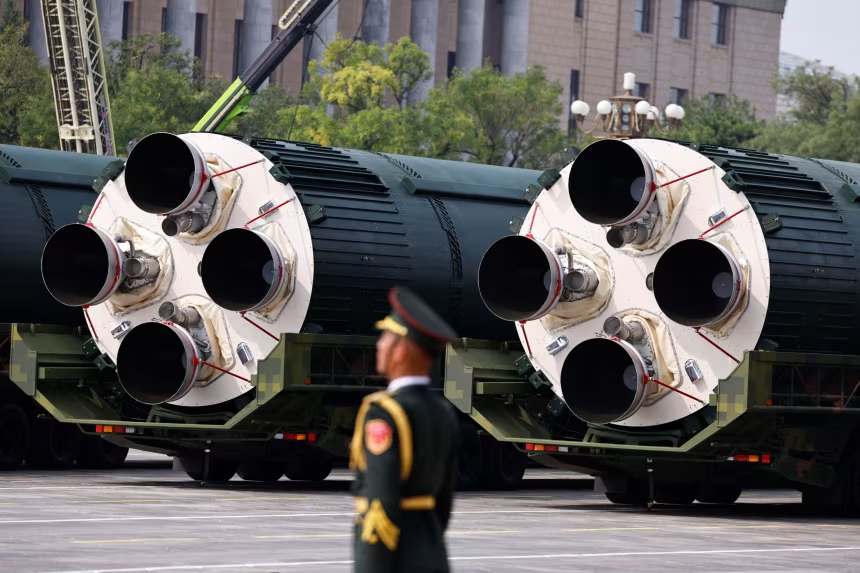
The United States and China have held preliminary discussions about reciprocal visits to each other’s nuclear facilities, in a potential confidence-building step as Washington raises concerns over Beijing’s expanding nuclear arsenal.
People familiar with the discussions said the idea has been raised during working-level engagements this year and is expected to remain on the agenda as US and Chinese officials prepare for further high-level meetings.
The proposed visits could include US Department of Energy national laboratories and their Chinese counterparts. Washington is also open to discussing access to nuclear testing sites, although no formal agreement has been reached.
The discussions have largely taken place alongside meetings involving the five permanent members of the United Nations Security Council, known as the P5. Sources described the talks as informal and preliminary, with no formal negotiations yet under way on a new arms control agreement involving the US, China and Russia.
China has previously resisted negotiations aimed at limiting its nuclear expansion, pointing to the much larger arsenals maintained by the United States and Russia. The US currently has about 5,000 nuclear warheads, compared with roughly 600 attributed to China, although Beijing is rapidly expanding its nuclear infrastructure.
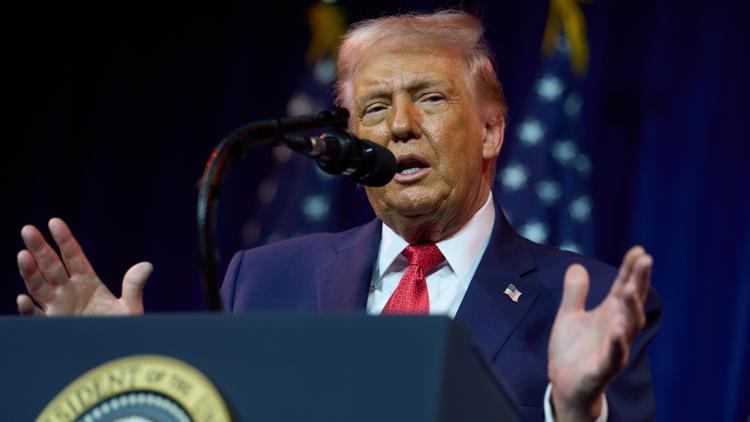
President Donald Trump has expressed support for trilateral arms control discussions involving Washington, Beijing and Moscow. However, a US official said Trump and Chinese President Xi Jinping did not discuss nuclear site visits during their most recent meeting.
Experts said reciprocal visits could help establish greater transparency and provide information that could support future discussions on nuclear risk reduction. Paul Dean, a former US arms control official, described the proposal as a potentially valuable confidence-building measure, while warning that the current US-China nuclear relationship has few safeguards.
There is also scepticism about Beijing’s intentions. Some former US officials and experts suggested China could be using the proposal to create a positive atmosphere ahead of future summits without necessarily committing to substantive limits on its nuclear programme.
The discussions are taking place against a backdrop of heightened US-China nuclear tensions. The Trump administration has previously accused China of conducting a covert nuclear experiment in 2020 using a technique intended to reduce detectable seismic signals, an allegation Beijing has not publicly accepted.
The US National Nuclear Security Administration recently conducted an underground non-nuclear experiment at the Nevada National Security Site as part of efforts to improve the ability to detect potential low-yield or difficult-to-detect nuclear explosions.
Washington is also working on a proposal aimed at improving verification of possible low-yield nuclear testing and could present the initiative to the P5 group later this year.
Analysts remain cautious about the prospects for a breakthrough. Gerald Brown of the Council on Foreign Relations said reciprocal visits could offer a potential opening for reducing nuclear risks, while noting that broader disagreements over China’s military expansion and Taiwan could complicate negotiations.
For now, the proposed site visits remain an idea under discussion rather than a formal arms-control arrangement. Further working-level contacts are expected before Trump and Xi meet again, potentially providing a test of whether the initiative can develop into broader strategic-stability talks.