Now Reading: Venezuela Economy Crisis Deepens Despite Reform Promises as Inflation Crushes Daily Life
-
01
Venezuela Economy Crisis Deepens Despite Reform Promises as Inflation Crushes Daily Life
Venezuela Economy Crisis Deepens Despite Reform Promises as Inflation Crushes Daily Life

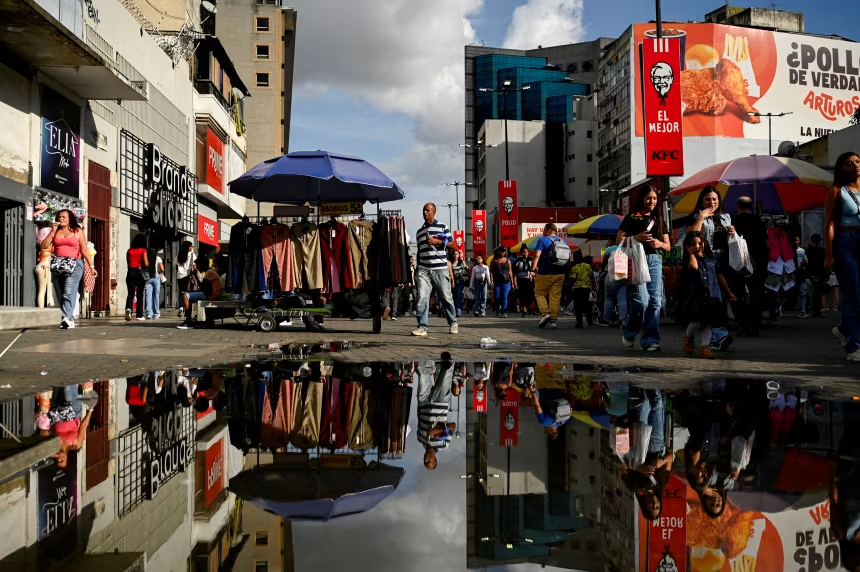
Crowded malls, stocked shelves, and glowing storefronts suggest a recovering economy in Caracas — but step closer, and a harsher truth emerges: people are browsing, not buying, as Venezuela’s economic crisis continues to squeeze everyday life.
Inside one busy shopping centre, shoppers drift from store to store comparing prices, only to leave empty-handed. The rare exception is a lingerie outlet offering heavy discounts, where queues form quickly — a sign that only steep price cuts can unlock spending power in today’s economy.
Cash is scarce, and credit is limited. Many customers now rely on mobile apps that offer small, short-term credit to pay for basics like food, clothes, and household items. In a country battling hyperinflation and tight banking restrictions, these digital lifelines have become a substitute for traditional credit cards, which remain out of reach for most citizens.
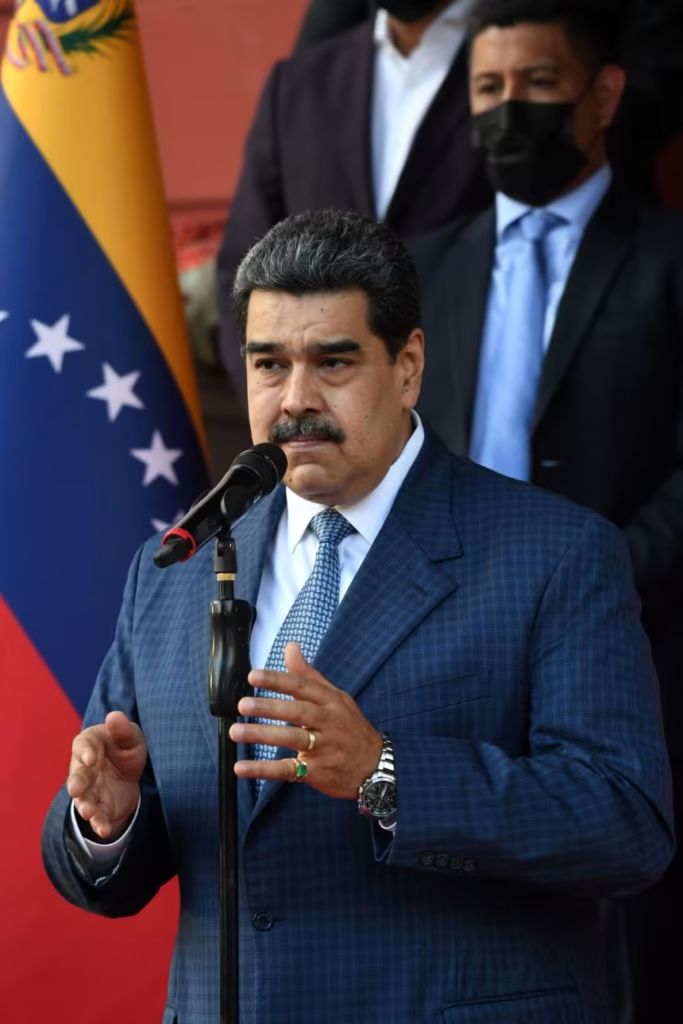
The economic strain persists despite a dramatic political shift following the capture of former president Nicolás Maduro. More than 100 days into the leadership of acting president Delcy Rodríguez, many Venezuelans say their daily reality has barely changed.
Official figures paint a more optimistic picture. Rodríguez says the economy is growing, with nearly 9% GDP expansion and 20 consecutive quarters of growth. She has also pointed to easing US sanctions and renewed talks with the International Monetary Fund and World Bank as signs of progress.
Yet those gains are hard to feel on the ground. Inflation remains punishing, with prices rising faster than incomes. Three months’ worth of minimum wage still fails to reach one dollar, forcing families to spend quickly before their money loses value. Basic goods — especially food and fuel — continue to climb in price.
Across the city, the economy tells a story of extremes. Some restaurants boom, while others shut within months. Imported goods stores, once symbols of a dollar-driven economy, are fading as consumers cut back. At the same time, car dealerships are expanding, offering dollar-based financing that only a small elite can access.
For most Venezuelans, survival is the priority. Retirees and workers are increasingly vocal about low wages, with protests growing louder. One demonstrator, holding a bone as a symbol of hardship, says even that small purchase now requires significant effort, highlighting the gap between income and reality.
Economists argue patience is needed. José Guerra says meaningful recovery will take time, stressing that stabilising inflation and the exchange rate is key before citizens can feel relief. While recent policies may help ease pressure, deeper changes are unlikely to be felt until later in 2026.
For now, many Venezuelans remain stuck in a painful cycle: full shelves, empty pockets, and growing frustration as promised economic improvements fail to materialise.