Now Reading: 2027: Peter Obi Unveils Vision for ‘Productive and Prosperous Nigeria,’ Promises Education, Healthcare and Industrial Revolution
-
01
2027: Peter Obi Unveils Vision for ‘Productive and Prosperous Nigeria,’ Promises Education, Healthcare and Industrial Revolution
2027: Peter Obi Unveils Vision for ‘Productive and Prosperous Nigeria,’ Promises Education, Healthcare and Industrial Revolution

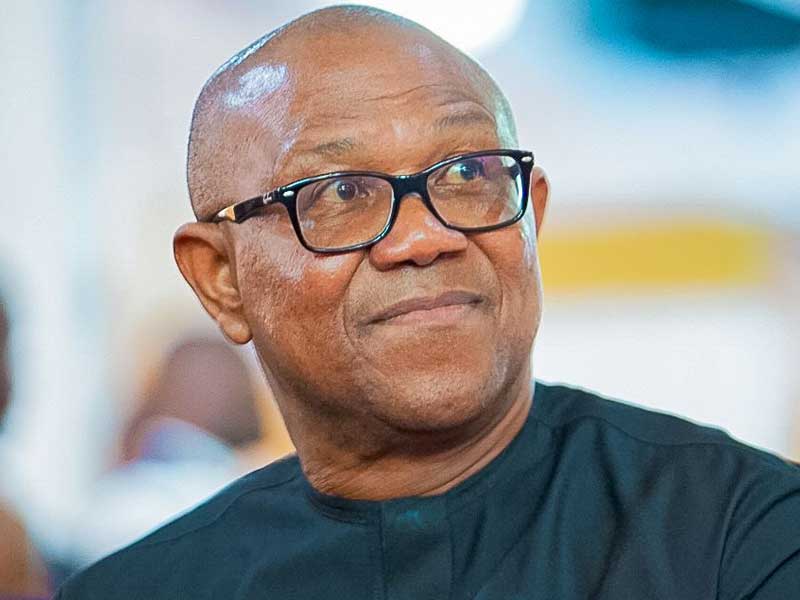
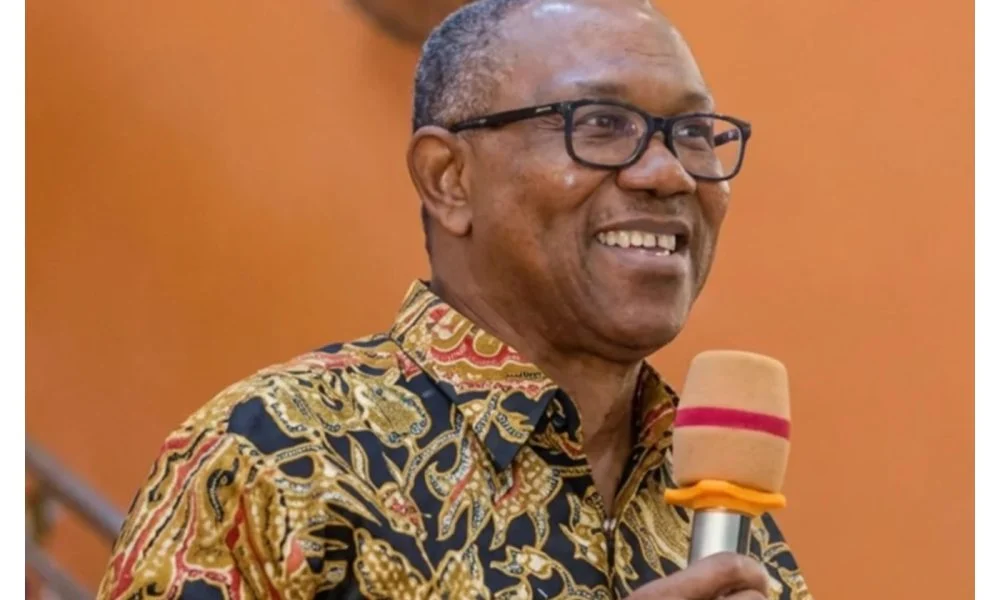
Nigeria Democratic Congress (NDC) presidential candidate for the 2027 election, Peter Obi, has unveiled an ambitious blueprint for what he describes as a “productive and prosperous Nigeria,” placing education, healthcare, industrialisation and human capital development at the centre of his proposed administration.
In a statement released on Wednesday to mark the beginning of a new month, the former Anambra State governor said his vision is aimed at rebuilding the country through inclusive governance, national unity and investments that improve the quality of life for Nigerians.
Obi recalled that his decision to seek Nigeria’s highest office was inspired by his desire to place the country on what he described as the path of national transformation and sustainable development.
“Now, as the Nigeria Democratic Congress candidate, I will, in the coming weeks and months, provide insights into the roadmap that I am confident will help curb abuse in government, halt the decline in the quality of life of Nigerians at all levels, and usher in an era of unity, peace, sustained progress, and prosperity,” he said.
According to Obi, his proposed roadmap will be anchored on unity, inclusion, social justice, equity and the freedom of every Nigerian to pursue legitimate opportunities without discrimination.
He identified education and healthcare as two critical sectors that would receive immediate attention, describing human capital as the most valuable infrastructure any nation can build.
“Robust human capital is indispensable infrastructure for national progress. It serves as the fundamental capital upon which daily life, economic expansion, and the delivery of essential public services depend,” Obi stated.
The former governor pledged to establish a national task force to drastically reduce the number of out-of-school children if elected, saying access to quality education would become a top priority under his administration.
Obi also promised to expand Technical and Vocational Education and Training (TVET) to support industrialisation, agricultural value addition and job creation. He said the programme would be driven through partnerships between government, the private sector and faith-based educational institutions, drawing inspiration from Germany’s dual education model that combines classroom learning with practical apprenticeship.
He noted that Nigeria’s high unemployment rate, despite the shortage of skilled workers, highlights the urgent need to reform vocational education and equip young people with employable skills.
In addition to technical education, Obi said his administration would promote character and civic education to strengthen responsible leadership, national values and public trust.
He ended the statement by reaffirming his campaign message, declaring, “A New Nigeria is Possible.”