Now Reading: US Health Deals in Africa Trigger Backlash as Kenya Erupts Over Ebola Isolation Centre
-
01
US Health Deals in Africa Trigger Backlash as Kenya Erupts Over Ebola Isolation Centre
US Health Deals in Africa Trigger Backlash as Kenya Erupts Over Ebola Isolation Centre

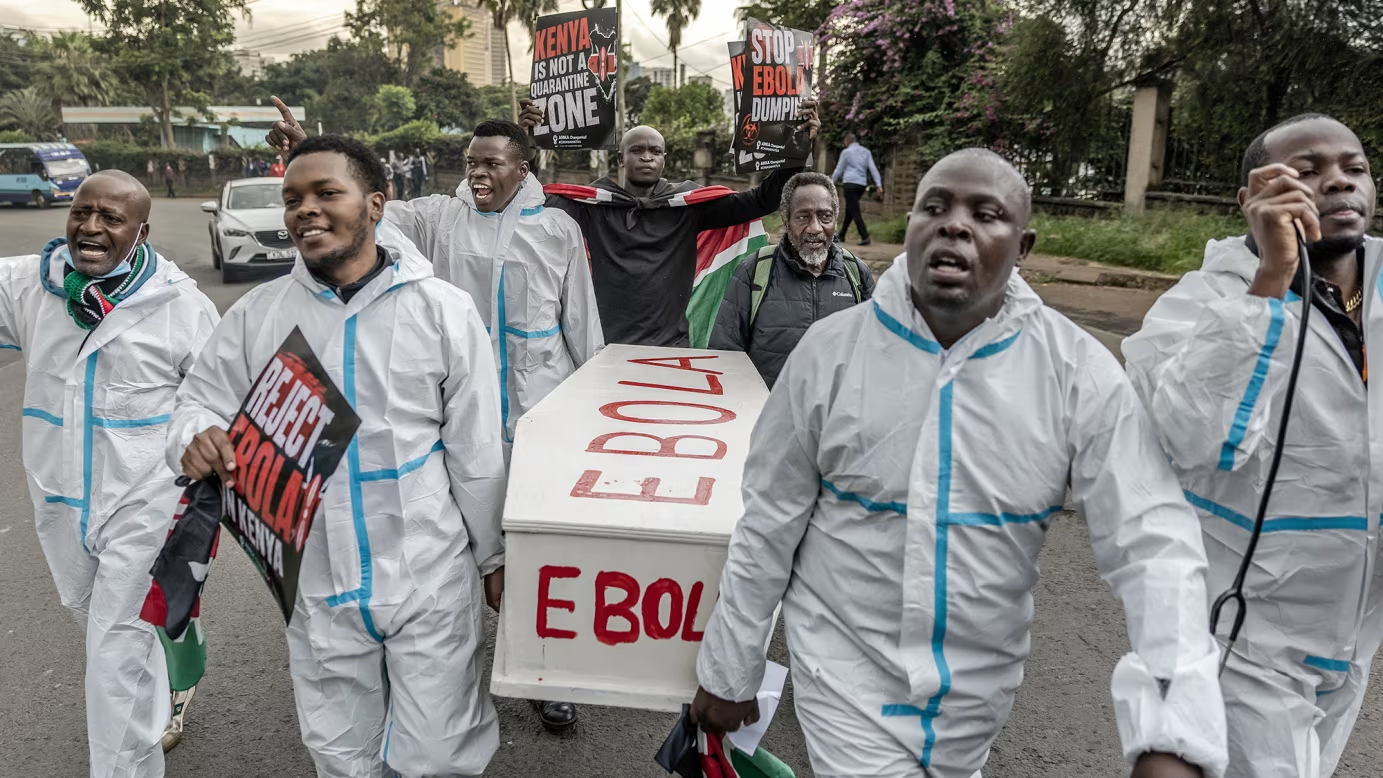
Street protests, political outrage and accusations of double standards are putting fresh pressure on the relationship between the United States and several African nations after Kenya approved a controversial US-funded Ebola isolation facility.
Demonstrators flooded parts of Nairobi and other Kenyan cities last week, chanting against the planned quarantine ward meant for Americans exposed to Ebola abroad. Critics fear the project could expose Kenya to deadly health risks despite the country never recording a single Ebola case.
The proposed facility comes as Ebola outbreaks continue in eastern Democratic Republic of Congo and neighbouring Uganda, more than 1,500 miles away from Kenya. Although a court temporarily halted construction pending legal action, the Kenyan government has continued to defend the deal, intensifying public anger.
President William Ruto argued that rejecting the American-backed project after years of receiving US assistance would be “very inhuman.” But his former deputy, Rigathi Gachagua, accused Washington of hypocrisy, insisting the United States would never accept such a facility on its own soil.
“We find it unfair, we find it a double standard, and we are totally opposed to it,” Gachagua told CNN, warning that the arrangement appeared to prioritise US interests over Kenyan safety concerns.
The controversy reflects growing unease across Africa over what critics describe as a shift from humanitarian partnerships to transactional diplomacy under the administration of Donald Trump. Since returning to office, Trump has frozen most foreign aid programmes and dismantled large sections of the US Agency for International Development, commonly known as USAID.
For decades, American funding supported HIV, tuberculosis and malaria programmes across Africa. Those initiatives are now being replaced with Washington’s “America First Global Health Strategy,” which focuses on direct bilateral agreements that US officials say are designed to reduce dependency while protecting American interests.
However, several African governments have raised concerns about conditions attached to the new deals. Zambia recently resisted a proposed $2 billion health package after officials claimed it included clauses favouring US companies and demanding access to sensitive national data.
Ghana and Zimbabwe have also reportedly objected to agreements involving long-term sharing of health and biological data. Ghana’s Health Minister, Kwabena Mintah Akandoh, publicly stated that African nations need “partnerships without strings attached.”
Questions are also emerging over Washington’s involvement in the mineral-rich eastern Democratic Republic of Congo, where the US has supported peace initiatives amid ongoing violence. Critics argue America’s growing diplomatic presence may be linked to access to strategic minerals such as coltan, a key material used in smartphones and electronic devices.
Analysts say the backlash unfolding in Kenya could become a defining moment in how African countries negotiate future health, security and economic partnerships with global powers.