Now Reading: Ethiopia Election 2026: From Nobel Peace Prize to Civil Conflict — How Abiy Ahmed’s Reform Dream Unravelled
-
01
Ethiopia Election 2026: From Nobel Peace Prize to Civil Conflict — How Abiy Ahmed’s Reform Dream Unravelled
Ethiopia Election 2026: From Nobel Peace Prize to Civil Conflict — How Abiy Ahmed’s Reform Dream Unravelled

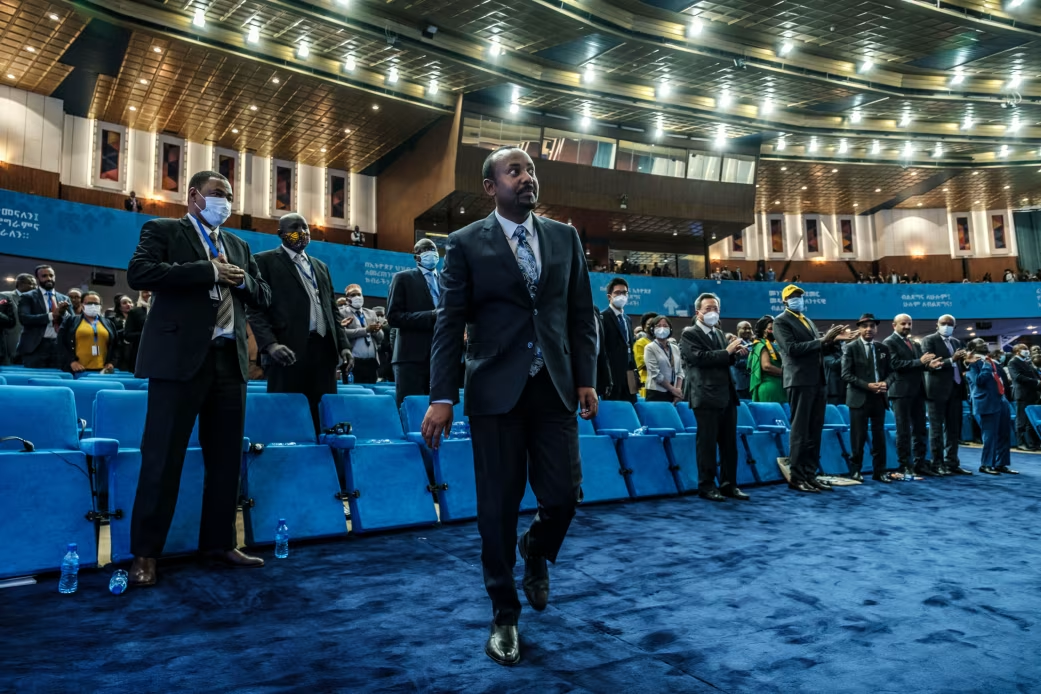
Just a few years ago, Abiy Ahmed was celebrated as the African leader who could transform Ethiopia into a modern democratic success story. Today, the same leader is facing accusations of deepening ethnic divisions, shrinking political freedoms and steering Africa’s second-most populous country into prolonged instability ahead of a crucial national election.
When Abiy took office in 2018 at the age of 41, he inherited a country shaken by years of anti-government protests and growing anger over state repression. His predecessor, Hailemariam Desalegn, had overseen rapid economic growth but struggled to contain unrest triggered by allegations of political marginalisation and violent crackdowns on dissent.
Abiy’s rise initially sparked hope across Ethiopia and beyond. Within months of becoming prime minister, he negotiated a peace agreement with neighbouring Eritrea, ending nearly two decades of hostility between the two nations. The breakthrough earned him the 2019 Nobel Peace Prize and transformed his global image into that of a reformer determined to rebuild Ethiopia.
His government also introduced early reforms that won widespread praise. Political prisoners were released, media restrictions were eased and opposition figures were allowed greater freedom to operate. Many Ethiopians believed the country was entering a new democratic era after decades of strict state control.
But that optimism gradually faded as Abiy moved to restructure Ethiopia’s political system. In 2019, he dissolved the long-standing ruling coalition known as the EPRDF and replaced it with a new national party called the Prosperity Party. The move was designed to centralise power and reduce ethnic-based politics, but critics argued it weakened regional autonomy and heightened tensions among Ethiopia’s diverse communities.
The biggest fallout came from the northern Tigray region, where the powerful Tigray People’s Liberation Front, TPLF, rejected Abiy’s reforms and accused the federal government of sidelining them politically. The disagreement later escalated into a devastating civil war in 2020 that killed hundreds of thousands of people and displaced millions across northern Ethiopia.
Although a peace deal brokered by the African Union officially ended the Tigray conflict in 2022, violence and political unrest continue to spread across parts of Amhara and Oromia regions. Armed groups remain active, while reports of arbitrary arrests, ethnic violence and restrictions on free speech have fuelled criticism of Abiy’s administration.
Despite the worsening insecurity outside the capital, Addis Ababa continues to project an image of economic progress. The city has witnessed major infrastructure expansion, new roads, parks and urban redevelopment projects. The government has also promoted economic reforms, including the launch of a national stock market aimed at attracting investors and modernising the economy.
However, analysts say the contrast between the modernisation of Addis Ababa and the insecurity across other regions highlights a country increasingly divided between political ambition and harsh realities on the ground.
As Ethiopians prepare for another national election, Abiy’s Prosperity Party is still expected to dominate due to a fragmented opposition and ongoing instability in several regions. But for many critics, the vote represents more than just another political contest — it is a test of whether Ethiopia can overcome the divisions that have deepened since Abiy first promised national unity and reform.