Now Reading: UEFA Keeps FIFA Boycott Threat Alive as CAF Backs Infantino Amid Deepening Leadership Crisis
-
01
UEFA Keeps FIFA Boycott Threat Alive as CAF Backs Infantino Amid Deepening Leadership Crisis
UEFA Keeps FIFA Boycott Threat Alive as CAF Backs Infantino Amid Deepening Leadership Crisis

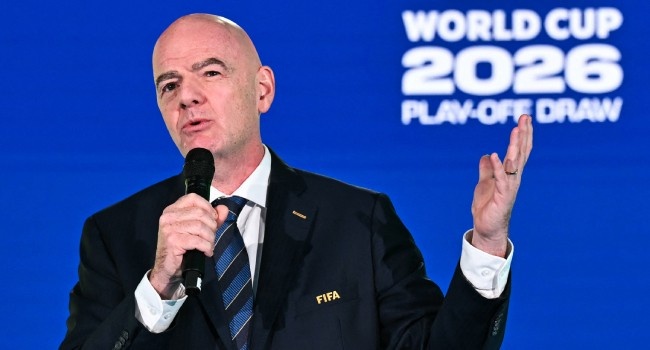
Pressure continues to mount on FIFA President Gianni Infantino after UEFA refused to withdraw its threat to boycott FIFA competitions, despite the governing body shelving its controversial commercial investment proposal.
The latest standoff has exposed growing divisions within world football, with UEFA maintaining it has lost confidence in Infantino’s leadership, while the Confederation of African Football (CAF) has reaffirmed its full support for the Swiss football administrator.
Infantino, 56, received unanimous backing from senior FIFA officials during an emergency meeting in Morocco on Wednesday. However, UEFA responded with a strongly worded statement, insisting that FIFA had failed to meet all the conditions it demanded before the boycott threat could be lifted.
At the heart of the dispute was FIFA’s proposal to establish a new commercial subsidiary known as FIFA Forward Enterprise (FFE). The initiative aimed to attract up to $4.2 billion in private investment based on a projected $20 billion valuation, with the company managing major competitions such as the FIFA World Cup and Club World Cup.
UEFA claimed its earlier threat to boycott FIFA tournaments played a decisive role in forcing Infantino to abandon the proposal last Saturday. While welcoming the withdrawal, Europe’s governing body said one key issue remains unresolved.
“UEFA’s associations were very clear about the conditions attached to their non-participation in FIFA competitions,” the organisation stated.
“First, the proposals to sell off the major competitions had to be withdrawn, and secondly, assurances have to be made that such attempts to disfigure the game in this way will never be made again. These conditions have not been met.”
UEFA also reiterated that it no longer has confidence in Infantino’s presidency, a position that has reportedly led several of its member associations to withdraw support for his bid to secure a fourth and final term as FIFA president at the election scheduled for next March in Rabat.
The criticism has extended beyond Europe. South American football governing body CONMEBOL expressed concern over what it described as repeated unilateral decisions taken without proper consultation through FIFA’s established institutional processes. Although it criticised Infantino’s handling of the proposal, CONMEBOL maintained that any leadership challenge should take place through the normal electoral process rather than a vote of no confidence.
The controversy has also drawn reactions from other football stakeholders. Players’ union FIFPRO described the abandoned investment plan as “a profound abuse of presidential power,” arguing that although the FIFA Forward Enterprise proposal had been dropped, the governance concerns surrounding it remained unresolved.
Meanwhile, CAF has moved in the opposite direction, unanimously reaffirming its support for Infantino after a meeting of its executive members. Several African football leaders have publicly defended the FIFA president, with South Africa’s Sports Minister Gayton McKenzie urging African football to reject what he called the “public lynching” of Infantino.
With criticism mounting across several confederations and the FIFA presidential election approaching, the dispute has become one of the biggest governance challenges of Infantino’s decade-long tenure, raising fresh questions about the future direction of world football.