Now Reading: Vom-Ganawuri-Manchok Road Becomes Impassable, Threatens Food Supply in North-Central
-
01
Vom-Ganawuri-Manchok Road Becomes Impassable, Threatens Food Supply in North-Central
Vom-Ganawuri-Manchok Road Becomes Impassable, Threatens Food Supply in North-Central

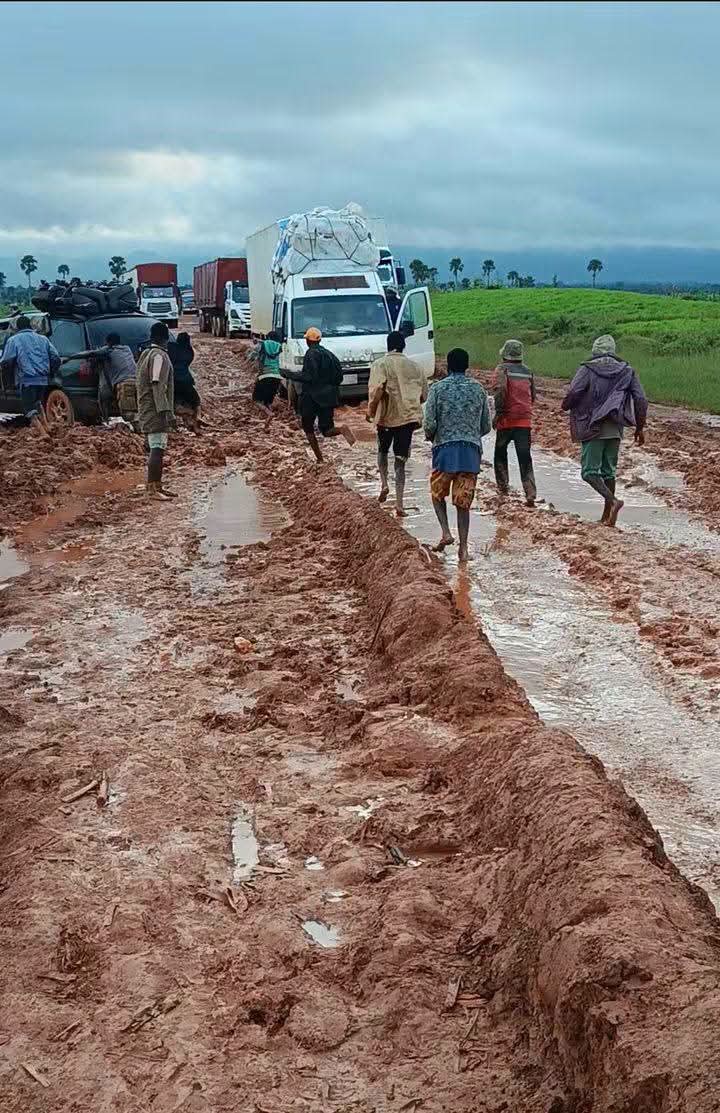
The 52-kilometre Vom-Ganawuri-Manchok road linking Plateau State with Kaduna has deteriorated badly, leaving motorists stranded for hours and, in some cases, days as vehicles struggle through deep mud and failed sections.
Heavy-duty trucks have reportedly become trapped at several points along the highway, which serves as a major connection between Plateau, Kaduna and communities across the Middle Belt.
The road was reconstructed and commissioned in 2013 under the administration of former President Goodluck Jonathan. At the time, then Minister of Works Mike Onolememen described it as a “world-class standard” highway capable of competing with roads anywhere in the world.
Today, the condition of the road bears little resemblance to that description. Signs of deterioration reportedly emerged within two years of its commissioning, with sections of the asphalt beginning to peel away.
The road is particularly important because it provides the shortest route between Jos and Kaduna, cutting travel time to about two and a half hours. Alternative routes through Saminaka or Kagoro can take more than four hours.
Communities along the corridor, including Vom, Ganawuri and Manchok, are major producers of yam, maize, rice, Irish potatoes and ginger. Farmers depend on the highway to transport their produce to markets in Jos, Kaduna, Abuja and other parts of the country.
One of the worst-affected areas is around Danton Village and Ganawuri Hills in Riyom Local Government Area of Plateau State, about 31 kilometres from Jos. A roughly 100-metre stretch has reportedly turned into a muddy section that is difficult for vehicles to cross, particularly during the rainy season.
Youths from nearby communities have reportedly been helping motorists recover vehicles from the mud while collecting N200 or more in some cases. The informal payments have added to the cost of using the already deteriorated route.
The impact extends beyond transportation. Trucks carrying agricultural produce have reportedly overturned along the highway, resulting in significant losses for farmers and traders. Drivers also face higher maintenance costs, which can translate into increased transport fares and ultimately higher food prices.
Security concerns have further complicated the situation. Some road users say slow-moving vehicles have become vulnerable to armed robbery, while the difficult sections have also been associated with accidents. The Federal Road Safety Corps has previously reported serious incidents, including tanker explosions, around the Ganawuri Hills axis.
Traders and commuters from Plateau and Kaduna are increasingly avoiding the route, disrupting movement around rural markets and weakening trade between communities on both sides of the state boundary.
Stakeholders in Riyom and Kaura Local Government Areas are calling for urgent government intervention. They want the Federal Government, the Federal Ministry of Works and FERMA to consider full reconstruction of the road rather than temporary repairs.
They also warn that continued deterioration could affect the movement of agricultural produce during the next farming season, increasing the risk of losses for farmers and higher food prices for consumers.
For now, motorists have been advised to consider alternative routes where possible. The collapse of the Vom-Ganawuri-Manchok road has become more than a transportation problem, with its effects increasingly being felt in food distribution, regional trade, security and household costs.