Now Reading: South Africans Vote in Crucial Local Elections as ANC Faces Fresh Political Challenge
-
01
South Africans Vote in Crucial Local Elections as ANC Faces Fresh Political Challenge
South Africans Vote in Crucial Local Elections as ANC Faces Fresh Political Challenge

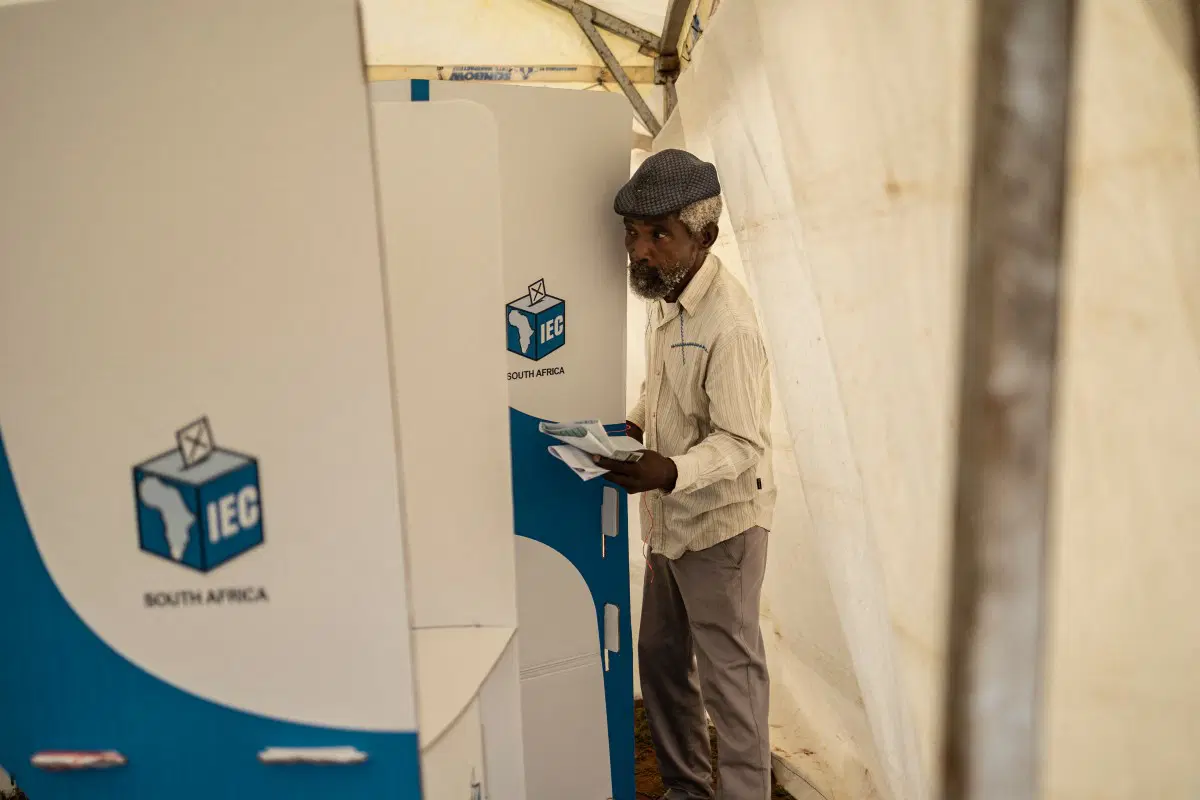
South Africans are voting in closely watched local government elections, with major political parties competing for control of key cities amid growing public dissatisfaction over poor infrastructure, unemployment and persistent inequality.
Polling stations opened at 7:00 am on Wednesday and are scheduled to close at 9:00 pm local time. The election is expected to provide an indication of public opinion ahead of the country’s next national polls in 2029.
Many voters are demanding improvements in basic services, including reliable electricity, clean water and employment opportunities. The country continues to battle unemployment above 30 per cent, while failing infrastructure has added to frustration with the political establishment.
More than 29 million people are registered to vote. However, turnout remains a major concern after only 46 per cent of registered voters participated in the 2021 municipal elections. The Electoral Commission also disclosed that 1.4 million of the 2.6 million people approved for special voting over two days had cast their ballots by Tuesday.
The ruling African National Congress (ANC), which led South Africa’s liberation struggle, is still projected to emerge as the largest party nationally, although opinion polls suggest its support could decline further. The party, associated with former president Nelson Mandela, lost its outright majority for the first time in the 2021 municipal elections and secured just over 40 per cent in the 2024 national elections.
The 2024 result forced the ANC to form a government of national unity with nine other political parties. The Democratic Alliance (DA), the country’s second-largest party, is targeting Johannesburg, hoping to benefit from public anger over service delivery failures. Meanwhile, former president Jacob Zuma’s uMkhonto weSizwe (MK) party is seeking to strengthen its position in Durban after winning 14.5 per cent of the national vote in 2024.
South Africans elect municipal councillors, who subsequently choose mayors and form the administrations responsible for running local governments. With several major cities unlikely to produce clear outright winners, the results could lead to fresh coalition negotiations. By February 2026, 74 of the country’s 257 municipalities were already governed by coalitions or minority administrations, according to the Mapungubwe Institute for Strategic Reflection.
Political analyst Kingsley Makhubela said voters were likely to focus on everyday concerns such as water supply, electricity, roads and sewage rather than party loyalties. He argued that the election would be shaped by these basic service delivery issues, while the final results, expected on Sunday, could influence the ANC’s political future ahead of its December 2027 leadership conference.