Now Reading: Obasanjo: South Africa Wouldn’t Have Ended Apartheid Without Nigeria’s Support
-
01
Obasanjo: South Africa Wouldn’t Have Ended Apartheid Without Nigeria’s Support
Obasanjo: South Africa Wouldn’t Have Ended Apartheid Without Nigeria’s Support

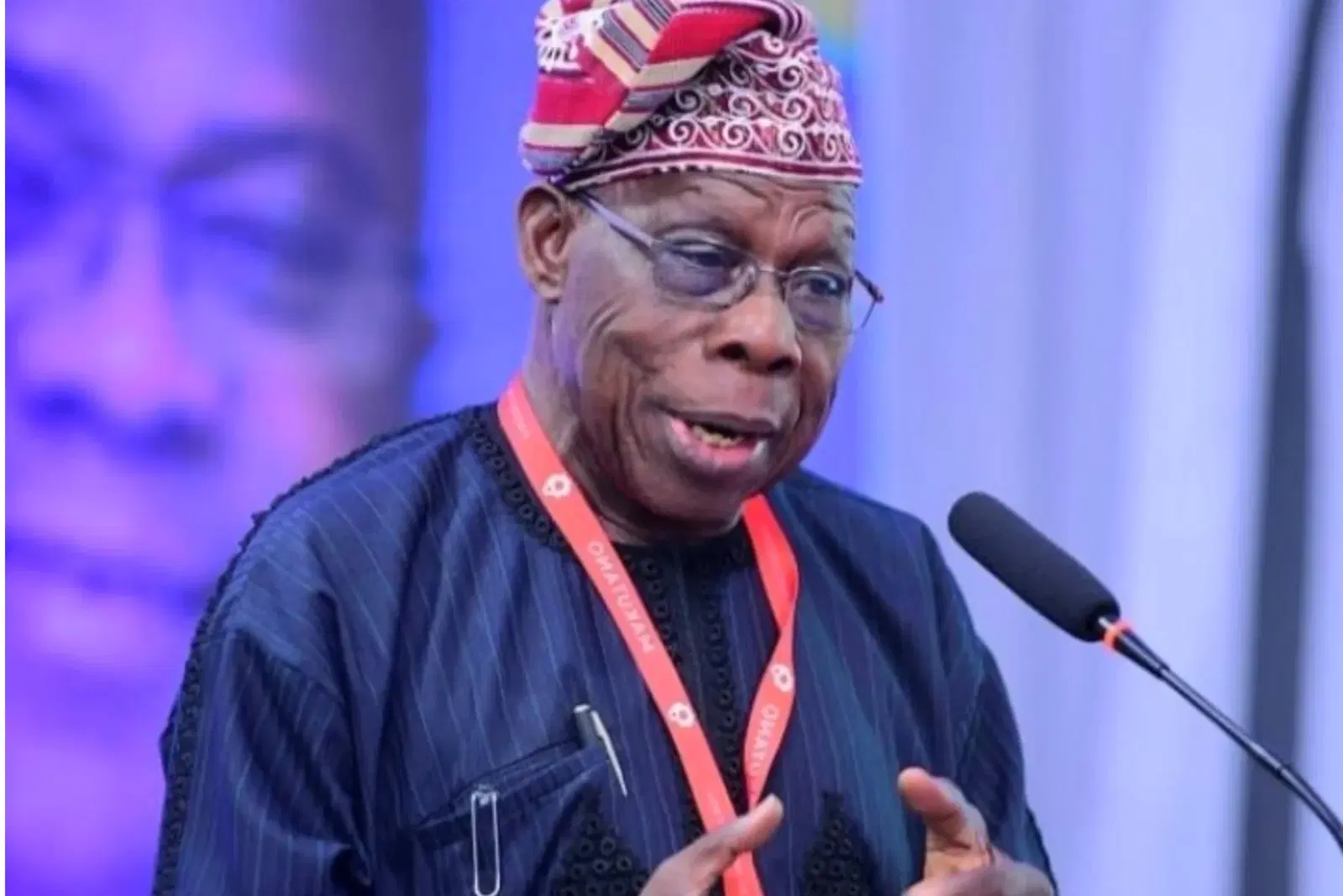
Former President Olusegun Obasanjo has said South Africa would not have ended apartheid when it did without Nigeria’s support for the struggle against white minority rule.
Obasanjo said Nigeria’s involvement in the anti-apartheid campaign was driven by the belief that no Black person should be regarded as inferior because of their skin colour, stressing that the country supported the struggle without seeking personal or national rewards.
The former president made the remarks during an interview on C-Suite Cafe, hosted by Ikem Okuhu.
“We were not doing what we did in South Africa or in Southern Africa or decolonisation anywhere for our personal gain or for our country. We did it for our race. I believe that no Black man anywhere or Black person anywhere should be regarded as an inferior human being because of his colour,” Obasanjo said.
He described Nigeria’s contribution to the anti-apartheid struggle as “enlightened self-interest” and said Nigerians should remain proud of the country’s role in opposing white minority rule.
“And for me—and I believe for Nigeria at that time and even now—we should be proud of what we did because without Nigeria, South Africa would not have got rid of apartheid when it got rid of it. That is true,” he said.
Obasanjo, who served as Nigeria’s military head of state from 1976 to 1979 and later as civilian president from 1999 to 2007, said Nigeria worked with several African and international leaders in the campaign against apartheid. He listed former US President Jimmy Carter, former British Prime Minister James Callaghan, former Tanzanian President Julius Nyerere, former Zambian President Kenneth Kaunda, former Mozambican President Samora Machel and former Swedish Prime Minister Olof Palme.
The former president also criticised xenophobic attacks targeting African migrants in South Africa, arguing that violations of immigration laws or criminal activity should be handled through lawful means rather than attacks on migrants’ homes and businesses.
“There are criminals among the illegal migrants, but I do not believe that you use illegality to treat illegality, asking and encouraging area boys and area girls to break into their houses and break into their shops,” he said.
Obasanjo questioned the scale of migrants’ impact on South Africa’s economy and noted that some migrants create jobs rather than take them away. He suggested that political pressure over unmet expectations among ordinary South Africans could be contributing to the hostility towards migrants.
He argued that the challenge extends beyond South Africa, noting that ordinary citizens across Nigeria, Kenya and other African countries are also struggling with unmet expectations. Obasanjo said using “illegality to treat illegality” would not provide a solution if African countries genuinely want greater integration.