Now Reading: ADC Defends Atiku’s Absence From 2027 Peace Accord, Says Signing Alone Cannot Stop Election Violence
-
01
ADC Defends Atiku’s Absence From 2027 Peace Accord, Says Signing Alone Cannot Stop Election Violence
ADC Defends Atiku’s Absence From 2027 Peace Accord, Says Signing Alone Cannot Stop Election Violence

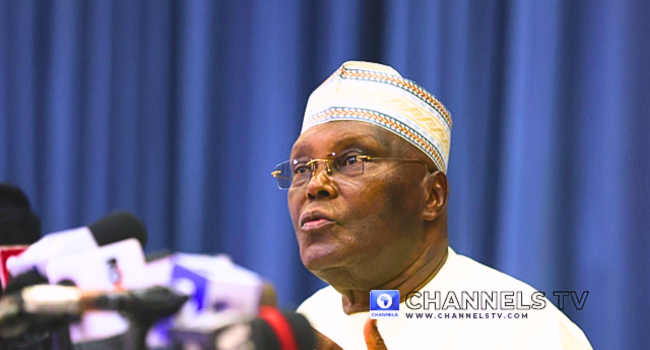
The African Democratic Congress (ADC) has defended its decision to keep presidential candidate Atiku Abubakar away from the signing of the National Peace Accord, saying the boycott was a deliberate protest against what it considers an ineffective response to electoral violence.
ADC National Publicity Secretary, Bolaji Abdullahi, explained the party’s position during an interview on Channels Television’s Sunrise Daily on Friday. He said politicians had repeatedly signed peace agreements before elections without seeing strong action when violence or other violations followed.
Abdullahi cited recent incidents surrounding the Osun governorship election, arguing that the National Peace Committee had failed to publicly condemn alleged killings and inflammatory statements linked to the election.
“We’ve been signing this thing year in, year out, every election cycle; we sign in support of this commitment. Things still happen; people still get killed, harassed, like in the case of Osun, but we don’t hear the Peace Committee say anything,” he said.
He also referred to comments attributed to Osun Senator Francis Fadahunsi before the election, alleging that the Peace Committee did not respond adequately. Abdullahi said the ADC’s decision to stay away was therefore its way of rejecting what it sees as a largely ceremonial process.
“So, what is the point? So, it’s our (ADC) way of saying no,” the party spokesman said, adding that political leaders should face consequences when their statements could encourage violence, regardless of their position.
The National Peace Accord was signed on Tuesday by several presidential candidates and political leaders ahead of the 2027 general elections. The agreement is designed to promote peaceful campaigns, discourage violence and encourage issue-based political engagement before, during and after the elections.
Atiku and President Bola Tinubu were both absent from the ceremony, although the President was represented by Secretary to the Government of the Federation, George Akume. Nigeria Democratic Congress candidate Peter Obi was among those who signed the accord and called for credible, peaceful elections.
The ADC’s position has added another layer to the debate over the credibility of the peace process, with the party demanding stronger enforcement rather than another symbolic pledge. INEC Chairman Joash Amupitan has also urged political parties to turn the 2027 campaign into a “marketplace of ideas” focused on solutions rather than insults and confrontation.