Now Reading: AI Beauty Models Raise Fresh Concerns Over Body Image Among Young People
-
01
AI Beauty Models Raise Fresh Concerns Over Body Image Among Young People
AI Beauty Models Raise Fresh Concerns Over Body Image Among Young People

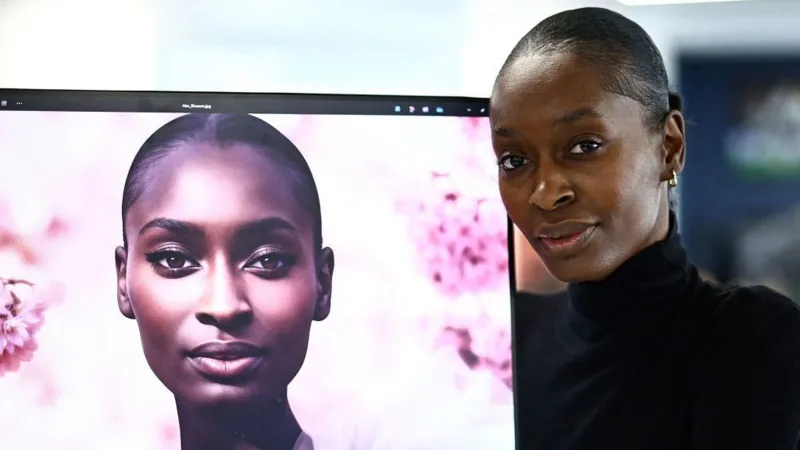
The growing use of artificial intelligence-generated models and images in social media and advertising is raising concerns about its potential impact on body image, particularly among children and teenagers.
Mia Perumal, a 19-year-old Cardiff University student who has recovered from an eating disorder, said she fears AI-generated beauty content could make unrealistic appearance standards even harder for young people to escape.
Perumal said she was exposed to harmful social media content from the age of 12 and believes access to AI-generated images during her eating disorder could have made her experience significantly worse.
She said she has increasingly noticed images of extremely thin, conventionally attractive AI-generated people appearing on social media, with some posts attracting comments from young girls asking for workout routines to achieve similar bodies.
Perumal described the trend as “really sad”, arguing that the appearance portrayed by many AI models is impossible for real people to attain.
“It’s all very well saying ‘oh, it’s AI, it’s not real’, but eating disorders don’t really listen to rationality,” she said.
She believes greater controls are needed around AI-generated content and urged young people to be cautious and question what they see online.
Parents fear impact on children
Concerns about AI-generated beauty standards are also being raised by parents.
Kelly Watts, 41, said she remembers constantly comparing her appearance with other people and models in magazines when she was a teenager.
Now, she worries that her 11-year-old son could experience similar pressures from AI-generated images of supposedly “perfect” people.
Watts, who works as a freelance marketer, said she regularly encounters AI-generated images in business and advertising but often finds that they are not clearly labelled.
“At first, I didn’t realise they were AI, but the more you see it, the more you can’t unsee it,” she said.
Her son Oscar plays rugby and is already becoming aware that some of his friends are taller than him. Although he has not expressed concerns about his body, Watts said she worries about the influence of AI-generated characters and images he may encounter online.
She said exposure to images of athletes with highly defined physiques already contributes to body-image pressures, and AI could take those expectations even further.
“It’s putting a lot of pressure on them, which they don’t need,” she said.
Watts said better AI literacy was necessary, including helping children distinguish between real and computer-generated images.
“Why do we want to compare ourselves to a robot instead of a human?” she asked.
AI can reinforce narrow beauty standards
Phillippa Diedrichs, professor of psychology at the Centre for Appearance Research at UWE Bristol, said people naturally compare themselves with others, but social media can intensify that process by repeatedly exposing users to narrow standards of beauty.
She said digitally created images can be particularly problematic because the people and bodies being presented may not even exist in biological reality.
“When we fall short, this can lead us to doubt ourselves and feel negatively about our own appearance,” Diedrichs explained.
She warned that unless AI systems are deliberately prompted to produce realistic and diverse representations, they can reproduce existing cultural biases and traditional beauty ideals contained in their training data.
That could mean fewer representations of people with distinctive facial features, people of colour, queer people and others who fall outside conventional beauty standards.
However, Diedrichs said AI could also have a positive effect if it is deliberately used to promote greater diversity and inclusion.
She said the technology could potentially allow brands to represent a wider range of people, although this would depend on how the systems are designed and used.
AI images becoming harder to identify
Identifying AI-generated people is also becoming increasingly difficult as the technology improves.
Diedrichs said consumers may sometimes notice clues such as unusual skin texture, eyes or the appearance of coily hair. A lack of natural blemishes or visible pores can also indicate that an image has been generated artificially.
But she acknowledged that these clues are becoming less reliable as AI technology advances.
Diedrichs said teenagers can be highly aware of technology and may recognise that an image is artificial, but awareness does not necessarily prevent people from wanting to look like what they see.
She encouraged consumers to consider how particular images make them feel.
“If it’s making you feel lacking, that’s a really important signal to pay attention to,” she said.
Brands experiment with AI models
AI-generated fashion models and digital twins — virtual versions of real models — are becoming increasingly common in the fashion and advertising industries.
Researchers Zoe Lee and Hannah Marriott of Cardiff Business School said companies including Balmain, Levi’s and H&M have experimented with the technology.
Their research, however, found that consumers often reacted negatively after discovering that models in advertising were AI-generated.
Participants in their focus groups said they would prefer fewer models who were real people rather than a larger number of artificial representations.
Marriott said some participants also became emotionally detached from images once they learned that the people shown had been generated by AI.
H&M said it worked with real models in 2025 to create digital representations, or twins, of them, with the models retaining control and ownership of their digital versions.
The company later said the exploration was paused in spring 2025 while it considered its next steps.
Researchers said AI could offer advantages to brands, including helping smaller companies access a wider range of models and allowing international brands to create advertising for different markets.
But concerns remain over the technology’s potential impact on body image, representation and jobs within creative industries.
For young people already vulnerable to appearance-related pressures, the growing presence of AI-generated bodies could make the distinction between realistic and impossible beauty standards even more difficult to navigate.
The debate is therefore moving beyond whether AI images can be identified to a broader question: how should the technology be used without deepening the pressures people already face over their appearance?