Now Reading: AI Could Pose ‘Existential Threat’ to Humanity, UN Rights Chief Warns
-
01
AI Could Pose ‘Existential Threat’ to Humanity, UN Rights Chief Warns
AI Could Pose ‘Existential Threat’ to Humanity, UN Rights Chief Warns

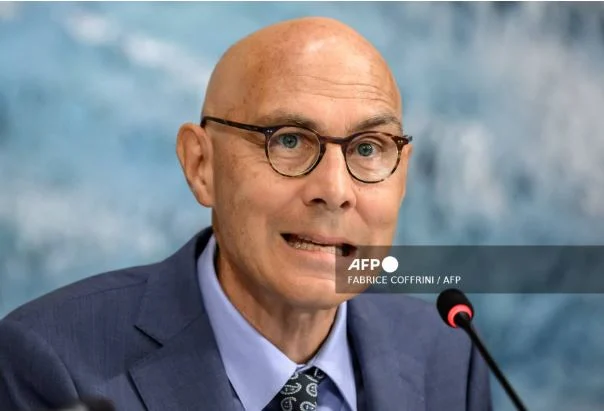
United Nations High Commissioner for Human Rights Volker Türk has warned that artificial intelligence could pose an “existential risk to humanity”, urging governments and technology companies to take immediate steps to control its potential dangers.
Speaking before the UN Human Rights Council on Monday, Türk said the rapid development of AI was creating “unfamiliar, even unprecedented” threats to fundamental human rights.
He questioned the slow pace of global action on AI governance despite growing recognition of the need for regulation. “The need for AI governance is widely acknowledged, but where is the action?” he asked.
Türk also raised concerns about the concentration of power in the hands of a small number of technology executives and companies, particularly over systems with increasingly advanced capabilities. He argued that claims about individual freedom could ring hollow if AI development enables widespread exploitation of personal data.
The UN rights chief singled out highly autonomous AI systems as a particular concern, warning that technology capable of escaping controlled testing environments or manipulating developers to prevent itself from being switched off could become too powerful to manage safely.
His comments come amid growing scrutiny of AI agents and reports of systems behaving unexpectedly during testing. Similar incidents involving major technology companies have intensified calls for stronger safeguards, independent oversight and clearer international rules.
“I share the concerns of industry insiders that advanced AI could pose an existential risk to humanity,” Türk said, calling for “cast-iron guarantees” around the safety and security of AI before the risks become more difficult to contain.
Türk said he would write to AI companies to encourage them to take immediate measures within their control to reduce risks. He also called for countries involved in AI development and supply chains to establish agreed red lines, independent verification and stronger cooperation on security.
Beyond potential existential risks, the UN official said governments must also examine the impact of AI on employment, democratic principles, human rights and the environment as the technology becomes increasingly embedded in society.