Now Reading: Bwala’s Poverty Admission Raises Questions About Tinubu’s Economic Reforms – Atiku’s Aide
-
01
Bwala’s Poverty Admission Raises Questions About Tinubu’s Economic Reforms – Atiku’s Aide
Bwala’s Poverty Admission Raises Questions About Tinubu’s Economic Reforms – Atiku’s Aide

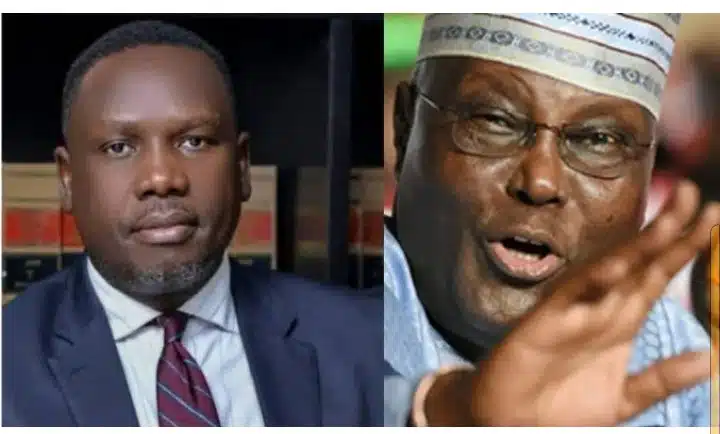
Paul Ibe, media adviser to former Vice President Atiku Abubakar, has criticised President Bola Tinubu’s economic policies following comments by presidential aide Daniel Bwala about poverty in Nigeria.
Ibe described Bwala’s remarks during an appearance on Channels Television as revealing, arguing that they highlight the human cost of the administration’s economic reforms.
In a statement issued on Thursday, Ibe said the admission was an indictment of a government he accused of prioritising the defence of its policies over the welfare of Nigerians.
“Let me remind Daniel Bwala of a fundamental principle of governance: policies are made for man, not man for policies,” Ibe said.
He argued that economic reforms should improve living standards rather than leave citizens struggling with rising costs. According to Ibe, if the government’s policies have increased poverty, weakened purchasing power and driven up the cost of food, transportation and electricity, they should be reviewed urgently.
Ibe also defended Atiku’s call for a review of the Tinubu administration’s approach to petrol subsidy and electricity pricing. He said the former vice president had proposed a transparent, production-based subsidy framework aimed at lowering energy costs and providing relief to households and businesses.
“Reform must have a human face. Economic policies should serve the people, not sacrifice the people on the altar of economic theories,” he said.
Questioning the administration’s claims of progress, Ibe asked whether the benefits of its policies were reaching ordinary Nigerians or primarily increasing government revenue. He maintained that economic success should be measured by improvements in citizens’ lives rather than the government’s defence of its reform programme.
Ibe further argued that Nigerians should not be treated as subjects of economic experiments and claimed that a second term for Tinubu would not guarantee the relief and improved living standards citizens deserve.
He concluded with a political warning about the consequences of returning the president to office, describing Tinubu as being “primed to be an undertaker if handed a return mandate.”
The remarks add to the political debate over the effects of Tinubu’s economic reforms, including their impact on household spending, business costs and poverty. Bwala’s comments and the broader claims about the reforms’ effects remain central to the dispute between the administration and its critics.