Now Reading: Court Restrains Police, FRSC From Fining Motorists Over Third Party Insurance Without Court Order
-
01
Court Restrains Police, FRSC From Fining Motorists Over Third Party Insurance Without Court Order
Court Restrains Police, FRSC From Fining Motorists Over Third Party Insurance Without Court Order

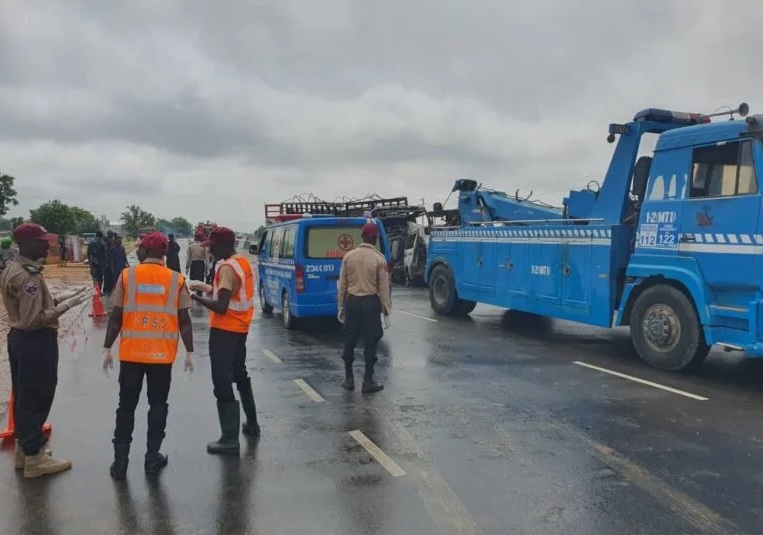
A Federal High Court in Abuja has issued a significant ruling restraining the Nigeria Police Force and the Federal Road Safety Corps (FRSC) from imposing fines or penalties on motorists for breaches of the Third Party Motor Vehicle Insurance Act without obtaining a valid court order.
Delivering judgment on Friday, Justice Hauwa Joseph Yilwa held that while both agencies are empowered to enforce the insurance law, they do not have the legal authority to independently impose fines or sanctions on motorists without judicial backing.
The case was filed by human rights lawyer Deji Adeyanju, who challenged what he described as unlawful enforcement practices by the agencies.
Before delivering the substantive judgment, the court dismissed a preliminary objection filed by the police, which sought to challenge the court’s jurisdiction to hear the matter.
Counsel to the police, Andrew Victor, argued that the court lacked jurisdiction and claimed the police had not been properly served with court documents. He further insisted that jurisdictional issues could be raised at any stage of proceedings.
However, Justice Yilwa rejected the objection, stating that the court record clearly showed that the police had been duly served on multiple occasions.
According to her, the originating summons had been served on the respondents on several dates, including April 3, May 21, November 14, 17, January 28, and April 21.
The judge also noted that other respondents had filed responses, while the police failed to respond, despite clear evidence of service.
“1st respondent is very much aware of the suit but refused to respond. This is viewed as an attempt to arrest this judgment and this court will not allow it,” she ruled.
She consequently dismissed the preliminary objection and proceeded to judgment.
In her final ruling, Justice Yilwa held that enforcement agencies must operate within the limits of the law, stressing that the imposition of fines or penalties without judicial authorization is unconstitutional.
The decision is expected to have wide implications for traffic enforcement practices in Nigeria, particularly in relation to insurance compliance checks conducted by security agencies on public roads.