Now Reading: Five Years After PIA, Oil Sector Stakeholders Demand Action to Boost Investment, Production
-
01
Five Years After PIA, Oil Sector Stakeholders Demand Action to Boost Investment, Production
Five Years After PIA, Oil Sector Stakeholders Demand Action to Boost Investment, Production


Five years after Nigeria enacted the Petroleum Industry Act (PIA), oil and gas stakeholders have called on the Federal Government to close remaining implementation gaps, warning that regulatory uncertainty could weaken investment, production and energy security.
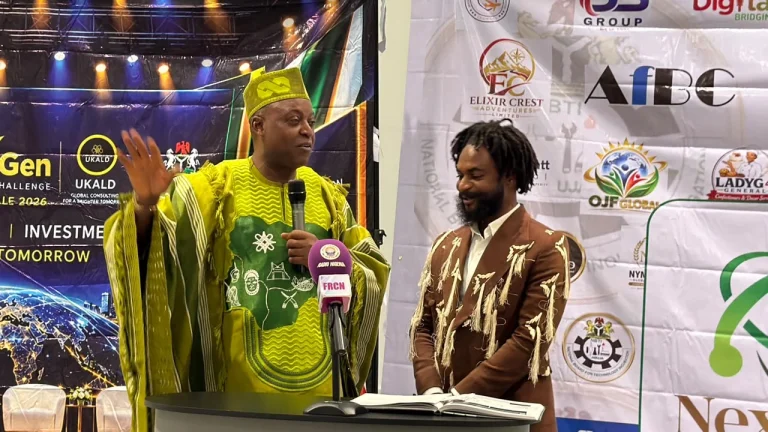
The concerns were raised at the Petroleum and Natural Gas Senior Staff Association of Nigeria (PENGASSAN) Energy and Labour Summit in Abuja. Industry experts used the event to assess the impact of the PIA since its passage in 2021 and examine what more is needed to turn the reform into higher investment and stronger oil and gas output.
Oil and gas expert Solomon Orieji said the PIA helped address uncertainty surrounding some of Nigeria’s major deepwater assets. He noted that five major deepwater projects, which account for about 80 per cent of the country’s deepwater production, were developed under commercial agreements signed in 1993 for 30 years.
With those agreements nearing expiration in 2023, investors faced questions over the legal framework for extending their interests and committing fresh capital. Orieji said the PIA provided a framework for the renewal and renegotiation of the production-sharing contracts, helping to reduce the investment risk surrounding the assets.
However, he warned that regulatory certainty alone should not be used to judge the success of the petroleum reform. Dr Mohammed Malah said the real test would be whether the framework delivers new investment, increased production and greater value for the Nigerian economy.
Malah acknowledged reforms under the PIA, including the separation of upstream, midstream and downstream functions, the restructuring of the Nigerian National Petroleum Corporation into a commercial entity and the formal inclusion of host communities in the petroleum framework. But he stressed that legislation by itself cannot increase oil output.
“The law itself does not produce a barrel,” Malah said, arguing that investment must be supported by infrastructure, skilled personnel, technology and effective implementation. He also cautioned against treating investment announcements as evidence of actual capital deployment, noting that security, financing costs, infrastructure and ageing assets remain major factors in production decisions.
Okechukwu Nwankwo said the PIA had already produced some positive investment outcomes through a more predictable regulatory framework and the introduction of more than 20 regulations. He pointed to projects including Indorama Train 3, Odum Energy, Ovade GPP, AGPCL and SIGP, which he said have a combined processing capacity of about 810 million standard cubic feet.
Nwankwo also disclosed that the Midstream and Downstream Gas Infrastructure Fund (MDGIF) had invested more than N570 billion and helped catalyse over N2 trillion in additional investment. He said the next phase of the reform should focus on issues including third-party access, tariffs, pricing, licensing, transparency, feedstock supply and strategic petroleum reserves.
The discussions underscored the challenge facing Nigeria five years into the PIA. While the Act has provided a clearer regulatory structure and helped reduce some investor uncertainty, stakeholders said its ultimate success will depend on converting confidence into actual capital deployment, completed projects, higher production and improved energy security.