Now Reading: INEC Yet to Receive Funds for 2027 Elections, Says Preparations Already Underway Despite N873.8bn Budget Proposal
-
01
INEC Yet to Receive Funds for 2027 Elections, Says Preparations Already Underway Despite N873.8bn Budget Proposal
INEC Yet to Receive Funds for 2027 Elections, Says Preparations Already Underway Despite N873.8bn Budget Proposal

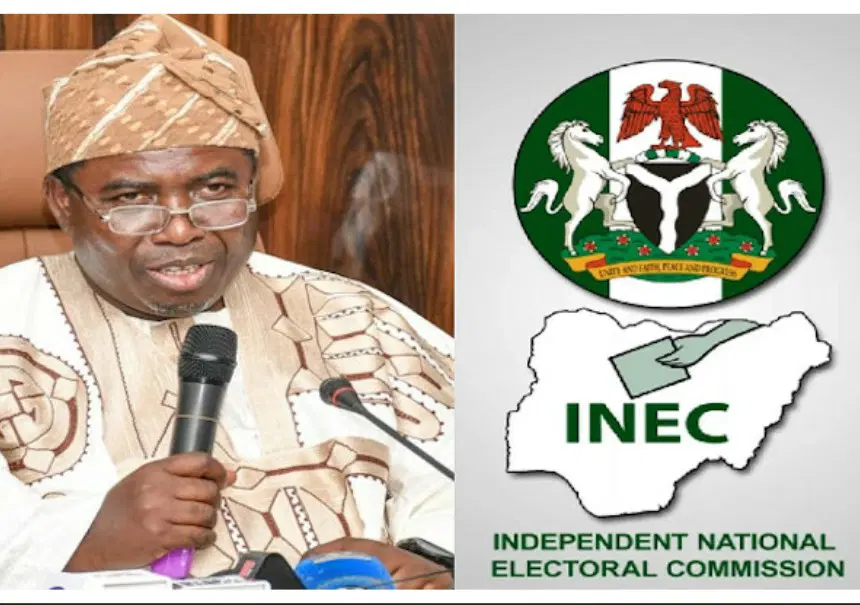
Nigeria’s electoral umpire has confirmed that it is yet to receive any budgetary allocation for the 2027 general elections, even as it continues preparations to deliver what it describes as a credible and technologically improved poll.
The disclosure was made on Thursday by Mohammed Haruna, the National Commissioner in charge of Voter Education and Publicity at the Independent National Electoral Commission, during a cross-sectoral interactive session in Abuja organised by the Peering Advocacy and Advancement Centre in Africa in partnership with Legis360.
Haruna said although the commission is still waiting for the release of election funds, preparations have not stopped. He explained that the Electoral Act 2026 requires election funds to be released no later than six months before the general election, meaning the commission is still operating within the legal timeline.
According to him, INEC has already begun making arrangements to replace election equipment, including damaged and unrecovered Bimodal Voter Accreditation System (BVAS) devices used during previous elections. He disclosed that the commission’s Director of ICT recently travelled to China to facilitate procurement, stressing that replacing the equipment requires early planning.
“Our director of ICT just returned from China regarding procurement because not all the BVAS devices used during the last general elections were recovered. Orders need to be placed, and these things take time,” Haruna said.
The commission also plans to conduct mock presidential election exercises ahead of 2027 to test its technology and prevent a repeat of the technical problems that affected the INEC Result Viewing (IReV) portal during the 2023 presidential election.
INEC has proposed a budget of ₦873.78 billion for the 2027 general elections, with significant funding expected to cover election operations, technology deployment and capital expenditure. Responding to concerns over the size of the budget, Haruna argued that the cost should be viewed in relation to the number of voters rather than the total amount.
“This N800 billion plus sounds humongous, but when you calculate the average cost per voter, it is about six dollars, which is reasonable for a country such as Nigeria. Virtually everything we use is imported, and exchange rate fluctuations continue to affect procurement costs,” he explained.
Haruna also identified conflicting court orders as one of the commission’s biggest operational challenges. He said last-minute judicial directives received shortly before the Ekiti governorship election forced INEC to reconfigure its software and redesign physical election materials to accommodate newly recognised political parties, leaving little time for adequate testing.
The national commissioner further addressed concerns over an alleged data breach involving the commission, assuring Nigerians that strict internal accountability measures remain in place. He revealed that an electoral officer accused of deliberately leaking sensitive information has been suspended, while the matter is being investigated by the Nigeria Data Protection Commission, the police and the Department of State Services.
Reviewing the recent Ekiti governorship election, Haruna said the BVAS technology recorded a 98 per cent successful voter accreditation rate despite minor biometric challenges involving elderly voters. However, he expressed concern over the persistence of vote-buying, describing it as one of the biggest threats to Nigeria’s electoral integrity.
Speaking after the event, PAACA Executive Director Ezenwa Nwagwu urged the Federal Government to release election funds early to avoid emergency procurement processes that could undermine transparency.
He warned that delayed funding encourages “fire brigade” planning and creates opportunities for corruption, adding that political actors should also be held accountable whenever institutional bottlenecks weaken the electoral process.