Now Reading: Marco Rubio Warns Iran Deal Must Not Threaten Gulf Security as Hormuz Tensions Persist
-
01
Marco Rubio Warns Iran Deal Must Not Threaten Gulf Security as Hormuz Tensions Persist
Marco Rubio Warns Iran Deal Must Not Threaten Gulf Security as Hormuz Tensions Persist

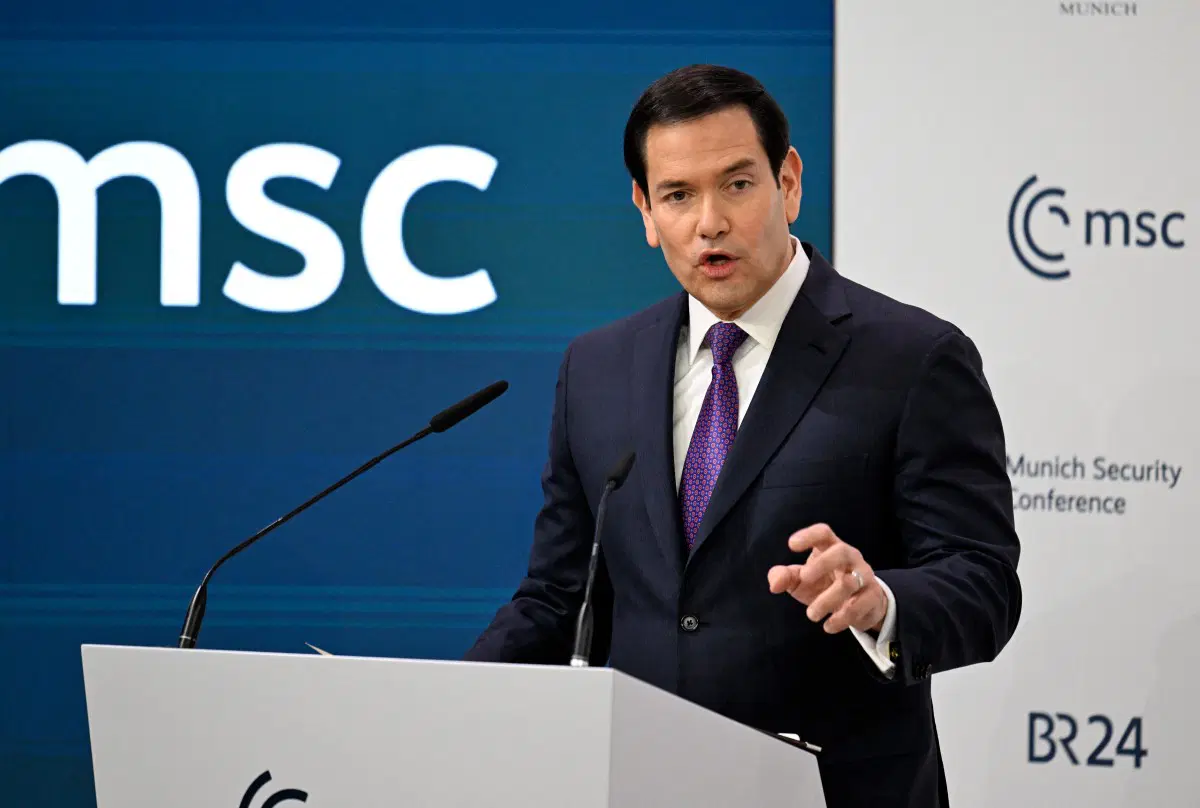
The United States has insisted that any peace agreement with Iran must protect the security interests of Gulf nations, as negotiations continue following the recent Middle East conflict that shook global energy markets.
Speaking in Bahrain on Thursday, US Secretary of State Marco Rubio sought to reassure Gulf allies that Washington would not accept a deal that compromises regional stability or the security of its long-standing partners.
Rubio’s visit forms part of a broader diplomatic tour across the Gulf following the war that erupted on February 28, when a large-scale US-Israeli military campaign targeted Iran. Although a preliminary agreement has since been reached to halt hostilities, difficult negotiations remain underway over Iran’s nuclear activities, sanctions relief and the future of energy shipments through the strategically vital Strait of Hormuz.
Addressing Gulf Cooperation Council leaders, Rubio stressed that Washington’s desire for a diplomatic settlement does not mean it is willing to make unlimited concessions. He said any final agreement must safeguard the prosperity, security and stability of Gulf states that have long faced concerns over Iran’s regional influence and military capabilities.
One of the most contentious issues remains the Strait of Hormuz, a critical maritime route through which a significant portion of the world’s oil and liquefied natural gas supplies pass. During the conflict, Iran imposed a blockade on the waterway in response to military strikes, triggering fears of a major global economic disruption.
Although shipping has resumed, tensions remain high after Tehran signalled plans to introduce maritime service charges in the area. Iran’s Revolutionary Guards warned this week that vessels using the route without authorisation could face consequences, prompting strong opposition from the United States and its allies.
Rubio reiterated Washington’s position that the Strait of Hormuz must remain an international waterway open to all lawful commercial traffic. He argued that allowing any nation to impose restrictions or fees on such routes would threaten global trade and economic stability.
Meanwhile, neighbouring Oman announced a temporary shipping corridor close to its coastline to ease maritime concerns. The route was reportedly coordinated with the International Maritime Organization, though Iranian officials appeared to criticise the move without directly naming Oman.
Despite the ongoing negotiations, Iran has projected confidence following the conflict. Tehran has described the preliminary agreement as evidence of American failure and insists it will not surrender control over strategic interests in the region. At the same time, US President Donald Trump said discussions with Iran were progressing positively, while also requesting nearly $88 billion from Congress to cover costs linked to the military campaign.
The diplomatic standoff widened further after Iran criticised the NATO for supporting Washington’s position during the conflict. Tehran accused the military alliance of complicity in what it described as an unlawful war, underscoring the deep divisions that remain despite efforts to secure a lasting peace agreement.