
Now Reading: Mexico Revives Famous ‘Mexican Wave’ Ahead of 2026 World Cup Despite Failed World Record Attempt
-
01
Mexico Revives Famous ‘Mexican Wave’ Ahead of 2026 World Cup Despite Failed World Record Attempt
Mexico Revives Famous ‘Mexican Wave’ Ahead of 2026 World Cup Despite Failed World Record Attempt

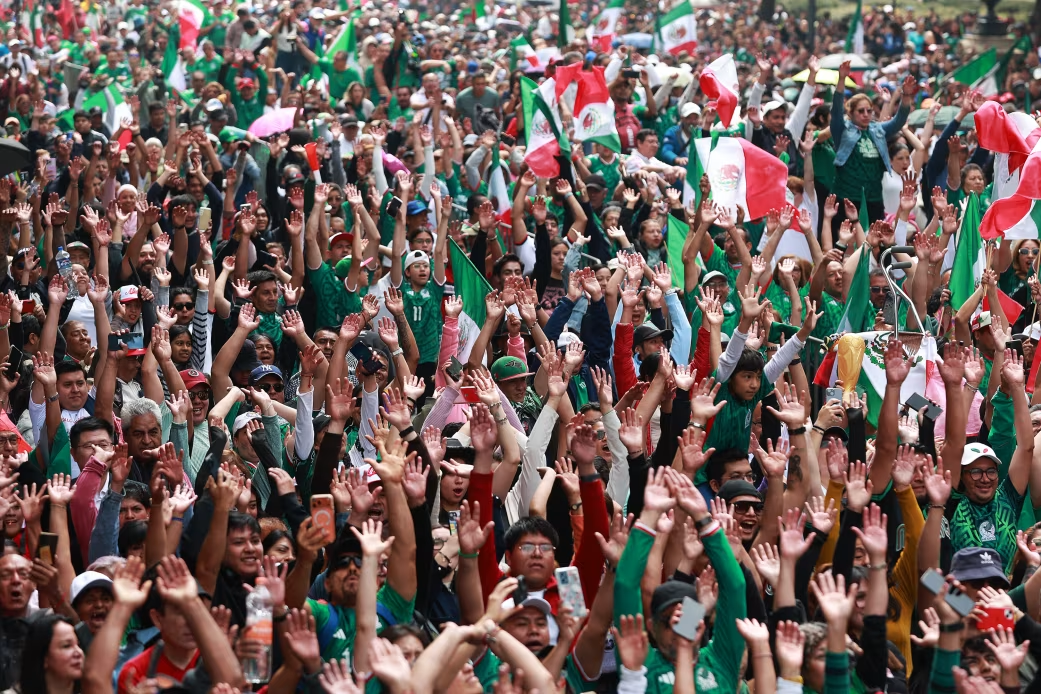
Crowds filled the streets of Mexico City over the weekend as thousands of football fans attempted to set a new world record for the biggest “Mexican Wave” ahead of the start of the 2026 FIFA World Cup.
The massive display unfolded along the famous Paseo de la Reforma, where fans repeatedly rose and sat in synchronized motion during rehearsals organized days before the tournament kicks off. The effort was meant to celebrate one of football’s most iconic fan traditions — a ritual many around the world simply call the “Mexican Wave.”
Although local officials initially celebrated the attempt as a record-breaking success, Guinness World Records later confirmed on Monday that the attempt did not officially qualify. The organization did not immediately explain why the record bid failed.
Still, the atmosphere in Mexico has already captured global attention as the country prepares to co-host the 2026 FIFA World Cup alongside the United States and Canada. Mexico will stage 13 matches during the tournament, including the opening game between Mexico national football team and South Africa national football team on June 11 in Mexico City.
For many local fans, football in Mexico goes far beyond what happens on the pitch. Stadiums across the country are known for nonstop music, dancing, drums, horns and chants that transform matches into carnival-like celebrations.
At a recent friendly match between Mexico and Serbia in Toluca, supporters filled the stadium with cumbia music, rhythmic chants and continuous waves rolling through the stands. Fans described the World Cup as an opportunity for Mexico to welcome the world in its own energetic style.
The wave itself has become deeply tied to Mexico’s football identity, even though historians believe the tradition may have first appeared in North America during the late 1970s or early 1980s. It gained international fame during the 1986 FIFA World Cup hosted by Mexico, when millions of viewers around the world saw the synchronized crowd movement on television for the first time.
Since then, the “Mexican Wave” has evolved into a global sporting ritual performed in football stadiums, basketball arenas and major sporting events worldwide. In Mexico, however, many fans view it as more than entertainment.
Fernando Vizcaíno, a researcher at the National Autonomous University of Mexico, said the wave represents a shared national identity and collective celebration among supporters.
As excitement builds for the World Cup opener, Mexico’s football culture — driven by noise, music, passion and spectacle — is already positioning itself as one of the tournament’s biggest attractions.