Now Reading: NAMA Seeks Bigger Share of Aviation Revenue, Pushes for 56% Allocation to Strengthen Airspace Safety
-
01
NAMA Seeks Bigger Share of Aviation Revenue, Pushes for 56% Allocation to Strengthen Airspace Safety
NAMA Seeks Bigger Share of Aviation Revenue, Pushes for 56% Allocation to Strengthen Airspace Safety

The Nigerian Airspace Management Agency (NAMA) has asked the National Assembly to significantly increase its share of the aviation industry’s statutory 5 percent revenue, arguing that rising operational costs are threatening the safety and efficiency of Nigeria’s airspace.
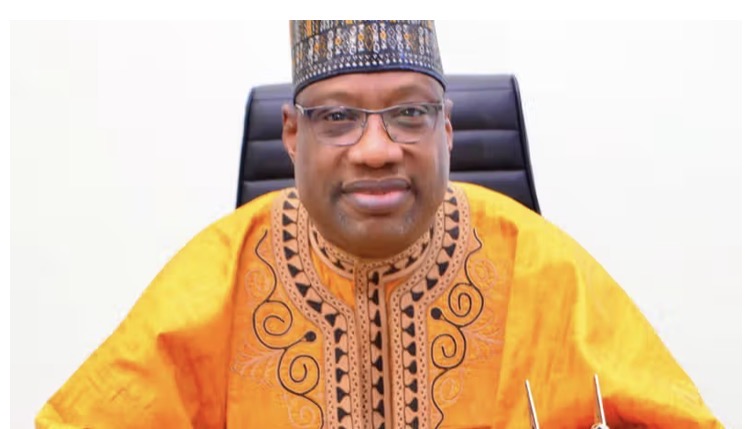
The agency’s Managing Director, Farouk Umar, made the appeal on Thursday during a public hearing organised by the House of Representatives Committee on Aviation. He proposed that NAMA’s allocation be raised from the current 22 percent to 56 percent, stressing that the request is for a redistribution of the existing revenue—not an increase in the 5 percent ticket sales charge paid by passengers.
Umar told lawmakers that NAMA bears the responsibility of providing critical air navigation services that keep aircraft operating safely across Nigeria. He said the current revenue-sharing formula no longer reflects the agency’s expanding responsibilities or the growing financial burden of maintaining aviation infrastructure.
“Before a passenger boards an aircraft, NAMA’s staff and systems are already in action. A flight plan needs processing, aeronautical information must be up-to-date, and radio communications must be clear. Navigation aids must be serviceable. Surveillance must be available. Controllers must be at their positions. Engineers must be ready to respond. Power and backup power must hold,” he said.
The NAMA boss revealed that the agency spent more than N43 billion in 2023 to sustain its operations. The figure includes about N21 billion for personnel costs, over N12 billion for capital projects, and more than N10 billion for recurrent operational expenses.
He also noted that the agency’s navigation charge has remained at N11,000 per flight since June 2008 despite sharp increases in fuel prices, electricity costs, foreign exchange rates, imported aviation equipment, software licences and specialised technical training.
Umar further highlighted the urgent need to modernise Nigeria’s Total Radar Coverage of Nigeria (TRACON) system, warning that ageing surveillance infrastructure and increasing cybersecurity threats require sustained investment in modern technologies, including satellite-based surveillance, digital aeronautical information systems and integrated flight data platforms.
Beyond funding, the NAMA chief called for legislative reforms to harmonise existing aviation laws. He pointed out that while the Civil Aviation Act allocates 22 percent of the statutory aviation revenue to NAMA, the agency’s enabling Act provides for a 23 percent allocation, creating inconsistencies that need to be resolved. He also requested that obstacle assessments and WGS-84 aeronautical surveys be officially recognised as chargeable technical services provided by the agency.
Umar assured lawmakers that increased funding would be matched with greater accountability, promising automated revenue collection, quarterly financial and project reports, annual independent audits and measurable performance indicators. “We are ready to give account of what was received, what it purchased, which milestone was achieved and what improvement the user obtained,” he said.