Now Reading: NGX Companies’ Cash-to-Debt Gap Widens as 22 Firms Hold More Debt Than Cash
-
01
NGX Companies’ Cash-to-Debt Gap Widens as 22 Firms Hold More Debt Than Cash
NGX Companies’ Cash-to-Debt Gap Widens as 22 Firms Hold More Debt Than Cash

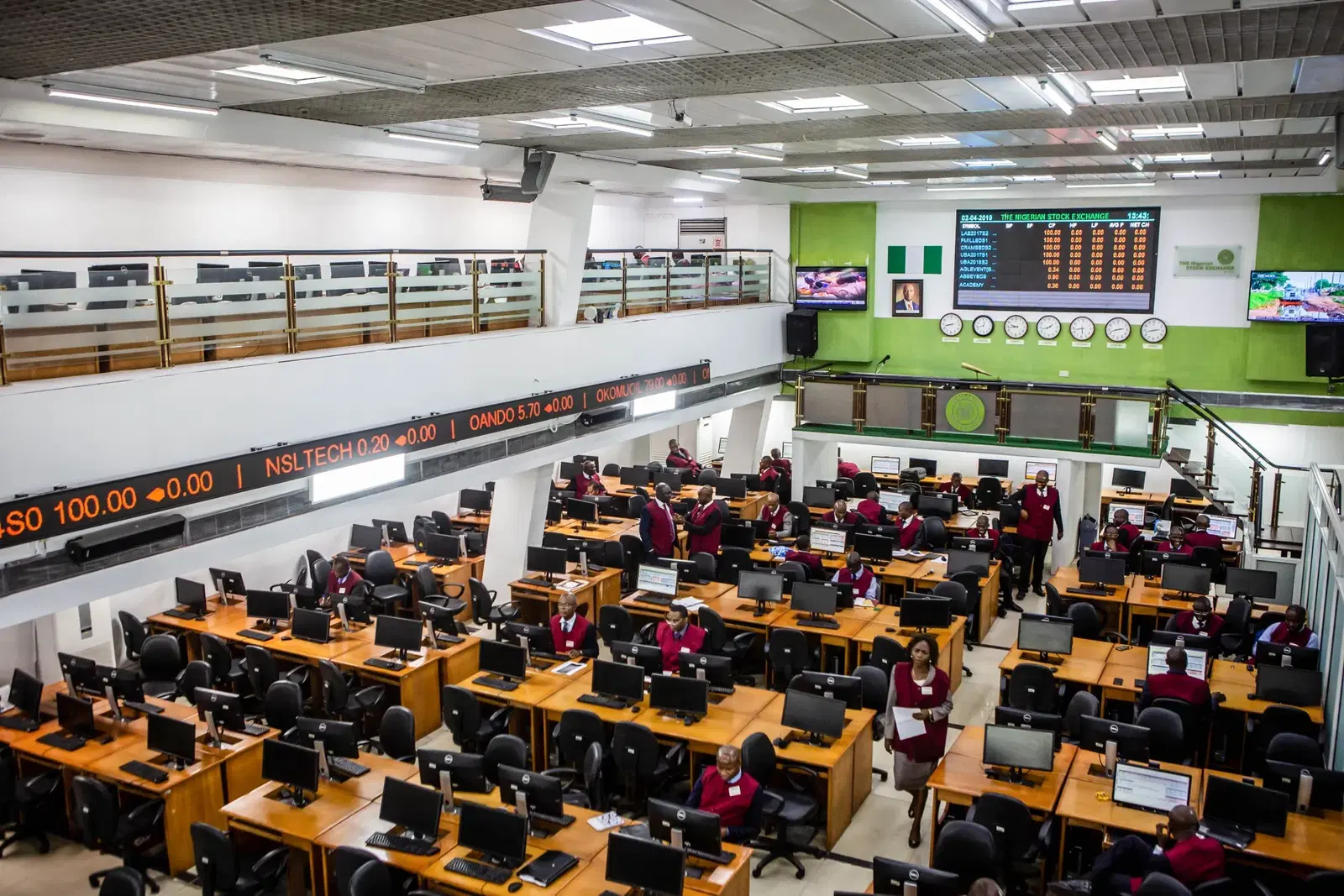
A sharp divide has emerged in the cash and debt positions of companies listed on the Nigerian Exchange Limited (NGX), with some firms holding cash several times higher than their total debt, while others have only a small fraction of their borrowings covered by available cash.
Data covering 40 listed companies in the second quarter of 2026 showed that the firms had a combined debt of N3.9 trillion. Of these, 18 companies recorded cash-to-debt ratios of at least 1.0 times, meaning their cash holdings matched or exceeded their total debt. The remaining 22 had ratios below 1.0 times, indicating that their debt was higher than their cash balances.
HBM Nigeria topped the list with a cash-to-debt ratio of 319.07 times, backed by N393.68 billion in cash against N1.23 billion in debt. UPDC Real Estate Investment Trust followed at 283.73 times, with N7.15 billion in cash and N25.2 million in debt. eTranzact International recorded 214.89 times, while CWG posted 211.1 times.
Other companies with substantial cash coverage included Unilever Nigeria at 44.8 times, Berger Paints at 18.4 times, Industrial & Medical Gases at 13.56 times and NASCON Allied Industries at 12.72 times. Vitafoam Nigeria recorded 5.88 times, while UPDC posted 5.47 times. International Breweries, Sterling Financial Holdings and May & Baker Nigeria recorded 3.34, 3.08 and 2.83 times, respectively.
At the other end of the table, Aradel Holdings recorded a ratio of 0.96 times, with N1.77 trillion in cash against N1.84 trillion in debt. Ellah Lakes posted 0.81 times, John Holt 0.77 times, Academy Press 0.72 times and Eterna 0.69 times. BUA Cement and BUA Foods recorded 0.46 and 0.44 times, respectively, while Guinness Nigeria and Champion Breweries each stood at 0.16 times.
Caverton Offshore Support Group had the lowest ratio at 0.03 times, with N2.46 billion in cash against N87.15 billion in debt. Chellarams recorded 0.05 times, C & I Leasing 0.07 times and FTN Cocoa Processors 0.08 times. These figures highlight the wide differences in cash coverage among the companies.
Analysts said the cash-to-debt ratio offers investors an indication of a company’s ability to meet its debt obligations using available cash. However, they warned that the measure does not, on its own, establish whether a company is profitable or financially sound. Operating cash flow, interest expenses, debt maturity, working-capital needs and the quality of cash holdings must also be considered.
Ambrose Omordion, Chief Operating Officer of InvestData Consulting Limited, said investors should assess debt alongside earnings, cash flow, interest coverage and repayment schedules. Economic and communications expert Clifford Egbomeade also cautioned that cash balances may include restricted funds or short-term investments that are not immediately available. Analysts added that the financial position of listed firms can affect investment, production, employment and broader capital-market development.