Now Reading: Nigeria Confirms New COVID-19 Case in Cross River as NCDC Moves to Calm Fears
-
01
Nigeria Confirms New COVID-19 Case in Cross River as NCDC Moves to Calm Fears
Nigeria Confirms New COVID-19 Case in Cross River as NCDC Moves to Calm Fears

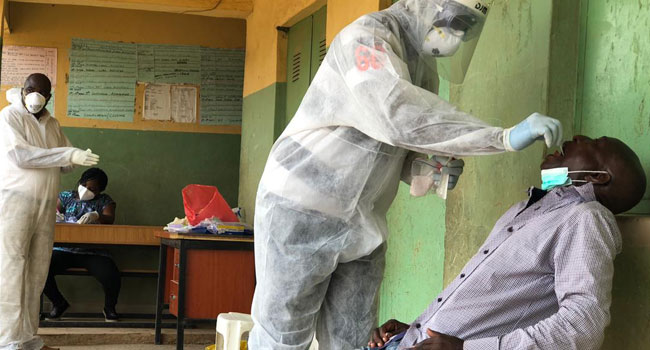
Nigeria’s health authorities have confirmed a fresh COVID-19 case in Cross River State, sparking renewed public attention to the virus years after the global pandemic was officially declared over as an emergency.
The Nigeria Centre for Disease Control and Prevention (NCDC) moved quickly to reassure citizens, saying there is no evidence of widespread transmission and that all necessary containment measures are already in place.
According to the agency, the confirmed patient has been isolated and is receiving treatment in stable condition. Officials also confirmed that contact tracing and surveillance activities have been activated to prevent further spread.
The Cross River State Ministry of Health had earlier disclosed that the index case is a Chinese national working in Akamkpa Local Government Area. He reportedly arrived in Nigeria on March 17 before developing symptoms consistent with COVID-19.
Despite the development, the NCDC emphasised that the situation remains under control. Health authorities say monitoring systems are active, and there is no indication that the case represents a wider outbreak.
“All identified contacts are being followed up appropriately, and there is no evidence at this time of widespread transmission,” the NCDC said in a statement issued by its Director-General, Jide Idris.
The agency also urged Nigerians not to panic, but to maintain basic preventive measures such as hand hygiene, respiratory etiquette, and seeking medical attention when symptoms appear.
COVID-19, first identified in 2019, previously triggered a global health emergency that led to millions of deaths and widespread economic disruption. Nigeria recorded thousands of deaths and hundreds of thousands of confirmed cases during the peak of the pandemic.
While the World Health Organisation has since declared the end of the global emergency phase, health experts continue to monitor sporadic cases and localised outbreaks in different countries.
Authorities say the latest case in Cross River is being handled according to established public health protocols, with reassurance that the risk of broader spread remains low.