Now Reading: Nigeria’s 2027 Election: Candidate Disputes, Economic Hardship and INEC’s Credibility Under Scrutiny
-
01
Nigeria’s 2027 Election: Candidate Disputes, Economic Hardship and INEC’s Credibility Under Scrutiny
Nigeria’s 2027 Election: Candidate Disputes, Economic Hardship and INEC’s Credibility Under Scrutiny

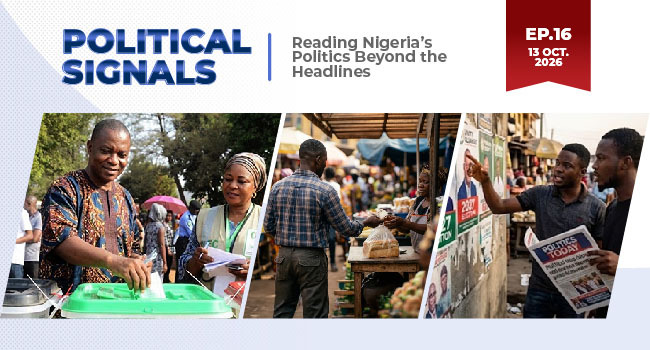
As Nigeria moves towards the 2027 general election, disputes over candidate eligibility, persistent economic hardship and concerns about electoral administration are emerging as key issues shaping the political landscape.
Although political parties and candidates are preparing for the polls, legal battles over nominations and eligibility are drawing attention away from debates about economic policy, security and national development. At the same time, many Nigerians continue to grapple with the cost of living despite signs of economic improvement.
These overlapping challenges are raising questions about what will shape voters’ decisions in 2027 and whether electoral institutions can maintain public confidence throughout the process.
Legal Battles Over the Ballot
One of the prominent disputes concerns a suit filed by former Vice-President Atiku Abubakar and the African Democratic Congress (ADC) challenging President Bola Tinubu’s eligibility to participate in the 2027 presidential election.
The Federal High Court in Abuja reportedly fixed November 20 to rule on an application by Atiku and the ADC to amend their suit. The case includes allegations concerning the authenticity of Tinubu’s National Youth Service Corps discharge certificate submitted in support of his nomination.
Tinubu and the All Progressives Congress (APC) oppose the proposed amendment. The allegations remain contested, and the court has not determined their merits.
Pre-election litigation is a legitimate part of Nigeria’s constitutional system, providing a legal avenue for challenging nominations and eligibility. However, the prominence of such cases also raises questions about whether political competition will focus on candidates’ programmes or become dominated by disputes that must first be resolved by the courts.
INEC Faces Questions Over Candidate Lists
The Independent National Electoral Commission (INEC) is also facing scrutiny over disputes involving the publication of candidates’ names.
In Gombe State, former Communications Minister Isa Pantami and the Peoples Democratic Party (PDP) reportedly gave the commission until Wednesday, October 14, to include his name on the governorship candidates’ list. The dispute followed a contested nomination process and a court-ordered rerun.
Pantami’s lawyers argue that INEC lacks the authority to exclude him following the rerun. The commission had yet to publicly resolve the matter, according to the report.
In Edo State, two candidates were reportedly listed under both the PDP and the Allied Peoples Movement for House of Assembly seats. INEC’s state office acknowledged the duplication and referred the matter to its national headquarters.
The two cases involve different circumstances and should not be treated as evidence of a coordinated problem. However, they highlight the importance of accurate candidate records, transparent explanations and timely resolution of nomination disputes.
INEC’s credibility depends on more than the conduct of voting and the announcement of results. It also rests on the accuracy of voter registration, the handling of party nominations, the publication of candidates’ names and the consistent application of electoral rules.
Unresolved disputes can lead to further litigation, increase uncertainty for political parties and create questions about the fairness of the process. Clear communication and adherence to legal requirements will therefore be important as preparations for the 2027 election continue.
Economic Hardship Remains Central to Voters’ Concerns
Beyond the legal disputes, economic conditions are likely to remain an important consideration for voters.
Although some economic indicators may show improvement, households continue to face pressure from the cost of food, transport and other essentials. For many Nigerians, the central question is whether economic reforms will translate into meaningful improvements in their daily lives.
The gap between reported economic progress and household experiences could become a significant issue during the campaign season. Political parties will be expected to explain how their policies would address inflationary pressures, improve living standards, create jobs and strengthen economic security.
The debate is not simply about whether reforms have produced measurable results. It is also about how those results are distributed, how quickly households can feel the benefits and what support is available to people facing immediate financial difficulties.
Candidates who address these concerns with clear, credible and practical proposals will give voters more substantive information with which to assess their options.
Public Confidence and the Road to 2027
The legal disputes, candidate-list controversies and economic pressures are unfolding at a time when political parties are positioning themselves for the next general election.
The issues are connected, even though they require different responses. Courts must determine legal disputes according to the law, INEC must administer electoral procedures transparently, and political parties must present programmes that respond to the country’s challenges.
For INEC, the priority is to demonstrate that nomination and administrative disputes are handled consistently and that decisions are communicated clearly. For political parties, the challenge is to move beyond accusations and explain their policy positions to the electorate.
The courts, meanwhile, have a constitutional role in resolving disputes brought before them. Their decisions should be respected, while allegations that remain before the judiciary should not be treated as established facts.
Ultimately, public confidence in the 2027 election will depend on the integrity of the entire process, from candidate selection and legal scrutiny to campaigning, voting and the resolution of electoral disputes.
As the election approaches, Nigerians will be watching both the political contest and the institutions responsible for ensuring that it is conducted within the law.