Now Reading: Nwadike, Amakeme Discuss AI, Future of Journalism at Horn Group Workshop in Owerri
-
01
Nwadike, Amakeme Discuss AI, Future of Journalism at Horn Group Workshop in Owerri
Nwadike, Amakeme Discuss AI, Future of Journalism at Horn Group Workshop in Owerri

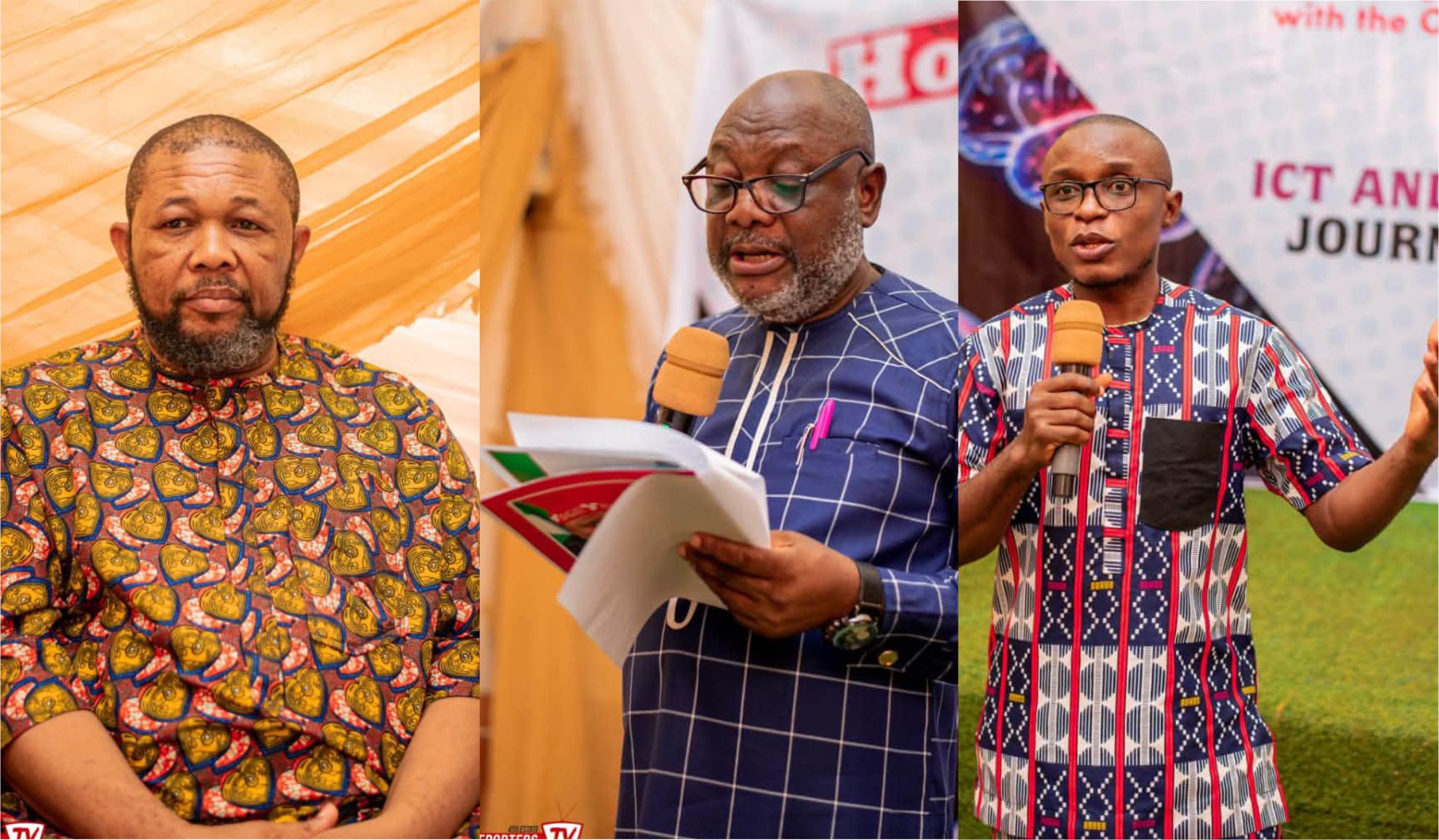
Media professionals in Imo State have been encouraged to embrace artificial intelligence (AI) and modern digital technologies as part of efforts to improve news gathering, editorial operations and content distribution. The call formed part of discussions at a Human Capital Development Training/Workshop facilitated by the founder of OtownGist Media and Creative Hub, Chinedu Hardy Nwadike, and Professor Lambert Amakeme, on Thursday, September 17, 2026, at Real Hotel, off House of Assembly Junction, Port Harcourt Road, Owerri.
The workshop, themed “Implications of ICT and AI on Contemporary Journalism in Imo State,” was organised by Newspoint Promotions Limited, publishers of Daily Nigeria Horn Newspapers, in partnership with The Onion Communication Limited, publishers of The Onion Newspapers. It brought together journalists, publishers and other media practitioners to examine how technological developments are influencing journalism and the skills required to remain effective in an increasingly digital media environment.
Delivering a presentation titled “From Newsroom to Digital Newsroom: AI, Digital Workflow and the Future of Journalism,” Nwadike examined the changing structure of media operations and the opportunities available to journalists who develop practical knowledge of emerging technologies. He explained that professional journalists already possess important advantages in the digital space because they understand reporting procedures, source management, fact-checking, editorial ethics and public accountability. According to his presentation, AI should be adopted as a supporting technology rather than a substitute for the responsibilities of trained journalists.
Nwadike outlined how tools such as ChatGPT, Google Gemini and TurboScribe could assist reporters with transcription, organising interview notes, reviewing grammar, summarising documents and preparing content for different platforms. He also presented a newsroom management model built around Google Drive, allowing reporters to submit stories, photographs and recordings through organised folders before the materials move through editing, approval, production and publication. He stressed that journalists and editors must retain control of factual information, particularly names, dates, figures, quotations and allegations, rather than relying on automated systems to make final editorial decisions.
The OtownGist founder further encouraged media houses to reconsider how they gather and distribute news, noting that a single reporting assignment could generate newspaper reports, website articles, photographs, audio programmes and videos for social media. He discussed mobile journalism, video news presentations, vox pops, podcasts and other digital formats that could help traditional media organisations reach audiences beyond their established readership. Drawing on OtownGist’s digital newsroom approach, he also examined opportunities for media organisations to develop production services such as event coverage, livestreaming, photography, documentary production and podcast recording, while preserving editorial independence.
On the ethical implications of AI, Nwadike highlighted the dangers of manipulated photographs, synthetic videos, voice cloning, deepfakes and misleading information circulated online. He emphasised the importance of establishing verification procedures that require journalists to confirm sources.