
Now Reading: Opinion: How Governor Alex Otti Is Positioning Abia for Food Security Through Agricultural Reforms
-
01
Opinion: How Governor Alex Otti Is Positioning Abia for Food Security Through Agricultural Reforms
Opinion: How Governor Alex Otti Is Positioning Abia for Food Security Through Agricultural Reforms

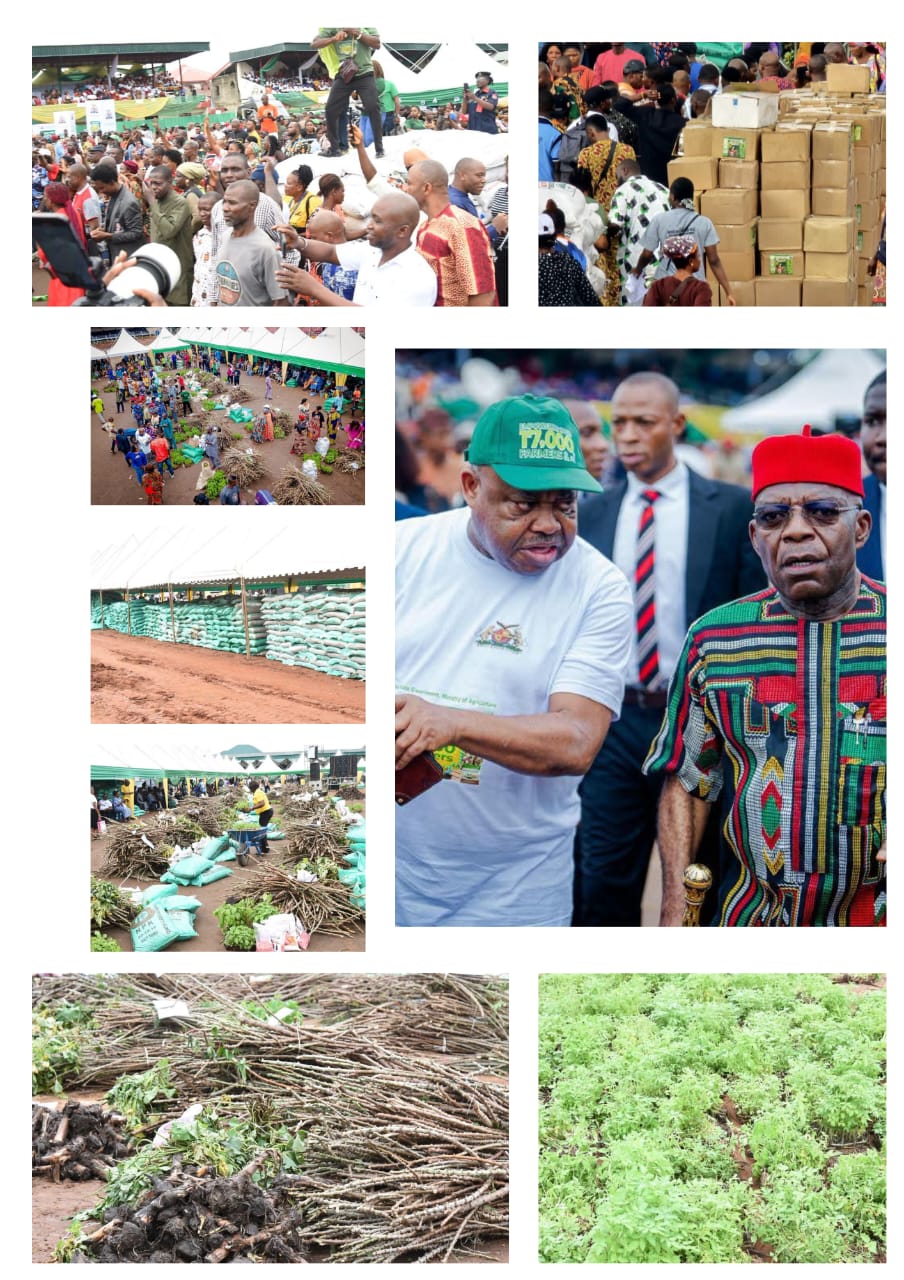
For years, agriculture remained one of Abia State’s strongest economic assets, supporting thousands of rural households but falling short of its full potential due to limited investment, poor planning and weak institutional support. Today, Governor Alex Otti is pursuing a different approach, placing agriculture at the centre of his administration’s economic development strategy.
The recent launch of the Abia State Farmers Support Programme, which targets 18,634 verified farmers across the state’s 17 local government areas, signals a significant shift in agricultural policy. Rather than focusing solely on distributing farming inputs, the initiative introduces a structured system built on farmer verification, accountability and data-driven planning.
A notable feature of the programme is the creation of a verified farmers’ database, with beneficiaries linked directly to their farmlands before receiving government support. This model seeks to address longstanding concerns over poor targeting, leakages and ineffective implementation that have affected previous agricultural intervention programmes.
Participating farmers are receiving improved seedlings for crops including cassava, rice, maize, plantain, sweet potatoes, pepper and tomatoes, alongside organic fertilisers and free logistics support. The objective is to increase productivity, improve household incomes and strengthen food production across the state.
Governor Otti has consistently argued that agriculture should be treated as a commercial enterprise rather than a subsistence activity. His administration is promoting commercial farming, agro-processing and value-chain development as key drivers of job creation, industrial growth and economic diversification.
The strategy has also attracted private sector interest. Plans for a proposed $200 million investment by a multinational palm oil company, in partnership with the Abia State Government, reflect growing investor confidence in the state’s agricultural reforms and business environment.
Supporting the broader vision is the Abia Rural Integrated and Community Economic Development (ARICE) Programme, which aims to expand agricultural production while encouraging processing, packaging, marketing and value addition to agricultural products.
The Ministry of Agriculture, led by Dr. Cliff Agbaeze, in collaboration with the Governor’s Special Adviser on Agriculture, Christopher Enweremadu, has developed a roadmap focused on mechanisation, climate-smart agriculture, improved inputs and partnerships with research institutions. Working alongside organisations such as the National Root Crops Research Institute (NRCRI), Umudike, and Michael Okpara University of Agriculture, Umudike, the administration hopes to bridge the gap between agricultural research and practical farming, positioning agriculture as a long-term driver of food security and economic growth in Abia State.
This article is an opinion piece written by Dr. Ebere Uzoukwa, Senior Special Assistant to the Governor of Abia State on Public Affairs. The views expressed are those of the author.