Now Reading: Peter Obi Denies Telling UK-Based Nigerians to Stop Sending Money Home
-
01
Peter Obi Denies Telling UK-Based Nigerians to Stop Sending Money Home
Peter Obi Denies Telling UK-Based Nigerians to Stop Sending Money Home

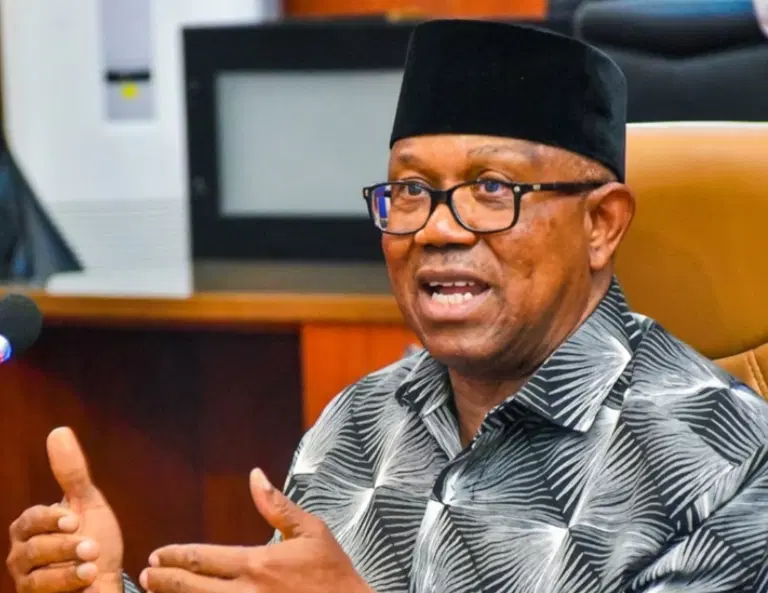
Peter Obi, the presidential candidate of the Nigeria Democratic Congress (NDC), has denied asking Nigerians living in the United Kingdom to stop supporting relatives at home, insisting that his remarks about the country’s economic hardship were misrepresented by political opponents.
The former Anambra State governor issued the clarification in a statement titled “My Message Has Been Twisted”, published on his verified X account on Tuesday. He said he valued the sacrifices of Nigerians abroad who regularly send money to their families to cover essential expenses.
Obi acknowledged that remittances from Nigerians in the diaspora help millions of households pay school fees, hospital bills, rent and food costs. He stressed that he had never called on Nigerians abroad to abandon their loved ones or withdraw the financial assistance many families depend on.
“I deeply appreciate Nigerians in the diaspora who work tirelessly and make enormous sacrifices to support their families back home,” he said.
The NDC candidate explained that his central concern was Nigeria’s dependence on money sent home by citizens living abroad to meet basic needs. He argued that the country should create conditions in which people can earn a living and access essential services without relying heavily on relatives overseas.
“My concern is that Nigeria should not remain a country where millions depend on relatives abroad for basic survival,” Obi said, calling for more jobs, affordable healthcare, quality education and greater economic opportunities.
He accused political opponents of distorting his message, maintaining that his criticism was directed at the economic conditions forcing families to depend on remittances, rather than at Nigerians who provide financial support. He said his goal was to build a country that could adequately provide for its citizens.
The clarification followed criticism of remarks Obi made during a town hall meeting with diaspora supporters in Manchester on Sunday. In a video that circulated widely online, he urged Nigerians in the United Kingdom to tell relatives requesting money that they could not continue providing assistance, arguing that such support could ease immediate hardship without resolving the underlying economic problems.
“You have people at home in Nigeria today who are begging you for money. Tell them no!” he said during the meeting.
Obi linked Nigeria’s economic difficulties to poor leadership and urged Nigerians abroad to encourage family members and friends at home to vote for leaders who would prioritise productivity, employment and economic opportunity. His subsequent clarification sought to distinguish his criticism of the country’s economic dependence on remittances from the personal sacrifices made by Nigerians supporting their families.