Now Reading: Tinubu Declares Era of Tough Reforms Over, Says Nigeria Has Entered Age of Prosperity
-
01
Tinubu Declares Era of Tough Reforms Over, Says Nigeria Has Entered Age of Prosperity
Tinubu Declares Era of Tough Reforms Over, Says Nigeria Has Entered Age of Prosperity

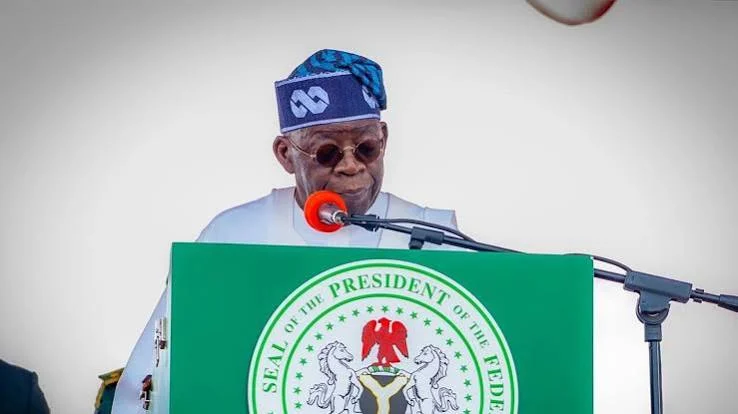
President Bola Tinubu has declared that the most difficult phase of his administration’s economic reforms is over, telling Nigerians that the country has moved from an “age of reform” into what he called an “age of prosperity.”
Tinubu made the declaration on Thursday in his Independence Day address marking Nigeria’s 66th anniversary, where he defended the removal of petrol subsidy and foreign exchange reforms while warning against calls to reverse the policies ahead of the 2027 general election.
The President compared Nigeria’s pre-2023 economic situation to a cancer patient who must choose between painful treatment and temporary relief. He said previous administrations had relied on what he described as the “morphine” of subsidies instead of confronting deeper economic problems.
“Nigeria was like a sick patient who receives the terrible news that he has cancer,” Tinubu said, arguing that his administration chose to confront the underlying problems despite the hardship caused by the reforms.
He also took aim at calls for a return to petrol subsidies, describing them as a “siren song” and urging Nigerians to remember why the reforms were introduced. His remarks came as subsidy policy has become a major issue in political discussions ahead of the 2027 election.
Tinubu said his administration’s reforms had not created Nigeria’s economic weaknesses but had confronted problems that had been allowed to persist. He claimed that the economy had grown by more than four per cent in 2026, while oil theft had declined, inflation had fallen from its peak, foreign reserves had been rebuilt and the foreign exchange market had stabilised.
He also said Nigeria generated more than $6 billion in non-oil export revenue in 2025, which he described as the highest in the country’s history. The President said the reforms had strengthened economic stability and resilience and that foreign direct investment was continuing to rise. These are claims made by the President in his address.
Declaring a shift in his administration’s priorities, Tinubu said the government would now focus less on correcting economic distortions and more on delivering “shared and widespread prosperity.” He linked that goal to lower production costs, cheaper transportation, improved agricultural output, reliable electricity, access to credit and greater industrial activity.
On the cost of living, the President outlined plans to expand mechanised irrigation and dry-season farming, improve access to seeds and fertiliser, invest in storage and transportation, and develop roads, railways and ports connecting farms and factories to markets.
He also promised greater emphasis on jobs, enterprise and industrial growth, including using domestic gas to power industries, supporting the revival of factories, expanding digital connectivity and investing in skills required by employers.
Acknowledging that many Nigerians continue to struggle with food, education, healthcare and other basic costs, Tinubu said his administration would strengthen social support programmes and improve the National Social Register. He also cited the Nigerian Education Loan Fund and CREDICORP as measures aimed at expanding access to education and consumer credit.
The President said salaries and pensions had been paid on time since 2023 and that pension reforms had been introduced to support retirees and vulnerable Nigerians.
“The age of reform has done its work. Now begins the age of prosperity,” Tinubu said, adding that Nigeria had corrected its economic course and should now move forward without looking back.